
Drawing Room Interior Design Ideas: Elegant, Stylish & Welcoming Ways to Design Your Space

A drawing room is often one of the most visible and formal spaces in a home. It may be used to welcome guests, host conversations, entertain family and friends, or simply create an impressive first impression.
The best drawing room interior design balances elegance with comfort. It should feel polished without becoming stiff, and decorative without becoming crowded.
Whether you are designing a compact apartment drawing room, a spacious family home or a luxurious villa, the fundamentals remain the same: create a practical seating arrangement, establish a focal point, choose furniture according to scale, layer the lighting and use colour, texture and artwork to give the room personality.
What Is a Drawing Room?
A drawing room is traditionally a more formal sitting or entertaining space within a home.
Unlike a family lounge that may be designed primarily for everyday relaxation and television viewing, a drawing room often places greater emphasis on:
- Guest seating
- Conversation
- Formal entertaining
- Visual presentation
- Decorative details
- Statement furniture
- Artwork
- Lighting
- Architectural features
Modern homes often use the terms drawing room and living room interchangeably, but the design approach can still be slightly different.
A drawing room generally benefits from a more intentional furniture arrangement and a stronger emphasis on presentation.
20 Drawing Room Interior Design Ideas
1. Start With the Room Layout
Before choosing furniture or décor, understand the room’s dimensions.
Identify:
- Doors
- Windows
- Main entrance
- Architectural features
- Electrical points
- Television location, if required
- Natural focal points
Then create a furniture plan that allows people to move comfortably around the room.
A beautiful drawing room should never sacrifice circulation for appearance.
2. Create a Conversation-Focused Seating Arrangement
If the room is primarily used for entertaining guests, arrange seating to encourage conversation.
A sofa paired with accent chairs can work particularly well.
Instead of directing every seat toward a television, consider positioning furniture around a central coffee table, rug or architectural feature.
3. Choose Furniture According to Scale
Furniture should match the size of the room.
A large drawing room can accommodate substantial sofas, accent chairs and a larger coffee table.
A compact room may work better with:
- Slim-profile sofas
- Compact armchairs
- Nesting tables
- Smaller consoles
- Visually lighter furniture
The goal is proportion rather than simply choosing the largest furniture available.
4. Establish a Strong Focal Point
Every drawing room benefits from a visual anchor.
Possible focal points include:
- Large artwork
- Feature wall
- Fireplace
- Statement lighting
- Architectural detail
- Elegant TV wall
- Large window
Once the focal point is established, arrange the furniture to support it.
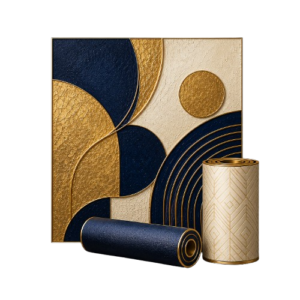
5. Use Statement Wall Art
Artwork can make a drawing room feel more sophisticated without requiring major structural changes.
Consider:
- Large abstract paintings
- Contemporary artwork
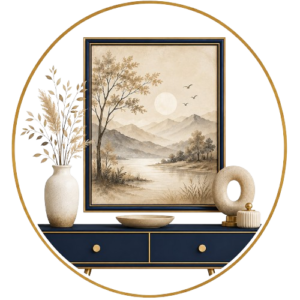
- Landscape artwork
- Botanical artwork
- Black and white artwork
- Colourful artwork
- Multi-panel artwork
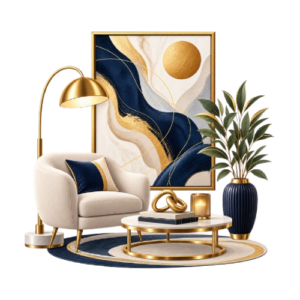
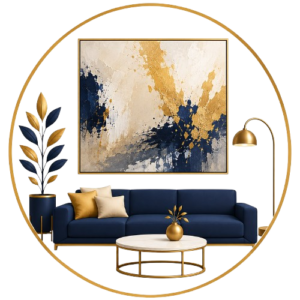
A substantial artwork above the main sofa or on the primary feature wall can become the centre of attention.
For more inspiration, explore our Living Room Wall Art Ideas and Modern Wall Art Ideas guides.
6. Add a Large Rug
A rug can visually connect the seating arrangement.
Choose a size that allows at least the main furniture pieces to relate to the rug rather than appearing scattered around it.
A rug also adds warmth and texture to rooms with hard flooring.
7. Choose an Elegant Coffee Table
The coffee table should relate to both the sofa and the room’s scale.
Options include:
- Wood
- Marble
- Glass
- Stone
- Metal
- Upholstered designs
Round or oval tables can work particularly well where circulation is important because they reduce sharp corners.
8. Use a Sophisticated Colour Palette
Drawing rooms often benefit from a restrained palette.
Consider:
- Cream + beige + wood
- Warm white + taupe
- Greige + walnut
- Beige + olive green
- White + navy
- Cream + terracotta
- Grey + charcoal
- Warm neutrals + colourful artwork
Use stronger colours selectively rather than allowing them to dominate every surface.
9. Layer Different Textures
A sophisticated drawing room should have visual depth.
Combine materials such as:
- Wood
- Linen
- Velvet
- Wool
- Stone
- Metal
- Glass
- Woven fibres
Even a neutral room can feel rich when different textures are layered thoughtfully.
10. Use Layered Lighting
Lighting has a major influence on the atmosphere of a drawing room.
Combine:
Ambient lighting for overall illumination.
Task lighting for reading or specific activities.
Accent lighting to highlight artwork, shelves or architectural features.
Table lamps, floor lamps, wall sconces and statement ceiling fixtures can all contribute to a more sophisticated environment.
11. Add a Statement Chandelier or Pendant
A drawing room can often support a more decorative light fixture than a casual lounge.
Choose the fixture according to ceiling height and room size.
In a double-height room, a larger sculptural fixture can emphasize the architecture.
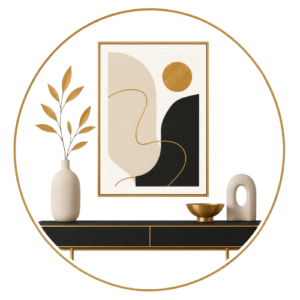
12. Use a Console Behind the Sofa
If the layout allows, a console table behind the sofa can create an additional decorative zone.
Style it with a lamp, artwork, books, ceramics or a small plant.
Keep the surface edited rather than filling it with accessories.
13. Create an Elegant Entrance View
If the drawing room is visible immediately from the entrance, consider what the visitor sees first.
Position an artwork, mirror, console or architectural feature along the main sightline.
This creates a stronger first impression and makes the entire home feel more intentional.
14. Introduce Mirrors Strategically
A large mirror can add brightness and visual depth.
Consider placing it:
- Above a console
- On a side wall
- Opposite a window
- Near the entrance
Choose a frame that complements the furniture and overall design style.
15. Combine Modern and Classic Elements
A drawing room does not need to follow a single furniture era.
For example, contemporary seating can be paired with:
- Classic moulding
- Traditional artwork
- A vintage-inspired console
- Modern lighting
- Natural wood
This creates a layered interior rather than a showroom-like appearance.
16. Create a Formal Seating Group
For larger rooms, consider creating multiple seating zones.
A main conversation area can be combined with a smaller reading or coffee corner.
Use rugs and lighting to visually define each zone.
17. Keep Decorative Objects Intentional
Drawing rooms often become cluttered because every available surface gets decorated.
Instead, choose a limited number of objects:
- Sculptures
- Ceramics
- Books
- Vases
- Plants
- Decorative bowls
Give each object enough visual space around it.
18. Use Curtains to Enhance the Room
Curtains can dramatically affect the appearance of a drawing room.
Floor-length curtains can emphasize ceiling height, while wider curtain placement can make windows appear larger.
Linen creates a relaxed appearance, while richer fabrics can give the room a more formal character.
19. Highlight Architectural Features
If your drawing room has:
- Arches
- Columns
- Mouldings
- Exposed beams
- Large windows
- Built-in niches
- Decorative ceilings
make these features part of the design.
Avoid covering important architectural details with excessive furniture or decoration.
20. Keep the Room Comfortable
A drawing room should still feel inviting.
Choose comfortable seating, maintain practical circulation and provide useful surfaces for drinks, books and everyday items.
Elegance should never come at the expense of usability.
Modern Drawing Room Interior Design Ideas
A modern drawing room design can be sophisticated without feeling cold.
Use:
- Clean-lined sofas
- Warm neutral colours
- Natural wood
- Stone surfaces
- Contemporary lighting
- Minimal decorative objects
- Large artwork
- Textured fabrics
Instead of making every surface minimalist, focus on creating visual clarity.
A single statement artwork can provide personality while maintaining a clean modern appearance.
For broader inspiration, explore our Modern Interior Design Ideas for Home guide.
Luxury Drawing Room Interior Design Ideas
A luxury drawing room does not have to rely on excessive gold, glossy finishes or oversized decorative objects.
A more sophisticated approach focuses on:
- Good proportions
- Quality-looking materials
- Comfortable furniture
- Layered lighting
- Natural stone
- Rich textures
- Statement artwork
- Custom-looking details
- Consistent finishes
A carefully selected chandelier, substantial rug and large artwork can create a luxurious atmosphere without overwhelming the room.
For additional inspiration, explore our Luxury Home Interior Design Ideas guide.
Drawing Room Colour Combination Ideas
The right colour combination depends on room size, natural light and personal style.
Beige + Warm White
A timeless combination for an elegant and welcoming room.
Greige + Natural Wood
Creates a sophisticated contemporary foundation.
Cream + Olive Green
Adds a subtle connection with nature.
White + Navy
Creates stronger contrast while remaining refined.
Taupe + Charcoal
Works particularly well in modern drawing rooms.
Cream + Terracotta
Adds warmth and character.
Neutral Walls + Colourful Artwork
A restrained room can become more expressive through a colourful statement painting.
This is particularly useful if you want to change the room’s accent colour without repainting the walls.
Drawing Room Wall Design Ideas
The main wall often deserves the greatest attention.
Large Artwork
A single substantial painting can establish the focal point.
Gallery Wall
A carefully planned collection can work well on larger walls or stair-adjacent areas.
Textured Wall
Limewash, plaster-effect paint, panelling or subtle texture can create depth.
Wood Panelling
Useful for creating warmth and architectural structure.
Decorative Moulding
Can add a classic character to formal interiors.
Statement Mirror
A large mirror can add visual depth and reflect light.
Choose one dominant treatment rather than combining several strong wall features.
Drawing Room Furniture Ideas
A practical furniture arrangement generally starts with the largest seating piece.
Then add:
- Accent chairs
- Coffee table
- Side tables
- Rug
- Console
- Storage or display furniture
Maintain enough space for comfortable movement between the furniture.
If the room is large, avoid pushing all furniture against the walls simply to fill the perimeter.
Drawing Room Lighting Ideas
Use several types of lighting to create a flexible atmosphere.
Ceiling Lighting
Provides general illumination.
Floor Lamps
Useful beside chairs or reading areas.
Table Lamps
Add softer illumination to consoles and side tables.
Wall Sconces
Can highlight architectural details or artwork.
Accent Lighting
Use directional lighting to draw attention to paintings, shelves or feature walls.
The combination creates more depth than relying on a single central ceiling fixture.
Drawing Room Interior Design for Small Spaces
A small drawing room can still feel elegant.
Choose furniture carefully and avoid overcrowding.
Useful approaches include:
- Light colours
- Slim-profile furniture
- Mirrors
- Built-in storage
- Compact coffee tables
- Wall-mounted lighting
- One strong artwork
- Clear circulation paths
A small room often benefits from fewer but more substantial design elements.
Do not fill every empty wall simply because space is available.
Drawing Room Interior Design for Large Spaces
Large drawing rooms require careful zoning.
Instead of one oversized seating arrangement, consider creating multiple areas.
For example:
Main conversation area + reading corner + small side table zone
Use rugs, lighting and furniture placement to visually separate the areas while maintaining a common colour palette.
Large walls can accommodate oversized artwork or carefully planned gallery arrangements.
For more ideas, explore our Large & Oversized Wall Art Ideas guide.
Drawing Room Design for Apartments
Apartment drawing rooms often need to perform multiple functions.
Use furniture that provides flexibility while maintaining a formal appearance.
A compact sofa, accent chair, storage console and appropriately sized artwork can create an elegant room without consuming too much floor space.
If the drawing room connects to a dining area, repeat colours and materials between the two spaces.
Drawing Room Design for Villas and Large Homes
A villa drawing room can emphasize architectural scale.
Consider:
- Double-height walls
- Large artwork
- Statement chandeliers
- Substantial rugs
- Large sofas
- Architectural wall treatments
- Multiple seating zones
However, avoid buying oversized furniture simply because the room is large.
Everything should remain proportional.
For broader villa inspiration, explore our Villa Interior Design Ideas guide.
How to Make a Drawing Room Look Expensive
A premium drawing room is usually created through coordination rather than excess.
Focus on:
- A cohesive colour palette
- Appropriately scaled furniture
- Good-quality-looking textiles
- Layered lighting
- Natural materials
- Large-scale artwork
- Well-fitted curtains
- Clean surfaces
- Consistent hardware
- Negative space
One strong statement piece can often create more impact than several smaller decorative items.
Common Drawing Room Interior Design Mistakes
Avoid these common mistakes:
- Buying furniture before measuring
- Using furniture that is too large
- Choosing a rug that is too small
- Hanging artwork too high
- Using artwork that is too small for the wall
- Relying on a single ceiling light
- Pushing every piece of furniture against the walls
- Using too many decorative objects
- Mixing too many unrelated styles
- Choosing too many accent colours
- Blocking windows or circulation paths
- Making the room look formal but uncomfortable
The best drawing rooms balance presentation with everyday usability.
How to Plan Your Drawing Room Interior Design
Step 1: Measure the Room
Record dimensions, doors, windows, ceiling height and architectural features.
Step 2: Identify the Focal Point
Decide whether the room will centre around artwork, a fireplace, a feature wall, a window or another element.
Step 3: Plan the Seating
Arrange furniture around conversation and circulation rather than simply filling the room.
Step 4: Choose the Colour Palette
Select a primary neutral and one or two accent colours.
Step 5: Select the Rug
Choose a size that connects the main seating arrangement.
Step 6: Plan the Lighting
Include ambient, task and accent lighting.
Step 7: Select Wall Décor
Choose artwork, mirrors or other wall treatments according to the size of each wall.
Step 8: Add Textures
Introduce rugs, curtains, cushions, upholstery, wood and natural materials.
Step 9: Add Decorative Objects
Use a limited number of meaningful pieces.
Step 10: Edit the Room
Step back and remove anything that makes the space feel crowded.
Frequently Asked Questions
What is drawing room interior design?
Drawing room interior design focuses on creating an elegant and comfortable space for entertaining guests, conversation and formal or semi-formal gatherings. It combines seating, furniture, lighting, colour, wall décor and architectural features.
What is the difference between a drawing room and a living room?
Traditionally, a drawing room is a more formal entertaining space, while a living room is generally designed for everyday family use. In modern homes, the terms are often used interchangeably.
What colour is best for a drawing room?
Warm white, cream, beige, greige, taupe, soft grey, olive green and navy can all work well. The best choice depends on natural light, room size and the desired atmosphere.
How do I make a small drawing room look elegant?
Use appropriately scaled furniture, light colours, mirrors, layered lighting, uncluttered surfaces and one strong focal point such as a large artwork.
What artwork is best for a drawing room?
Abstract, contemporary, botanical, landscape, black-and-white and colourful artwork can all work. Select artwork according to the wall dimensions, furniture scale and overall colour palette.
How large should artwork be above a sofa?
Artwork should generally have enough visual presence to relate to the width of the sofa without overwhelming it. A common mistake is choosing a piece that is too small for the furniture and wall.
How can I make a drawing room look luxurious?
Use a cohesive palette, quality-looking textiles, layered lighting, natural materials, substantial furniture, large artwork and carefully selected decorative pieces.
Should drawing room furniture match?
Furniture does not have to be identical. Coordinated colours, materials and proportions often create a more sophisticated result than a completely matching furniture set.
How do I arrange furniture in a large drawing room?
Create defined seating zones instead of pushing every piece against the walls. Use rugs, lighting and furniture placement to visually connect each area.
Can a drawing room have a TV?
Yes. If the room is also used for entertainment, a TV can be integrated into a feature wall or cabinetry. However, if the primary purpose is formal entertaining, consider whether artwork or another architectural feature should remain the main focal point.
Final Thoughts
The best drawing room interior design combines elegance with genuine comfort.
Start with the room’s layout and determine how you want people to move, sit and interact. Choose furniture according to scale, establish a clear focal point and build the room around a controlled colour palette.
Then introduce texture through rugs, curtains and upholstery, layer the lighting and use artwork to give the walls personality.
Whether you are designing a compact apartment drawing room, a modern family home or a spacious villa, you do not need excessive decoration to make the room impressive.
Good proportions, thoughtful lighting, comfortable furniture and well-chosen artwork can create a drawing room that feels refined, welcoming and distinctly yours.
Explore more Canvasora inspiration:
- Modern Home Interior Design Ideas for Every Room
- Interior Design Ideas by Room
- Modern Interior Design Ideas for Home
- Contemporary Interior Design Ideas
- Luxury Home Interior Design Ideas
- Villa Interior Design Ideas
- 2BHK Home Interior Design Ideas
- Living Room Wall Art Ideas
- Bedroom Wall Art Ideas
- Modern Wall Art Ideas
- Large & Oversized Wall Art Ideas
- Gallery Wall Ideas
- Canvas Wall Art Ideas
- Black and White Wall Art
- Colourful Wall Art
- Unique & Creative Wall Decor Ideas
Complete your drawing room with thoughtfully selected wall art from Canvasora, chosen to complement your furniture, colour palette and the scale of your space.