
Wall Painting Ideas: Easy DIY Designs, Drawings & Techniques


A painted wall can completely change the character of a room. From a simple geometric pattern to a detailed mural, hand-drawn artwork, nature-inspired scene, or playful children’s design, wall painting ideas offer a creative way to make an ordinary wall feel personal and distinctive.
You do not need to be a professional artist to create something beautiful. Many easy wall painting projects can be completed with basic supplies, a little planning, and a design that matches your skill level. Simple lines, botanical shapes, abstract forms, clouds, arches, hearts, flowers, and other motifs can produce impressive results without complicated techniques.
At the same time, decorative wall painting can go far beyond simple DIY projects. Wings wall painting, butterfly designs, animal murals, tree-and-bird scenes, mandalas, graffiti, fresco-inspired surfaces, pencil drawings, and 3D effects can turn a wall into a genuine focal point.
This guide brings together practical wall painting drawing ideas, easy techniques, creative themes, room-specific inspiration, and tips for planning a successful painted wall.
What Is Wall Painting?
Wall painting is the process of applying paint or other artistic media directly to a wall to create a decorative, illustrative, geometric, or artistic design.
Unlike conventional wall colour, which usually covers the entire surface uniformly, a decorative painting can introduce:
- Patterns
- Illustrations
- Murals
- Line drawings
- Botanical motifs
- Geometric shapes
- Character artwork
- Abstract compositions
- Textured effects
- Trompe-l’œil or 3D effects
The result can be subtle or dramatic depending on the scale, colours, and complexity of the design.
25 Wall Painting Ideas to Try
1. Wings Wall Painting
A wings wall painting can create a dramatic feature wall, especially behind a bed, sofa, dressing area, or photography corner.
Large wings can be painted symmetrically on either side of a central point, allowing the wall itself to become part of the composition. White, gold, black, muted pastel, or monochrome wings can produce very different moods.
For a sophisticated home, keep the surrounding décor simple so the wings remain the visual focus.
2. Butterfly Wall Painting
Butterflies are an easy subject for decorative painting because their silhouettes can be simplified into clean shapes.
You can paint:
- One oversized butterfly
- A small group
- A symmetrical composition
- Butterflies emerging from flowers
- A flowing butterfly trail
For an elegant interior, use two or three related shades rather than too many unrelated colours.
3. Simple Wall Painting
A simple wall painting does not need intricate detail to look impressive.
Try:
- Arches
- Circles
- Half circles
- Organic shapes
- Simple leaves
- Waves
- Lines
- Colour blocks
Simple compositions are particularly useful for beginners because they are easier to measure, tape, paint, and correct.
4. Easy Wall Painting for Beginners
If you are new to painting walls, begin with designs based on simple shapes rather than realistic illustrations.
Good beginner projects include:
- Geometric blocks
- Stripes
- Arches
- Clouds
- Simple flowers
- Leaves
- Abstract lines
- Small murals
Use painter’s tape for crisp edges and test the colours on a small area before committing to the entire wall.
5. Panda Wall Painting
A panda wall painting can be a playful choice for children’s rooms, nurseries, playrooms, or educational spaces.
The design can be simplified into recognizable black-and-white shapes instead of attempting highly detailed realism.
Pair the panda with bamboo, clouds, leaves, or simple landscape elements for a complete scene.
6. Handmade Easy Wall Painting
Handmade artwork gives a room a more personal character.
An easy handmade wall painting can be created using:
- Brushes
- Sponges
- Stencils
- Painter’s tape
- Rollers
- Simple templates
- Pencil outlines
Sketch your design lightly first, then paint the largest shapes before adding smaller details.
7. Simple Wall Painting Art
For a modern home, simple wall painting art can use abstract forms instead of recognizable objects.
Try overlapping circles, curved lines, organic shapes, arches, or blocks of colour.
The most important consideration is balance. Leave enough negative space around the design so the wall does not feel overcrowded.
8. Wall Drawing Easy Enough for Beginners
Drawing directly onto a wall can feel intimidating, but simple line-based designs are surprisingly accessible.
Use a pencil to create a very light outline first. Once you are happy with the composition, trace the design with a fine brush or paint marker.
This approach works especially well for:
- Leaves
- Faces
- Flowers
- Abstract figures
- Mountains
- Birds
- Simple geometric patterns
9. Wall Painting Drawing Easy Ideas
A beginner-friendly wall painting drawing can start with a simple sketch and gradually build into painted artwork.
One useful process is:
Sketch → outline → large colour areas → details → corrections → final accents
This makes the project easier to control than trying to paint the complete design immediately.
10. Animal Wall Painting
Animal murals can add personality to children’s rooms, nurseries, play areas, cafés, studios, or creative spaces.
Popular subjects include:
- Elephants
- Tigers
- Lions
- Pandas
- Birds
- Deer
- Rabbits
- Fish
- Butterflies
You can choose realistic artwork or simplify the animals into modern silhouettes and line drawings.
11. Beautiful Simple Wall Paintings
Some of the most attractive painted walls are intentionally uncomplicated.
A large botanical branch, abstract sun, arch, mountain outline, floral composition, or monochrome line drawing can create a strong focal point without covering the entire wall.
Think about scale and placement before detail. A well-positioned simple design often looks more polished than a complicated design placed randomly.
12. Creative Wall Painting Art
Creative wall painting art can combine different techniques rather than following a conventional mural format.
Consider:
- Abstract brushwork
- Geometric compositions
- Layered shapes
- Oversized botanical forms
- Colour gradients
- Continuous-line drawings
- Architectural illusions
- Mixed textures
Let the room’s existing furniture and colours influence the artwork.
13. Cute Wall Painting
Cute wall paintings work particularly well in children’s bedrooms and playrooms.
Clouds, stars, rainbows, animals, flowers, smiling characters, balloons, and simple landscapes can create a playful environment.
Keep the palette coordinated with the room instead of using every available colour.
14. Drawing for Wall Painting
Before painting a detailed design, create a drawing for wall painting on paper or digitally.
This lets you test:
- Composition
- Scale
- Colour
- Placement
- Proportions
- Visual balance
For large murals, divide the wall into a simple grid and transfer the sketch section by section.
15. Easy Wall Drawing
Easy wall drawing ideas are particularly useful when you want artwork that looks hand-created but does not require advanced painting skills.
Continuous-line portraits, botanical outlines, abstract faces, simple landscapes, and geometric drawings are good options.
Black line work against a light wall can create a sophisticated contemporary effect.
16. Feather Wall Painting
A feather wall painting can create a delicate and decorative feature.
Use a single oversized feather for a minimalist effect or combine several feathers into a flowing arrangement.
Soft neutral colours can create an understated look, while metallic or darker accents can make the design more dramatic.
17. Fresco Wall Painting
Fresco-inspired wall painting can bring an aged, architectural quality to an interior.
Instead of attempting a historically accurate fresco, you can create a modern interpretation using:
- Muted earth tones
- Soft washes
- Classical-inspired forms
- Architectural fragments
- Faded botanical motifs
This works particularly well in interiors with Mediterranean, traditional, rustic, or vintage influences.
18. Graffiti Wall Painting
A graffiti wall painting can bring energy and personality to a creative space.
It is particularly suitable for:
- Teen bedrooms
- Studios
- Game rooms
- Creative offices
- Restaurants
- Commercial interiors
Use the room’s existing colour palette as a starting point so the artwork feels intentional rather than disconnected.
19. Heart Wall Painting
A heart wall painting is simple, recognizable, and highly adaptable.
You can create:
- One large heart
- Multiple small hearts
- Abstract hearts
- Geometric hearts
- Floral hearts
- A heart-shaped outline
It can work particularly well in bedrooms, children’s rooms, creative corners, or event spaces.
20. Love Wall Painting
A love wall painting can combine typography, symbols, botanical elements, or abstract forms.
For a sophisticated interior, avoid making the design overly literal. A subtle word, handwritten-style lettering, or abstract heart motif can communicate the theme while maintaining visual elegance.
21. Pencil Wall Art
Pencil-based artwork can create a refined monochrome appearance.
A pencil wall art design can feature portraits, botanical drawings, architecture, animals, or continuous-line illustrations.
Use a light pencil outline before applying darker lines if you are creating the artwork directly on the wall.
22. Rose Wall Painting
Roses are versatile subjects for both realistic and simplified murals.
A single oversized rose can work as a statement design, while several smaller flowers can create a botanical composition.
For modern interiors, consider a monochrome rose drawing instead of a highly colourful floral mural.
23. Sky Wall Painting
A sky wall painting can visually transform a room by introducing clouds, gradients, stars, sunsets, or atmospheric landscapes.
This approach is especially effective in:
- Children’s rooms
- Bedrooms
- Reading corners
- Creative spaces
- Hospitality interiors
Use gradual colour transitions to avoid an overly flat appearance.
24. Tree and Birds Wall Painting
A wall painting featuring a tree and birds can create a natural focal point.
A simple tree silhouette can be combined with flying birds, leaves, flowers, or subtle branches.
This type of design works particularly well on large blank walls where a single small artwork might appear undersized.
25. Tree and Flowers Wall Painting
Combine branches, leaves, and flowers to create a botanical mural.
For a contemporary look, simplify the forms and use a limited palette. For children’s rooms, you can make the flowers brighter and more playful.
Wall Painting Ideas by Room
Wall Painting Ideas for the Bedroom
The bedroom is one of the best places for a decorative wall because the artwork can replace a traditional headboard or become the main feature behind the bed.
Consider:
- Wings
- Botanical designs
- Abstract arches
- Moon and sky scenes
- Large flowers
- Simple line drawings
- Soft landscapes
Keep the colours restful if the goal is to create a relaxing atmosphere.
Simple Wall Painting for Hall
A hall or living room can accommodate larger and more expressive designs.
Consider:
- Oversized abstract forms
- Geometric compositions
- Large botanical murals
- Tree-and-bird artwork
- Architectural patterns
- Contemporary line drawings
Make sure the painting relates to the sofa, rug, curtains, or other major furnishings.
Wall Painting for Children’s Rooms
Children’s spaces allow more freedom.
Pandas, animals, clouds, rainbows, stars, trees, flowers, characters, and colourful abstract designs can all work well.
Choose washable, appropriate wall finishes where practical and keep artwork away from areas where furniture may frequently rub against the wall.
Wall Painting for Kindergarten
A wall painting for kindergarten can combine decoration with learning.
Possible themes include:
- Alphabet
- Numbers
- Animals
- Nature
- Solar system
- Maps
- Seasons
- Shapes
- Plants
Keep the artwork clear and visually engaging rather than overcrowding the walls with too many educational elements.
Wall Painting for an Office
Modern offices can use subtle murals, abstract shapes, line drawings, cityscapes, typography, or brand-inspired colour compositions.
For professional environments, use a controlled palette and avoid designs that compete with workstations.
Character Wall Painting Ideas
Character murals can create highly personal spaces, particularly for children and teenagers.
Popular searches include Mickey Mouse wall painting, Minion wall painting, Naruto wall painting, and Joker wall painting.
If you are creating character-inspired artwork, consider using simplified silhouettes, colour themes, or original interpretations rather than trying to reproduce a complex character illustration exactly.
For commercial or public-facing use, remember that recognizable characters and logos can be protected by intellectual-property rights.
Mandala, Buddha & Dreamcatcher Wall Painting Ideas
Mandala Wall Painting
A wall painting mandala art design can create a symmetrical focal point.
Because symmetry is important, mark the centre of the wall carefully before beginning. A compass, stencil, or grid can help maintain consistent proportions.
Buddha Wall Painting
A Buddha wall painting simple design can create a calm focal point in meditation areas, reading spaces, or quiet corners.
Keep the composition uncluttered and use a restrained palette for a peaceful appearance.
Dreamcatcher Wall Painting
A dreamcatcher-inspired design can combine circular forms, feathers, lines, and soft colours.
A large central design can work particularly well above a bed or in a personal creative space.
Special-Event Wall Painting Ideas
Wedding Wall Painting
A wedding wall painting can be used as a temporary or permanent decorative backdrop.
Popular concepts include:
- Floral compositions
- Initials
- Abstract botanical designs
- Love motifs
- Couple silhouettes
- Decorative lettering
For temporary event walls, use an appropriate removable or temporary application method rather than permanently altering the surface.
Welcome Wall Painting
A welcome wall painting can create an inviting entrance for a home, event, school, café, studio, or commercial space.
Keep the lettering legible and position it where visitors can naturally see it.
Techniques for Painting Walls for Beginners
If you are painting walls for beginners, preparation matters as much as artistic ability.
Step 1: Prepare the Surface
Clean the wall and repair obvious cracks, holes, or uneven areas.
Step 2: Choose the Design
Select a design that matches your skill level and the size of the wall.
Step 3: Make a Sketch
Create a paper sketch before transferring the artwork to the wall.
Step 4: Mark the Wall
Use a pencil, level, measuring tape, or grid to establish proportions.
Step 5: Protect Surrounding Areas
Cover floors and furniture and use painter’s tape around edges where necessary.
Step 6: Paint Large Areas First
Complete the background and largest shapes before working on details.
Step 7: Add Details
Use smaller brushes for outlines and fine elements.
Step 8: Correct Imperfections
Step back regularly. Small imperfections are easier to identify from a distance.
Step 9: Let the Paint Cure
Follow the paint manufacturer’s instructions before placing furniture directly against the finished wall or cleaning it.
Easy Wall Murals to Paint
If you want something larger than a simple motif but easier than a realistic mural, consider an easy wall mural to paint.
Good options include:
- Abstract landscapes
- Sunset gradients
- Mountain silhouettes
- Large leaves
- Arches
- Clouds
- Simple floral branches
- Geometric colour blocks
- Rainbow shapes
- Minimal city skylines
Use a limited number of colours and large shapes to keep the project manageable.
Line Drawing Wall Art
Line drawing wall art is one of the easiest ways to create a contemporary painted feature.
Continuous lines can form:
- Faces
- Bodies
- Flowers
- Leaves
- Animals
- Abstract shapes
A single dark line on a pale wall can create a sophisticated effect without requiring extensive painting experience.
What About Sol LeWitt Wall Drawing?
Sol LeWitt wall drawing is an important reference point in conceptual and contemporary art, where instructions and systematic geometric processes can form the basis of wall works.
For a home DIY project, you can take inspiration from the broader idea of repeated lines, grids, geometry, and systematic compositions without treating a personal DIY design as an original Sol LeWitt work.
3D Wall Painting Ideas
A 3D wall painting simple enough for beginners can create the illusion of depth without requiring advanced mural skills.
Try:
- Geometric cubes
- Repeating arches
- Shadow effects
- Floating circles
- Faux windows
- Receding corridors
- Layered blocks
Use carefully positioned highlights and shadows to create the illusion of depth.
How to Choose Colours for Wall Painting
Start with the room rather than the paint chart.
Look at:
- Sofa colour
- Flooring
- Curtains
- Furniture
- Existing artwork
- Natural light
- Artificial lighting
- Room size
A useful approach is to select one dominant colour, one supporting colour, and a small accent.
For example:
Modern: warm white + charcoal + muted green
Playful: cream + blue + yellow
Nature-inspired: sage + beige + brown
Romantic: soft pink + cream + terracotta
Monochrome: white + grey + black
How to Make DIY Wall Painting Look Professional
A polished result usually comes from preparation rather than complicated artistic techniques.
Measure Before Painting
Poor proportions can make an otherwise good design look awkward.
Test Colours
Paint a small sample first and observe it under both daylight and artificial lighting.
Use the Correct Tools
Different designs require different brushes, rollers, stencils, tape, or paint markers.
Keep Edges Clean
Painter’s tape can help produce sharp geometric boundaries.
Respect Negative Space
Do not automatically fill the entire wall. Empty space can make the artwork more sophisticated.
Consider the Furniture
A painted design should interact with the furniture rather than compete with it.
Common Wall Painting Mistakes
Starting Without a Sketch
Even simple designs benefit from planning.
Choosing a Design That Is Too Complex
Match the project to your experience.
Ignoring Wall Size
A tiny motif can disappear on a large wall, while an oversized complex mural can overwhelm a small room.
Using Too Many Colours
A limited palette often creates a more cohesive result.
Painting Over a Poor Surface
Repair and prepare the wall before beginning.
Forgetting Lighting
Colours can appear dramatically different under warm artificial light and daylight.
Ignoring the Rest of the Room
The painting should complement furniture, flooring, textiles, and décor.
DIY Wall Painting vs Ready-Made Wall Art
DIY painting is ideal when you want something directly integrated into the wall and enjoy the creative process.
Ready-made wall art can be more practical when you want:
- Easier installation
- The ability to change artwork later
- Professional-looking artwork
- Less preparation
- No permanent alteration to the wall
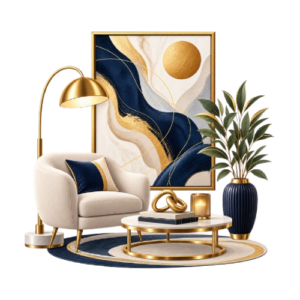
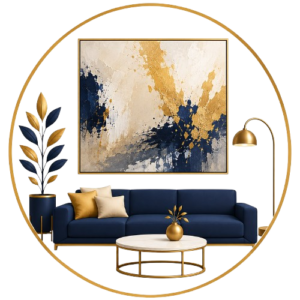
You can also combine both approaches. A painted accent wall can work beautifully with framed or canvas artwork on surrounding walls.
How to Plan a Wall Painting Project
Before picking up a brush, answer five questions:
1. What is the purpose of the wall?
Is it a focal point, backdrop, educational surface, children’s feature, or decorative accent?
2. How large should the artwork be?
Measure the wall and surrounding furniture.
3. What style suits the room?
Modern, minimalist, botanical, playful, traditional, abstract, or artistic?
4. Which colours already exist?
Use the room’s palette as your starting point.
5. Is the design permanent?
This matters particularly for rentals, events, or frequently changing interiors.
Planning these details first can prevent expensive repainting later.
Frequently Asked Questions About Wall Painting
What is the easiest wall painting for beginners?
Geometric shapes, arches, stripes, simple leaves, clouds, abstract forms, and line drawings are among the easiest designs to begin with.
How do I draw a design on a wall before painting?
Create the design on paper first, then lightly transfer it using a pencil, grid, stencil, projector, or measured reference points.
What wall painting is best for a bedroom?
Botanical designs, wings, feathers, simple landscapes, abstract shapes, and calming line drawings can work particularly well in bedrooms.
How can I make a small wall look interesting?
Use one strong motif, a simple mural, geometric colour blocking, or a large line drawing instead of covering the wall with many small elements.
Can I create a wall mural without being an artist?
Yes. Choose simple shapes, use templates or stencils, sketch before painting, and build the design from large shapes to smaller details.
What is a good wall painting for children?
Animals, clouds, trees, rainbows, stars, educational themes, and simple character-inspired designs are popular options.
How do I make wall painting look modern?
Use simplified forms, clean lines, controlled colours, generous negative space, and a design that relates to the room’s furniture and architecture.
Can I combine wall painting with canvas art?
Absolutely. A painted accent wall can act as a backdrop for carefully selected canvas or framed artwork. Keep the colours and visual weight balanced.
How long does a wall painting project take?
It depends on wall preparation, size, paint type, design complexity, drying time, and the number of coats required. Simple geometric designs can be much faster than detailed murals.
Is wall painting suitable for rental homes?
It can be, but permanent painting may not be allowed by the rental agreement. Always check the property’s rules before making changes.
Final Thoughts
The best wall painting ideas are not necessarily the most complicated. A simple line, oversized botanical form, geometric composition, pair of wings, butterfly, tree, flower, or carefully planned mural can completely change how a room feels.
If you are a beginner, start with an easy wall painting based on simple shapes and a limited colour palette. As your confidence grows, you can explore more detailed wall painting drawing, animal murals, pencil art, fresco-inspired designs, graffiti, 3D effects, and larger decorative compositions.
The key is to plan the wall as part of the room. Consider its size, surrounding furniture, lighting, colour palette, and purpose before choosing the design.
And if you prefer the visual impact of artwork without permanently painting your walls, Canvasora’s collection of wall art can provide a flexible alternative—allowing you to create a strong focal point while keeping the option to change your décor over time.