
Puja Room Interior Design Ideas: Peaceful, Beautiful & Practical Ways to Create a Sacred Space

A puja room is one of the most meaningful spaces in an Indian home. While it may be compact, its design needs to balance spiritual significance with practical considerations such as storage, lighting, ventilation, cleaning and everyday accessibility.
The best puja room interior design feels peaceful without being unnecessarily elaborate. Natural materials, warm lighting, thoughtful proportions, subtle colours and carefully selected decorative details can create a space that feels special while remaining consistent with the rest of the home.
Whether you have a dedicated prayer room, a small mandir niche, a compact apartment corner or a larger traditional puja space, these ideas can help you create a beautiful and functional setting.
What Makes a Good Puja Room Interior Design?
A well-designed puja room should consider:
- Available space
- Placement and layout
- Storage
- Lighting
- Ventilation
- Easy cleaning
- Materials
- Colour palette
- Door or partition
- Decorative details
- Relationship with the rest of the home
The design should also reflect your family’s traditions and personal preferences.
Rather than treating the puja room as simply another decorative room, consider it a space where simplicity, cleanliness and visual calm are especially important.
15 Puja Room Interior Design Ideas
1. Create a Dedicated Puja Room Where Possible
If your home has enough space, a separate puja room can provide a quiet environment for prayer and reflection.
Keep the room visually uncluttered and provide enough space for the required idols, lamps, accessories and storage.
The exact placement should be planned according to your home’s architecture and your family’s traditions.
2. Design a Compact Puja Niche
A full room is not essential.
A dedicated niche in a living room, dining area, hallway or another suitable location can become a beautiful home temple.
Use a clearly defined backdrop, appropriate lighting and a small amount of storage to distinguish the space from the surrounding room.
3. Use Natural Wood
Wood is a timeless choice for puja room interiors.
It can be used for:
- Mandir structures
- Shelves
- Doors
- Cabinets
- Decorative panels
- Carved details
Natural wood can add warmth while complementing both traditional and modern homes.
4. Add a Decorative Back Panel
The wall behind the mandir can become the room’s main feature.
Consider:
- Wood panelling
- CNC-cut panels
- Fluted details
- Subtle patterns
- Marble-look surfaces
- Traditional carved designs
- Simple textured finishes
Choose a design that creates visual focus without becoming overwhelming.
5. Use Warm Lighting
Lighting plays an important role in creating the atmosphere of a puja room.
Combine general illumination with softer accent lighting.
Useful options include:
- Warm LED strips
- Backlighting
- Wall lights
- Pendant fixtures
- Recessed lighting
- Decorative lamps
Lighting should illuminate the prayer area clearly while maintaining a calm atmosphere.
6. Choose a Peaceful Colour Palette
Soft, warm colours generally work well.
Consider:
- White
- Cream
- Beige
- Sand
- Light wood
- Soft yellow
- Muted gold
- Terracotta
- Pale green
If you prefer stronger colours, use them selectively in the backdrop or decorative details.
7. Add Practical Storage
Puja rooms often require storage for prayer accessories, books, lamps, incense, containers and other everyday items.
Use:
- Drawers
- Closed cabinets
- Shelves
- Small compartments
- Hidden storage
Keeping frequently used items organized helps the room remain clean and peaceful.
8. Choose a Suitable Puja Room Door
A door or partition can provide privacy while also becoming a decorative element.
Options include:
- Wooden doors
- Glass doors
- Fluted glass
- Jali panels
- Carved wooden screens
- Sliding partitions
For compact homes, a sliding or folding solution may save valuable space.
9. Use Jali or Decorative Screens
Jali panels can define a puja area without completely closing it off.
They allow light and visual connection to pass through while creating a distinct boundary.
This can work particularly well when a home does not have a dedicated prayer room.
10. Include a Small Seating Area
If space permits, provide a comfortable floor cushion, low seating or small stool.
Avoid filling the room with unnecessary furniture.
The seating should support the room’s purpose rather than become another decorative element.
11. Use Marble or Stone Details
Natural stone can add a timeless quality to a puja room.
Marble, granite, sandstone or stone-look finishes can be used for:
- Platforms
- Backdrops
- Shelves
- Flooring
- Decorative borders
Choose materials that are easy to clean and suitable for the way the space will be used.
12. Create a Traditional Puja Room
A traditional puja room can emphasize craftsmanship and familiar decorative elements.
Consider:
- Carved wood
- Traditional patterns
- Brass accessories
- Warm lighting
- Natural stone
- Decorative bells
- Traditional artwork
Keep the overall arrangement organized so the room does not become visually crowded.
13. Create a Modern Puja Room
A modern puja room design can be simple and architectural.
Use:
- Clean-lined cabinetry
- Neutral colours
- Natural wood
- Minimal decoration
- Simple lighting
- Glass or jali partitions
- A restrained backdrop
The objective is to create a sacred space that fits naturally into a contemporary home.
14. Add Subtle Wall Décor
Wall décor can enhance the space when used thoughtfully.
Consider:
- Traditional motifs
- Minimal artwork
- Decorative panels
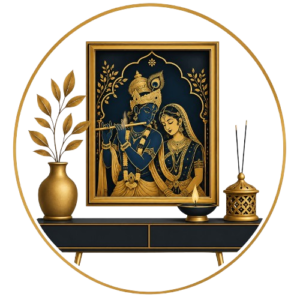
- Spiritual artwork
- Carved details
- Simple mirrors where appropriate
Avoid using too many unrelated decorative objects.
15. Keep the Space Easy to Clean
This is one of the most important practical considerations.
Choose surfaces that are easy to wipe and maintain. Avoid excessive grooves, inaccessible corners or decorative elements that make routine cleaning difficult.
A beautiful puja room should also remain easy to care for.
Small Puja Room Interior Design Ideas
Compact homes often need to integrate the puja area into another room.
Useful approaches include:
Create a Wall-Mounted Mandir
A wall-mounted structure saves floor space and can provide small shelves or drawers.
Use a Corner
An unused corner can become a dedicated prayer space with a defined backdrop.
Add a Partition
A jali, wood or glass partition can visually separate the puja area.
Use Vertical Storage
Shelves and cabinets above or beside the mandir can provide additional storage.
Keep the Palette Light
White, cream, beige and light wood can help a compact puja area feel open.
Keep Decoration Restrained
In a small space, too many decorative elements can quickly make the area feel crowded.
Modern Puja Room Design Ideas
A modern puja room can combine traditional purpose with contemporary interior design.
Consider:
- Warm wood
- Cream or beige surfaces
- Simple geometric patterns
- Integrated storage
- Backlit panels
- Minimal brass accents
- Fluted or jali partitions
- Clean-lined shelves
- Soft warm lighting
The mandir should remain the visual focus.
Puja Room Colour Combination Ideas
The colour palette can influence the overall atmosphere.
White + Natural Wood
A clean and timeless combination.
Cream + Gold
Creates a warmer and more traditional appearance.
Beige + Wood
Works well in contemporary interiors.
White + Soft Yellow
Creates a bright and peaceful atmosphere.
Cream + Terracotta
Adds warmth and an earthy quality.
Light Green + Wood
Creates a natural and calming appearance.
Use stronger colours selectively so the room remains visually peaceful.
Puja Room Lighting Ideas
Lighting should be both functional and atmospheric.
Backlighting
Can highlight the mandir backdrop.
LED Strip Lighting
Useful beneath shelves or around architectural features.
Warm Recessed Lights
Provide general illumination without overwhelming the room.
Wall Lights
Can provide softer secondary lighting.
Decorative Lamps
Traditional lamps can add warmth and significance to the space.
Avoid excessively harsh or cool lighting if the goal is a calm atmosphere.
Puja Room Wall Design Ideas
The main wall behind the mandir can define the entire room.
Popular approaches include:
- Carved wooden panels
- Jali patterns
- Marble-look panels
- Fluted wood
- Decorative niches
- Textured paint
- Traditional motifs
- Minimal geometric panels
- Backlit designs
The right choice depends on whether the rest of your home is traditional, contemporary or somewhere between the two.
Puja Room Storage Ideas
Storage should remain practical and discreet.
Consider:
- Drawers beneath the mandir
- Closed cabinets
- Small side compartments
- Floating shelves
- Built-in storage
- Hidden drawers
- Tall narrow cabinets
Use dedicated compartments for smaller items so the main prayer area remains uncluttered.
Puja Room Design for Apartments
Apartments often have limited space, making compact solutions especially useful.
A wall-mounted mandir, corner niche or screened-off section can provide a dedicated prayer area without requiring an entire room.
If the puja space is part of the living room, coordinate its wood finish, wall colour and lighting with the surrounding interior while still giving it a distinct identity.
For broader apartment inspiration, explore our 2BHK Home Interior Design Ideas and Interior Design Ideas by Room guides.
Puja Room Design for Large Homes and Villas
Larger homes can accommodate a dedicated prayer room with more storage and architectural detail.
Consider a combination of:
- Natural stone
- Wood
- Decorative doors
- Built-in storage
- Layered lighting
- Seating
- Architectural niches
A larger room should still remain visually calm. Additional space does not mean every wall needs decoration.
How to Make a Puja Room Look Elegant
A sophisticated puja room relies on simplicity and craftsmanship.
Focus on:
- A strong central mandir design
- Good-quality-looking materials
- Warm lighting
- Consistent colours
- Practical storage
- Clean surfaces
- One strong backdrop
- Carefully selected decorative details
- Appropriate proportions
- Easy maintenance
Avoid combining too many decorative styles in a small space.
Common Puja Room Interior Design Mistakes
Avoid these common mistakes:
- Making the space too decorative
- Poor lighting
- Insufficient storage
- Using materials that are difficult to clean
- Overcrowding the mandir
- Choosing furniture that is too large
- Ignoring ventilation
- Using too many colours
- Creating a design that clashes with the rest of the home
- Leaving electrical wiring exposed
- Adding décor without considering practical use
The room should remain peaceful, functional and easy to maintain.
How to Plan Your Puja Room Interior Design
Step 1: Decide the Location
Choose a suitable space based on your home’s architecture and your family’s traditions.
Step 2: Determine the Size
Decide whether you need a dedicated room, niche, cabinet or partitioned area.
Step 3: Plan the Mandir
Establish the main structure and its required dimensions.
Step 4: Plan Storage
Determine where prayer accessories and other items will be kept.
Step 5: Choose Materials
Select wood, stone, glass, metal or other finishes that are practical and cohesive with the home.
Step 6: Select Colours
Choose a calm base palette and limited accent tones.
Step 7: Plan Lighting
Include both functional illumination and softer accent lighting.
Step 8: Add the Door or Partition
If privacy or separation is required, select a suitable door, jali or screen.
Step 9: Add Wall Décor
Use a restrained amount of artwork or decorative detailing.
Step 10: Keep It Organized
The final space should have enough storage to remain clean and uncluttered.
Frequently Asked Questions
What is the best design for a puja room?
The best puja room design depends on the available space, home architecture and family traditions. A good design should provide a peaceful setting, practical storage, suitable lighting and easy maintenance.
Can I create a puja room in a small apartment?
Yes. A wall-mounted mandir, corner niche, compact cabinet or partitioned area can create a dedicated prayer space without requiring a separate room.
Which colours are best for a puja room?
White, cream, beige, light wood, soft yellow, muted gold, terracotta and pale green can all work well. Choose colours that create a calm atmosphere and complement the rest of your home.
What materials work well in a puja room?
Wood, natural stone, marble, ceramic, glass and metal can all be used. Select finishes that are durable and easy to maintain.
How should a puja room be lit?
Use a combination of general and warm accent lighting. Backlighting, recessed lights, LED strips and decorative lamps can highlight the mandir while creating a calm atmosphere.
How can I design a modern puja room?
Use clean-lined woodwork, neutral colours, integrated storage, simple patterns, warm lighting and restrained decorative elements. A jali or glass partition can create separation without making the room feel closed.
Can I use wall art in a puja room?
Yes, if it is appropriate to the space and your personal traditions. Traditional motifs, spiritual artwork and subtle decorative pieces can complement the room without competing with the main mandir.
How do I keep a puja room organized?
Provide dedicated storage for prayer accessories, books, lamps and other items. Closed cabinets and drawers can help keep the main prayer area clean and uncluttered.
Should a puja room have a door?
A door is not always necessary. Depending on the home’s layout, you can use a traditional door, glass door, sliding partition, jali screen or simply define the area architecturally.
Final Thoughts
The best puja room interior design creates a space that feels peaceful, organized and connected to the character of the home.
Start with the location and layout, then plan the mandir, storage and lighting. Choose materials and colours that create warmth without unnecessary visual complexity, and use a feature wall, decorative panel or subtle artwork to add personality.
For a compact apartment, a beautifully designed niche can be just as effective as a dedicated prayer room. In a larger home, natural wood, stone, architectural details and carefully planned lighting can create a more substantial space.
Above all, the design should support the purpose of the room.
Keep it clean, calm, practical and personal—and let simplicity create the beauty.
Explore more Canvasora inspiration:
- Interior Design Ideas by Room
- Modern Home Interior Design Ideas for Every Room
- Modern Interior Design Ideas for Home
- Minimalist Home Interior Design Ideas
- Contemporary Interior Design Ideas
- Traditional & Classic Interior Design Ideas
- 2BHK Home Interior Design Ideas
- Villa Interior Design Ideas
- Modern Wall Art Ideas
- Canvas Wall Art Ideas
- Unique & Creative Wall Decor Ideas
Add the finishing visual touch to your home with thoughtfully selected wall art and décor from Canvasora.