
Modern Interior Design Ideas for Home: Stylish Ways to Create a Contemporary Space

Looking for modern interior design ideas that make your home feel stylish, comfortable and timeless? Modern interiors are often associated with clean lines, uncluttered spaces and sophisticated colours, but a successful modern home is about much more than minimal furniture.
The best modern interiors combine function, proportion, natural materials, lighting, colour and carefully selected décor. The result can be sleek and contemporary while still feeling warm and inviting.
Whether you’re designing a new apartment, updating a family home or planning a complete renovation, modern interior design can be adapted to almost any space.
In this guide, you’ll discover practical modern home interior design ideas for living rooms, bedrooms, kitchens and other areas, along with advice on colours, furniture, lighting, materials, wall décor and common mistakes to avoid.
What Is Modern Interior Design?
Modern interior design is a design approach built around simplicity, functionality and clean visual lines.
Typical characteristics include:
- Clean-lined furniture
- Simple architectural forms
- Neutral colour palettes
- Natural materials
- Functional storage
- Minimal visual clutter
- Statement lighting
- Carefully selected artwork
- Open and comfortable layouts
Modern design doesn’t mean that a room has to feel empty or cold.
A warm modern interior can combine contemporary furniture with wood, textured fabrics, plants, soft lighting and artwork.
The goal is to create a space where every element has a purpose.
15 Modern Interior Design Ideas for Your Home
1. Start With a Neutral Base
A neutral colour palette provides a flexible foundation for a modern home.
Consider:
- Warm white
- Off-white
- Beige
- Taupe
- Soft grey
- Charcoal
You can then introduce stronger colours through artwork, cushions, rugs or decorative objects.
A neutral foundation also allows architectural details and furniture to become the focus of the room.
2. Choose Furniture With Clean Lines
Furniture has a major influence on whether a room feels modern.
Look for pieces with:
- Straight or gently curved silhouettes
- Simple upholstery
- Minimal ornamentation
- Balanced proportions
- Functional forms
Avoid filling the room with too many individual furniture pieces.
Instead, choose fewer pieces that provide both comfort and visual structure.
A large sofa, simple coffee table and statement chair can often create a stronger modern composition than a crowded furniture arrangement.
3. Introduce Warm Wood
Modern interiors can sometimes feel overly hard when they rely exclusively on glass, metal and white surfaces.
Wood adds warmth and natural texture.
Use it through:
- Flooring
- Cabinets
- Coffee tables
- Shelving
- Wall panels
- Dining furniture
- Decorative details
Light oak can create a Scandinavian-inspired modern look, while darker wood can create a richer and more sophisticated atmosphere.
4. Keep the Layout Open and Functional
Modern design places considerable importance on how people move through a room.
Before adding decorative elements, consider:
- Walking paths
- Furniture spacing
- Door openings
- Window access
- Storage
- Conversation areas
Don’t push every piece of furniture against a wall simply because the centre of the room is empty.
Instead, create intentional zones.
For example, a living room might have one seating zone, a reading corner and a media area while maintaining a clear visual connection between them.
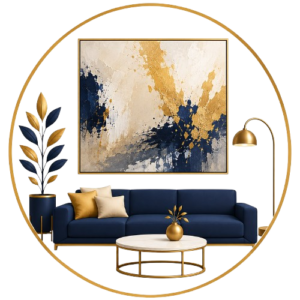
5. Use Statement Wall Art
A modern room doesn’t need dozens of decorations.
One carefully selected artwork can provide the visual focal point.
Consider:
- Large abstract artwork
- Minimalist line art
- Monochrome artwork
- Geometric compositions
- Contemporary landscapes
- Oversized canvas artwork
The artwork should relate to the wall and furniture around it.
For example, a large horizontal canvas can work particularly well above a sofa, while a vertical artwork can emphasise the height of a narrow wall.
Explore Modern Wall Art Ideas → for more artwork inspiration.
6. Use Lighting as Part of the Design
Lighting should be planned alongside furniture and finishes rather than treated as an afterthought.
A modern room can combine:
Ambient lighting
General illumination for the room.
Task lighting
Lighting for activities such as reading, cooking or working.
Accent lighting
Lighting used to highlight artwork, architecture or decorative features.
Pendant lights, wall lights, recessed lighting and floor lamps can all contribute to a modern aesthetic.
Warm lighting is particularly useful when a room contains a lot of white, grey or concrete surfaces.
7. Create Contrast With Black Accents
A neutral modern interior can benefit from small amounts of darker colour.
Try introducing black through:
- Lighting fixtures
- Window frames
- Furniture legs
- Door hardware
- Picture frames
- Decorative objects
Black accents create definition without requiring a completely dark colour scheme.
The key is repetition.
Using the same dark accent in several places makes the room feel intentionally designed.
8. Add Texture to Prevent a Room Feeling Flat
Minimalism doesn’t mean removing every texture.
Layer materials such as:
- Linen
- Wool
- Wood
- Stone
- Glass
- Metal
- Cotton
- Bouclé
- Textured ceramics
For example, a neutral sofa can be made more inviting with textured cushions, a woven rug and a wooden coffee table.
Texture is especially important in monochromatic interiors.
9. Use One Strong Accent Colour
Modern interiors often work well with a restrained colour palette.
Start with a neutral base and introduce one accent colour.
For example:
Warm white + beige + olive
or
Grey + white + deep blue
or
Taupe + cream + terracotta
You can repeat the accent colour through artwork, cushions, rugs and small accessories.
This creates visual continuity without making the room overly colourful.
10. Make Storage Part of the Architecture
Visible clutter can quickly undermine a modern interior.
Whenever possible, integrate storage into the design.
Consider:
- Built-in wardrobes
- Floating cabinets
- Concealed storage
- Wall-mounted shelving
- Storage benches
- Closed media units
Built-in storage can also make a small home feel more spacious because fewer objects remain visually exposed.
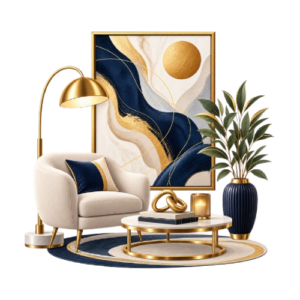
11. Create a Modern Living Room
The living room is often the most visible space in a home, making it an ideal place to establish your modern design language.
Consider:
- A streamlined sofa
- Low-profile furniture
- A simple rug
- One large artwork
- A sculptural coffee table
- Layered lighting
- Natural wood accents
Avoid making every item contemporary.
A modern sofa paired with vintage-inspired artwork or natural materials can create a more interesting interior.
12. Design a Modern Bedroom
A modern bedroom should feel calm rather than overly clinical.
Use:
- Soft neutral walls
- Simple bedside tables
- Upholstered furniture
- Layered bedding
- Warm lighting
- Minimal artwork
- Natural textures
A large artwork above the bed can become the focal point without requiring many decorative objects.
For more ideas, explore Bedroom Wall Art Ideas →.
13. Create a Modern Kitchen
A modern kitchen combines visual simplicity with efficient functionality.
Popular elements include:
- Handleless cabinets
- Integrated appliances
- Simple cabinet fronts
- Stone or engineered worktops
- Pendant lighting
- Open shelving
- Minimal hardware
Wood cabinetry can soften an otherwise contemporary kitchen.
A contrasting island can also create a strong visual anchor.
For smaller homes, focus on vertical storage and efficient work surfaces rather than adding unnecessary cabinetry.
14. Design a Modern Home Office
A modern home office should be practical but visually calm.
Choose:
- A simple desk
- Comfortable ergonomic seating
- Integrated storage
- Minimal accessories
- Good task lighting
- One or two pieces of artwork
A large artwork behind the desk can create a strong background for video calls.
Avoid placing too many small decorative items around the workspace because they can create visual distraction.
For more workspace inspiration, see Office Wall Art Ideas →.
15. Bring Nature Into the Interior
Modern homes benefit from natural elements.
Add:
- Indoor plants
- Natural wood
- Stone
- Woven materials
- Botanical artwork
- Natural textiles
Plants can soften clean architectural lines and introduce colour without disrupting a restrained palette.
Large botanical artwork can create a similar effect where maintaining real plants is difficult.
Explore Floral & Botanical Wall Art Ideas → for more inspiration.
Modern Interior Design Ideas by Room
A consistent modern style can be carried throughout the house while allowing each room to serve a different purpose.
Modern Living Room
Prioritise comfortable seating, clear circulation and one strong focal point.
A large artwork above the sofa can anchor the room while a rug helps define the seating area.
Modern Bedroom
Keep the palette calm and use texture to create warmth.
Choose fewer decorative pieces and focus on comfortable lighting and balanced furniture placement.
Modern Kitchen
Prioritise efficient storage, clean cabinet lines and practical work surfaces.
Use lighting and materials to introduce character rather than excessive decoration.
Modern Dining Room
A simple dining table, sculptural lighting and one large artwork can create an elegant modern composition.
Modern Home Office
Combine functional storage with a restrained colour palette.
Choose artwork that adds personality without becoming distracting.
Modern Hallway
Use the narrow space efficiently with a mirror, vertical artwork, wall lighting or a slim console.
Modern Interior Colour Ideas
Colour is one of the easiest ways to establish a modern aesthetic.
Warm Neutrals
Warm white, beige, cream and taupe create a softer interpretation of modern design.
These colours work particularly well with wood and natural textiles.
Grey
Grey remains a versatile modern colour.
Combine light grey with white and natural wood for a brighter interior, or use charcoal accents for stronger contrast.
White
White can make modern spaces feel larger and brighter.
To prevent a white room from feeling sterile, introduce:
- Wood
- Plants
- Textiles
- Artwork
- Warm lighting
Black
Black works best as an accent in many modern interiors.
Use it through furniture, lighting, frames, doors or architectural details.
Green and Blue
Muted green and blue can introduce colour while maintaining a sophisticated atmosphere.
Use them through artwork, furniture, textiles or an accent wall.
Modern Interior Design With Natural Materials
Natural materials can make contemporary interiors feel warmer and more sophisticated.
Wood
Adds warmth and organic texture.
Stone
Creates a durable and architectural appearance.
Linen
Adds softness to furniture and window treatments.
Wool
Works particularly well in rugs and textiles.
Rattan and Woven Materials
Introduce texture and a more relaxed character.
Glass
Helps maintain visual openness.
Metal
Adds definition and contemporary contrast.
The strongest interiors usually combine several materials rather than relying on one finish throughout the entire room.
Modern vs Contemporary Interior Design
The terms modern and contemporary are often used interchangeably, but they aren’t exactly the same.
Modern design generally refers to a more defined design philosophy centred on simplicity, function and clean forms.
Contemporary design is more fluid and can change with current trends.
A modern room might use:
- Clean-lined furniture
- Natural wood
- Neutral colours
- Minimal decoration
A contemporary room might additionally introduce:
- Curved furniture
- Current materials
- Sculptural forms
- Stronger contrasts
- Newer design trends
Both approaches can overlap, and many homes successfully combine elements of each.
For broader inspiration, explore Home Interior Design Ideas →.
How to Make Modern Interiors Feel Warm
One of the most common concerns about modern design is that it can feel cold.
You can prevent this by combining clean forms with softer elements.
Add warm wood
Wood immediately introduces natural warmth.
Use warm lighting
Choose lighting that creates a comfortable atmosphere rather than harsh illumination.
Add textiles
Rugs, curtains, cushions and upholstered furniture soften hard surfaces.
Introduce plants
Greenery adds life and natural colour.
Display artwork
Artwork can introduce personality and colour without adding visual clutter.
Leave some imperfection
A room doesn’t need to look perfectly symmetrical or showroom-like.
Personal objects can make a modern home feel lived-in.
How to Make Modern Interior Design Look Expensive
A premium modern interior is usually more about proportion and restraint than expensive decoration.
Focus on:
- Correct furniture scale
- High-quality-looking finishes
- Consistent materials
- Good lighting
- Large-scale artwork
- Clean lines
- Limited colours
- Intentional negative space
Instead of filling a wall with many small decorations, consider one substantial artwork with enough space around it.
This creates a stronger visual hierarchy.
Modern Interior Design for Small Homes
Modern design can work particularly well in apartments and compact homes because it naturally prioritises function.
Use:
- Multi-functional furniture
- Built-in storage
- Light colours
- Mirrors
- Floating furniture
- Minimal decoration
- Consistent flooring
- Vertical storage
Avoid buying furniture simply because it looks attractive.
Measure every major piece before purchasing it.
A beautiful oversized sofa can quickly overwhelm a small living room.
Modern Interior Design for Large Homes
Larger homes require a different approach.
The challenge isn’t creating space but making the space feel connected.
Use:
- Larger furniture
- Oversized artwork
- Statement lighting
- Large rugs
- Architectural features
- Defined seating zones
Avoid filling large rooms with many small objects.
Instead, increase the scale of the major elements.
Common Modern Interior Design Mistakes
Making Everything White
A completely white room can feel flat.
Introduce texture and natural materials.
Using Too Much Grey
Grey can become monotonous when every surface uses the same tone.
Add warmth through wood, textiles or accent colours.
Choosing Furniture Without Measuring
Always check dimensions before purchasing.
Making the Room Too Minimal
A modern interior should still feel comfortable and personal.
Ignoring Lighting
Poor lighting can undermine an otherwise beautiful design.
Using Too Many Trends
Choose design elements that will remain useful beyond the current trend cycle.
Filling Every Wall
Modern design benefits from negative space.
Choosing Artwork That Is Too Small
Artwork should relate to the wall and furniture scale.
How to Plan a Modern Interior Design
Before making major purchases, create a simple plan.
Step 1: Measure the room
Record wall dimensions, ceiling height, doors and windows.
Step 2: Define your style
Choose three words that describe the desired result.
For example:
Modern + warm + minimalist
Step 3: Choose your colour palette
Select a neutral base and one or two supporting colours.
Step 4: Plan furniture
Start with the largest pieces and work down to smaller items.
Step 5: Plan lighting
Combine ambient, task and accent lighting.
Step 6: Add artwork
Choose artwork according to the room’s scale and colour palette.
Step 7: Add texture
Introduce rugs, curtains, cushions, plants and natural materials.
Step 8: Remove unnecessary items
Step back and identify anything that doesn’t contribute to the overall design.
Frequently Asked Questions About Modern Interior Design
What is modern interior design?
Modern interior design focuses on clean lines, functional furniture, simple forms, restrained decoration and carefully considered materials and colours.
How can I make my house look modern?
Start with a clear layout, clean-lined furniture, a controlled colour palette, good lighting, natural materials and minimal but meaningful decoration.
What colours are best for modern interiors?
Warm white, beige, taupe, grey and soft neutral shades are versatile foundations. Black, blue, green and terracotta can be introduced as accents.
How do I make a modern home feel cosy?
Add warm wood, layered lighting, rugs, curtains, textured fabrics, plants and personal artwork.
What is the difference between modern and contemporary interiors?
Modern design refers to a more defined design approach, while contemporary design evolves with current trends. The two can overlap in many homes.
Can modern interior design work in a small home?
Yes. Modern design’s emphasis on functionality, storage and clean visual lines can work particularly well in compact spaces.
How do I choose artwork for a modern home?
Look for artwork that complements the room’s scale, furniture and colour palette. Abstract, minimalist, geometric, monochrome and contemporary artwork can all work well.
Does modern interior design have to be minimalist?
No. Modern interiors can include comfortable furniture, artwork, plants, books, textiles and decorative objects. The key is maintaining visual balance and avoiding unnecessary clutter.
Create a Modern Home That Feels Personal
The best modern interior design is not simply a collection of contemporary furniture and neutral walls. It is a carefully balanced combination of function, proportion, materials, colour, lighting and personality.
Start with the structure of the room. Choose furniture that fits the space, establish a restrained colour palette and introduce natural materials to create warmth. Then use lighting, textiles and artwork to give the interior its individual character.
A modern home can be minimal without feeling empty, sophisticated without feeling formal and contemporary without becoming overly dependent on trends.
For more Canvasora inspiration, explore:
- Home Interior Design Ideas for Every Room →
- Modern Wall Art Ideas →
- Abstract Wall Art Ideas →
- Canvas Wall Art Ideas →
- Large & Oversized Wall Art Ideas →
- Black and White Wall Art Ideas →
- Colourful Wall Art Ideas →
- Living Room Wall Art Ideas →
- Bedroom Wall Art Ideas →
- Office Wall Art Ideas →
Your home doesn’t need more decoration simply for the sake of decoration. It needs the right combination of space, function, materials and carefully chosen details to create a modern interior that feels genuinely yours.