
Interior Design Ideas by Room: Stylish & Practical Ideas for Every Space

A well-designed home is not created by decorating every room in exactly the same way. Each space has a different purpose, so successful room interior design begins with understanding how that room will actually be used.
A living room needs comfortable seating and a strong focal point. A bedroom should feel calm and restful. A kitchen needs efficient storage and practical work zones, while a home office needs focused lighting and an organized layout.
At the same time, the rooms should feel connected through a consistent design language.
This guide brings together interior design ideas by room to help you plan each part of your home—from the entrance and living room to bedrooms, kitchen, dining area, bathroom, office and balcony.
How to Approach Interior Design by Room
Before choosing furniture or décor, consider five basic questions for every room:
- What is the primary purpose of the room?
- Who will use it?
- How much space is available?
- How much natural light does it receive?
- What needs to be stored there?
Once these questions are answered, choose the room’s layout, furniture, colours, lighting and décor.
A useful approach is to keep the overall home cohesive while allowing each room to have its own personality.
1. Living Room Interior Design Ideas
The living room is often the main social space in a home, so it should balance comfort, conversation and visual appeal.
Create a Clear Seating Arrangement
Start with the sofa and arrange additional seating around a central point such as a coffee table, fireplace, TV wall or artwork.
Avoid automatically pushing every piece of furniture against the walls.
Establish a Focal Wall
A living room can benefit from one strong visual feature.
Options include:
- Large artwork
- TV wall
- Textured wall
- Fireplace
- Gallery wall
- Statement shelving
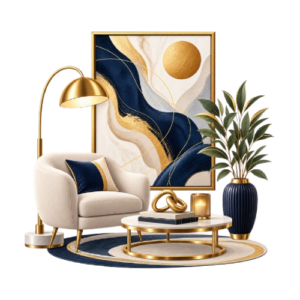
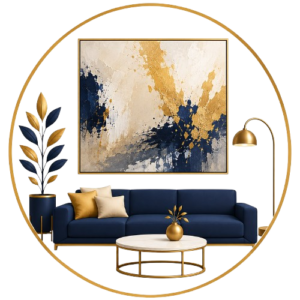
A large painting above the sofa can add colour and personality without requiring major renovation.
For more inspiration, explore our Living Room Wall Art Ideas guide.
Layer the Lighting
Combine ceiling lighting with floor lamps, table lamps and accent lighting where appropriate.
This allows the atmosphere to change from bright daytime use to a warmer evening setting.
Keep Furniture Proportional
The sofa, coffee table and rug should relate to one another in scale. Oversized furniture can make a small room feel cramped, while undersized pieces can make a large room feel unfinished.
2. Bedroom Interior Design Ideas
The bedroom should feel calm, comfortable and personal.
Choose Relaxing Colours
Warm white, beige, soft grey, muted blue, sage and other understated colours can create a restful atmosphere.
Make the Bed the Main Focal Point
The bed is naturally the visual centre of the room.
Use an upholstered headboard, layered bedding, bedside lighting or artwork to strengthen the focal point.
Add Practical Storage
Use wardrobes, drawers and under-bed storage to keep everyday items organized.
Full-height wardrobes can be especially useful when floor space is limited.
Use Artwork Thoughtfully
A large artwork above the bed can provide visual interest while keeping the rest of the room relatively simple.
Explore our Bedroom Wall Art Ideas guide for more inspiration.
3. Kitchen Interior Design Ideas
A kitchen should be designed around workflow, storage and everyday convenience.
Plan the Layout First
Depending on the space, consider:
- L-shaped kitchens
- U-shaped kitchens
- Parallel kitchens
- Single-wall kitchens
- Open-plan kitchens
The ideal layout allows easy movement between food preparation, cooking, washing and storage areas.
Maximize Storage
Use drawers, tall cabinets, corner storage and dedicated appliance spaces.
Keep frequently used items accessible and store occasional-use items in less convenient areas.
Create a Cohesive Material Palette
Choose a controlled combination of cabinetry, countertop and backsplash finishes.
Natural wood, stone, ceramic and warm neutral colours can add character without making the kitchen visually busy.
4. Dining Room Interior Design Ideas
The dining room should feel comfortable enough for everyday meals while also being suitable for entertaining.
Choose the Table First
The dining table determines much of the room’s layout.
Leave sufficient space around it for chairs to be pulled out comfortably and for people to move around the room.
Add Statement Lighting
A pendant or chandelier positioned above the dining table can create an immediate focal point.
Use Wall Art
A dining room often has a large wall that can benefit from artwork.
Abstract, botanical, landscape or colourful artwork can complement the room’s palette and create a more finished appearance.
5. Drawing Room Interior Design Ideas
In homes where the drawing room functions as a more formal entertaining space, the design can be slightly more refined than the everyday family lounge.
Use Balanced Furniture
Arrange seating to encourage conversation rather than orienting every chair toward a television.
Introduce a Strong Centrepiece
A coffee table, rug, sculpture, statement light or artwork can anchor the room.
Choose Refined Wall Décor
A large painting or carefully planned gallery wall can give the drawing room a sophisticated focal point.
For a dedicated guide, explore our Drawing Room Interior Design Ideas page.
6. Home Office Interior Design Ideas
A home office should support concentration while still feeling comfortable.
Position the Desk Carefully
Where possible, place the desk near natural light without creating screen glare.
Prioritize Storage
Use shelves, cabinets or drawers to keep paperwork and equipment organized.
Add Comfortable Lighting
Combine natural light with focused task lighting for darker hours.
Personalize the Walls
Artwork, photography or a small gallery arrangement can make the workspace feel more personal.
For additional inspiration, explore our Office Wall Art Ideas guide.
7. Bathroom Interior Design Ideas
Bathrooms benefit from simple layouts and easy-to-maintain materials.
Keep the Palette Calm
White, cream, beige, grey and natural stone colours can create a clean atmosphere.
Use Mirrors Strategically
A large mirror can make a compact bathroom feel more spacious while improving the usefulness of the vanity area.
Add Texture
Stone, ceramic, wood-look finishes and textured tiles can add depth.
Keep Counters Clear
Use drawers and cabinets to store everyday products rather than allowing the vanity to become cluttered.
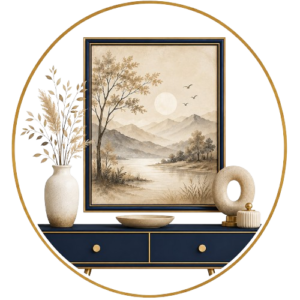
8. Entryway & Foyer Interior Design Ideas
The entrance creates the first impression of the home.
Even a small entryway can become functional and attractive.
Consider:
- Slim console table
- Mirror
- Artwork
- Shoe storage
- Small bench
- Hooks
- Decorative lighting
If the area is narrow, prioritize vertical storage and keep the walking path clear.
A statement artwork or mirror can create a strong focal point without consuming floor space.
9. Balcony Interior Design Ideas
A balcony can become a valuable extension of your living space.
Add Compact Furniture
Choose seating appropriate to the available floor area.
Introduce Plants
Plants can soften hard surfaces and create a more relaxing atmosphere.
Add Lighting
Small outdoor-rated lights can make the balcony more useful after sunset.
Keep the Floor Open
Avoid filling every corner with furniture. Maintaining clear floor space makes the balcony feel larger and easier to use.
10. Guest Room Interior Design Ideas
A guest room should feel welcoming without being over-personalized.
Provide:
- Comfortable bed
- Adequate storage
- Bedside lighting
- Curtains
- Mirror
- Seating where space permits
- Simple artwork
Keep the colour palette calm and avoid excessive decorative objects.
11. Children’s Room Interior Design Ideas
Children’s rooms need to balance play, sleep, storage and study.
Use furniture that can adapt as the child grows.
Consider:
- Modular storage
- Easy-to-clean surfaces
- Study desk
- Open shelving
- Soft furnishings
- Age-appropriate artwork
Colour can be introduced through artwork, bedding and accessories rather than permanent finishes that may quickly become outdated.
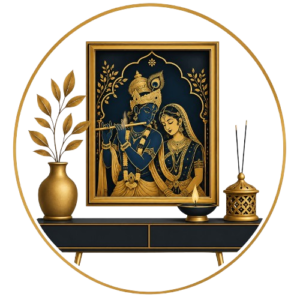
12. Puja Room Interior Design Ideas
A puja room should feel calm, organized and visually uncluttered.
Natural wood, warm lighting, subtle colours and practical storage can create a peaceful environment.
Where the room is very small, use vertical storage and keep decorative elements selective.
Explore our Puja Room Interior Design Ideas guide for more detailed inspiration.
13. Study Room Interior Design Ideas
A study room should support focused work and reading.
Place the desk where natural light is useful, then supplement it with task lighting.
Use shelves or closed storage to keep books and supplies organized.
A neutral wall palette combined with a small amount of artwork can create an environment that feels focused without becoming sterile.
14. Utility & Laundry Area Interior Design Ideas
Even functional areas benefit from good planning.
Use vertical storage, wall-mounted racks and clearly organized cabinets to maximize available space.
Keep frequently used cleaning products accessible while storing less frequently used items higher up.
The most important goal is efficient use of space rather than decorative complexity.
15. Staircase & Landing Interior Design Ideas
Staircases and landings are often overlooked.
They can become strong transitional areas through:
- Artwork
- Gallery walls
- Mirrors
- Wall lighting
- Textured finishes
- Decorative niches
A staircase wall is particularly suitable for a carefully planned gallery arrangement.
For ideas on creating one, see our Gallery Wall Ideas guide.
Choosing Colours for Different Rooms
Different rooms can use different colour intensities while still feeling connected.
Living Room
Warm neutrals, earthy colours, muted greens, blue and carefully selected stronger accents can work well.
Bedroom
Choose softer colours such as cream, beige, warm grey, sage or muted blue.
Kitchen
White, cream, grey, wood tones and muted greens are versatile choices.
Dining Room
The dining room can support deeper colours such as navy, olive, charcoal or terracotta.
Home Office
Neutral colours with blue, green or warm wood accents can create a focused but comfortable atmosphere.
Bathroom
Light neutrals and natural stone tones can make the space feel clean and spacious.
The key is not to use exactly the same colour in every room. Instead, repeat selected tones throughout the home.
Furniture Ideas for Every Room
Furniture should be selected according to function, room dimensions and circulation.
Living Room
Prioritize comfortable seating, a suitable coffee table and practical storage.
Bedroom
Focus on the bed, wardrobes, bedside tables and optional seating.
Kitchen
Prioritize storage, work surfaces and efficient movement.
Dining Room
Choose a table and chairs that fit comfortably within the room.
Home Office
Invest in a suitable desk, chair and storage.
Entryway
Use slim furniture that provides useful storage without obstructing circulation.
Before purchasing anything, measure the room and mark the approximate furniture footprint.
Lighting Ideas by Room
Lighting can completely change the appearance of an interior.
Living Room
Use ceiling lights, floor lamps, table lamps and accent lighting.
Bedroom
Use bedside lamps, soft ceiling lighting and indirect accent lighting.
Kitchen
Combine general lighting with task lighting under cabinets or around preparation areas.
Dining Room
A pendant or chandelier above the table can become the main visual feature.
Home Office
Use focused task lighting that illuminates the desk without creating excessive glare.
Bathroom
Use effective vanity lighting alongside general illumination.
A combination of ambient, task and accent lighting generally creates a more flexible interior than relying on one ceiling fixture.
Wall Décor Ideas by Room
Wall décor should support the purpose and proportions of the room.
Living Room
Large abstract paintings, gallery walls, landscapes and colourful artwork can work well.
Bedroom
Choose calming artwork, botanical pieces, landscapes or understated abstract art.
Dining Room
Use artwork to add colour and personality to otherwise neutral walls.
Home Office
Use motivational, abstract, botanical or minimalist artwork according to your taste.
Entryway
A mirror or statement artwork can create an immediate focal point.
Staircase
A gallery wall can turn an overlooked transitional area into a memorable feature.
For more inspiration, explore our Modern Wall Art Ideas, Nature & Landscape Wall Art Ideas, Colourful Wall Art Ideas and Black and White Wall Art guides.
How to Make Every Room Feel Connected
One of the biggest challenges in whole-home interior design is maintaining consistency.
You can create cohesion by repeating:
- One or two wood finishes
- Similar metal finishes
- A consistent base wall colour
- Complementary accent colours
- Similar flooring
- Related lighting styles
- Repeated artwork themes
- Consistent textile tones
The rooms do not need to look identical.
Think of the home as a collection of individual spaces that belong to the same visual story.
Interior Design Ideas for Small Rooms
Small rooms require careful editing.
Use furniture that fits the available space and avoid filling every empty corner.
Useful approaches include:
- Wall-mounted storage
- Full-height cabinets
- Mirrors
- Light colours
- Furniture with visible legs
- Multipurpose pieces
- Vertical shelving
- Large but carefully selected artwork
A common mistake is assuming that small rooms need many tiny decorative objects. In reality, one strong focal point can often create a cleaner and more sophisticated result.
Interior Design Ideas for Large Rooms
Large rooms require the opposite approach.
Instead of trying to fill every empty area, create distinct functional zones.
For example, a large living room could include:
- Main seating area
- Reading corner
- Conversation area
- Small workspace
Use rugs, lighting and furniture placement to visually define each zone.
Large walls can also accommodate appropriately scaled artwork.
Explore our Large & Oversized Wall Art Ideas guide for more ideas.
How to Make Your Home Look More Luxurious
Luxury does not require excessive decoration.
Focus on:
- Good proportions
- Consistent materials
- Layered lighting
- Quality-looking textiles
- Clean storage
- Well-fitted curtains
- Statement furniture
- Appropriately scaled artwork
- A restrained colour palette
- Negative space
A room often looks more premium when there are fewer, better-chosen elements.
Common Room Interior Design Mistakes
Avoid these common mistakes:
- Buying furniture before measuring
- Choosing décor before establishing the layout
- Using too many colours
- Ignoring lighting
- Leaving large walls with undersized artwork
- Filling every corner
- Creating rooms with completely unrelated styles
- Forgetting storage
- Blocking natural light
- Choosing furniture that is too large
- Using decorative pieces without considering scale
Good design is not about adding more. It is about making the right elements work together.
How to Plan Your Home Room by Room
If you are designing an entire home, work through the spaces systematically.
Step 1: Measure Every Room
Record dimensions, doors, windows and important architectural features.
Step 2: Define the Purpose
Decide exactly how each room will be used.
Step 3: Create a Furniture Layout
Plan circulation before buying furniture.
Step 4: Establish a Whole-Home Palette
Choose a main neutral and a few complementary colours.
Step 5: Select Materials
Repeat selected wood, stone, metal and fabric finishes.
Step 6: Plan Lighting
Identify ambient, task and accent lighting requirements.
Step 7: Choose Focal Points
Every major room should have one clear visual anchor.
Step 8: Add Wall Art
Select artwork according to the wall’s size, furniture arrangement and room palette.
Step 9: Add Accessories
Use plants, cushions, ceramics, books and decorative objects to finish the space.
Step 10: Edit
Remove anything that feels unnecessary or visually distracting.
Frequently Asked Questions
What is room interior design?
Room interior design is the process of planning and decorating individual spaces according to their function, size, layout, lighting and aesthetic requirements while maintaining consistency with the rest of the home.
What should I design first in a room?
Start with the layout and major furniture pieces. Once circulation and function are established, choose colours, lighting, artwork and accessories.
How do I make different rooms feel connected?
Use a consistent base palette, repeat selected materials and finishes, and maintain similar design principles throughout the home. Each room can still have its own accent colours and personality.
How do I make a small room look bigger?
Use appropriate furniture proportions, light colours, mirrors, vertical storage, uncluttered surfaces and clear circulation paths.
How do I decorate a large empty wall?
Choose artwork according to the wall and furniture scale. A large statement artwork, triptych or gallery wall can work well depending on the room.
What is the best colour for a home interior?
There is no single best colour. Warm white, cream, beige, greige and light grey are versatile foundations, while blue, green, terracotta, charcoal and other colours can be used as accents.
How important is lighting in interior design?
Lighting is extremely important because it affects both functionality and atmosphere. Combining ambient, task and accent lighting provides greater flexibility.
Should every room have the same interior style?
No. Rooms can have different levels of formality or individual accents. However, repeating colours, materials and design elements helps the home feel cohesive.
What artwork should I use in my home?
Choose artwork according to the room’s purpose, wall size, furniture arrangement and colour palette. Abstract, botanical, nature, landscape, black-and-white and colourful artwork can all work depending on the interior.
How can I make my home look expensive?
Focus on proportion, lighting, consistent finishes, quality-looking materials, clean storage and carefully selected statement pieces rather than excessive decoration.
Final Thoughts
Great interior design by room starts with a simple principle: every room should work well before it is made beautiful.
Plan the layout first, choose furniture according to scale, provide enough storage and make lighting part of the design from the beginning. Then use colour, texture, artwork and accessories to create personality.
Your living room does not need to look exactly like your bedroom, and your kitchen does not need to follow the same decorative approach as your dining room. What matters is that the rooms share enough colours, materials and design principles to feel like parts of the same home.
Whether you are furnishing a compact apartment, a 2BHK, a large family house or a villa, thoughtful room-by-room planning can turn every space into a functional and visually appealing part of the home.
Explore more Canvasora inspiration:
- Modern Home Interior Design Ideas for Every Room
- Modern Interior Design Ideas for Home
- Minimalist Home Interior Design Ideas
- Scandinavian Interior Design Ideas
- Contemporary Interior Design Ideas
- Traditional & Classic Interior Design Ideas
- Rustic & Modern Rustic Interior Design Ideas
- Luxury Home Interior Design Ideas
- Villa Interior Design Ideas
- 2BHK Home Interior Design Ideas
- Living Room Wall Art Ideas
- Bedroom Wall Art Ideas
- Office Wall Art Ideas
- Gallery Wall Ideas
- Modern Wall Art Ideas
- Canvas Wall Art Ideas
- Unique & Creative Wall Decor Ideas
Give every room a stronger visual identity with thoughtfully selected wall art from Canvasora.