
Easy Wall Painting Ideas for Beginners: Simple DIY Designs & Step-by-Step Tips


You do not need to be a professional artist to transform a blank wall. With the right design, basic painting supplies, and a little preparation, easy wall painting can turn an ordinary room into a more personal and creative space.
The easiest projects usually rely on simple shapes, clean lines, repeated patterns, or uncomplicated illustrations. Geometric arches, leaves, clouds, rainbows, abstract forms, mountains, flowers, and line drawings can all create an impressive feature wall without requiring advanced artistic skills.
The key is to choose a design that matches your experience, plan the composition before painting, and work from large areas toward smaller details.
In this guide, you will find practical easy wall painting ideas, beginner-friendly techniques, room-specific inspiration, colour suggestions, and mistakes to avoid.
What Makes a Wall Painting Easy for Beginners?
A beginner-friendly wall painting generally has:
- Simple shapes
- Limited colours
- Minimal fine detail
- Clear outlines
- Repeated patterns
- Easy-to-measure proportions
- A manageable wall size
You can make almost any concept easier by simplifying its shapes.
For example, instead of painting a highly realistic tree, create a clean trunk with simplified branches and leaves. Instead of painting a detailed landscape, use mountains, a sun, and a few clouds.
Simple does not mean boring. Good composition can make a straightforward design look sophisticated.
20 Easy Wall Painting Ideas
1. Geometric Colour Blocks
Geometric shapes are among the easiest designs to paint.
Try combining:
- Squares
- Rectangles
- Circles
- Arches
- Triangles
- Half circles
Choose two or three colours that already exist in your room and use painter’s tape to create clean boundaries.
2. Painted Arch
A large painted arch can create a beautiful focal point behind a bed, sofa, console, or desk.
Use a soft neutral for a subtle appearance or a stronger colour for more contrast.
You can create the curved top using a simple string-and-pencil method or a suitable template.
3. Simple Botanical Branch
A branch with leaves is an excellent introduction to freehand wall painting.
Start by sketching the main branch lightly in pencil. Add simplified leaves rather than trying to reproduce every natural detail.
Black, olive, sage, brown, or muted green can work particularly well.
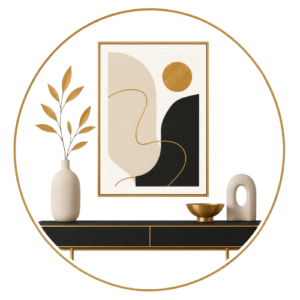
4. Abstract Organic Shapes
Create overlapping organic shapes with curved edges.
There is no need for perfect symmetry. The objective is to create a balanced composition that works with the room.
Use a restrained palette for a modern appearance.
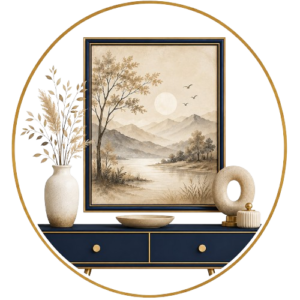
5. Simple Mountain Wall Painting
Mountains can be reduced to a few triangular or curved silhouettes.
Create layers using different shades to introduce depth.
This works particularly well in bedrooms, children’s rooms, reading corners, and creative spaces.
6. Clouds and Sky
A simple sky mural can transform a plain wall.
Paint a pale blue background and add simplified white clouds. For a more subtle approach, paint only a few clouds directly onto a white or pale-coloured wall.
7. Rainbow Wall Painting
A rainbow is easy to recognise and can be simplified into broad curved bands.
It works especially well in:
- Children’s bedrooms
- Nurseries
- Playrooms
- Kindergarten spaces
Use a muted palette if you want the design to feel more suitable for a sophisticated interior.
8. Simple Flower Wall Painting
Flowers can be painted using basic circles, petals, stems, and leaves.
Instead of painting many tiny flowers, create one or two large flowers as a statement feature.
This reduces the amount of detail while increasing visual impact.
9. Heart Wall Painting
A heart is one of the simplest shapes to reproduce.
Try:
- One oversized heart
- Several small hearts
- An outlined heart
- Geometric hearts
- A heart combined with flowers
A large hand-painted heart can work in bedrooms, children’s rooms, or creative corners.
10. Minimalist Line Drawing
Line drawings are ideal if you want a modern result with minimal paint.
Simple faces, bodies, flowers, leaves, birds, or abstract figures can be created using one continuous line.
Lightly sketch the design first and then trace it using a small brush or paint marker.
11. Simple Tree and Birds
A tree silhouette with a few flying birds can become an attractive feature wall.
Keep the branches relatively simple and allow plenty of empty wall around the design.
This is especially effective on large walls where small decorative objects might otherwise disappear.
12. Feather Wall Painting
A feather is an elegant beginner-friendly motif.
Sketch the central stem first and add individual feather sections around it. You can use one colour for a minimalist effect or subtle tonal variations for more depth.
13. Butterfly Wall Painting
Butterflies can be simplified into symmetrical silhouettes.
Try painting:
- One oversized butterfly
- Three or four butterflies
- A trail of small butterflies
- Butterflies around a botanical branch
Use painter’s tape or a stencil if you want precise symmetry.
14. Simple Panda Painting
A panda can be created using basic black-and-white shapes, making it suitable for children’s rooms.
Add bamboo or simple leaves around the animal to create a more complete composition without adding excessive detail.
15. Simple Mandala
Mandalas appear complex but can be simplified into repeated circles, petals, dots, and lines.
Start at the centre and work outward while maintaining symmetry.
For beginners, a smaller mandala is easier to control than a wall-sized design.
16. Painted Sun
A simple sun can be created using a circle and repeated rays.
Try an earthy terracotta, mustard, beige, or muted yellow for a modern interior.
A sun can also become the centre of a larger abstract landscape.
17. Simple Abstract Face
Create a minimalist face using curved lines.
You do not need realistic proportions. The appeal comes from the simplicity of the composition.
Black line art against a warm white or beige wall can look particularly refined.
18. Two-Tone Wave
Paint flowing waves across part of a wall using two complementary colours.
This can visually connect a children’s room, creative workspace, or modern living space without requiring detailed artwork.
19. Painted Window Illusion
Create a simple faux window using architectural lines and a landscape or sky scene.
This technique can make an enclosed corner more visually interesting.
Keep the perspective relatively simple if you are a beginner.
20. Stencil Wall Pattern
Stencils allow you to create repeated artwork without needing advanced freehand skills.
Possible patterns include:
- Leaves
- Geometric shapes
- Flowers
- Stars
- Circles
- Moroccan-inspired motifs
- Abstract patterns
Keep the spacing consistent for a professional-looking result.
Easy Wall Painting Ideas by Room
The same technique can look completely different depending on where you use it.
Bedroom
Bedrooms generally benefit from calming designs.
Good choices include:
- Painted arches
- Botanical branches
- Feathers
- Simple landscapes
- Abstract shapes
- Line drawings
A design behind the bed can function as a visual alternative to a traditional headboard.
Living Room or Hall
The living room can handle stronger visual statements.
Try:
- Large geometric compositions
- Abstract shapes
- Oversized botanical artwork
- Tree-and-bird murals
- Colour-blocked walls
Place the main design where it naturally becomes part of the room’s focal point.
Children’s Room
Children’s rooms allow more playful ideas.
Consider:
- Rainbows
- Clouds
- Animals
- Butterflies
- Stars
- Mountains
- Trees
- Cute characters
Keep the artwork visually engaging but avoid filling every wall with competing designs.
Kindergarten
For a wall painting for kindergarten, combine simple artwork with educational themes.
Alphabet letters, numbers, animals, planets, shapes, trees, and colourful patterns can make walls more engaging.
Make designs large and easy to recognise from a distance.
Home Office
For a home office, choose artwork that adds personality without becoming distracting.
Simple geometric forms, abstract lines, botanical artwork, subtle landscapes, or a restrained accent wall can work well.
Entryway
A small geometric composition, painted arch, botanical motif, or simple welcome design can make an entryway feel more intentional.
Easy Wall Painting Ideas Based on Skill Level
Very Easy
Start with:
- Stripes
- Dots
- Colour blocks
- Arches
- Simple circles
- Two-tone patterns
Beginner
Move toward:
- Leaves
- Flowers
- Clouds
- Mountains
- Butterflies
- Feathers
- Simple animals
Confident Beginner
Try:
- Large botanical murals
- Mandalas
- Character-inspired designs
- Landscape scenes
- Line-art portraits
- Simple 3D effects
More Advanced
Once you are comfortable, explore:
- Detailed murals
- Realistic animals
- Fresco-inspired artwork
- Graffiti
- Complex landscapes
- Perspective-based designs
How to Paint a Wall Design Step by Step
The easiest way to achieve a clean result is to separate the project into stages.
Step 1: Choose the Wall
Select a wall that has enough open space for your design.
Avoid starting on a wall crowded with furniture, switches, shelves, or architectural interruptions.
Step 2: Measure the Space
Measure the wall and identify its centre.
Consider the position of:
- Furniture
- Windows
- Doors
- Electrical outlets
- Lighting
- Existing décor
Step 3: Choose Your Design
Select something appropriate for your skill level.
If you are unsure, start with a simple geometric or line-based design.
Step 4: Test Your Colours
Paint samples on a small area and observe them at different times of day.
A colour can look very different in natural daylight compared with warm artificial lighting.
Step 5: Prepare the Surface
Clean the wall and repair visible holes or cracks.
Allow repairs to dry before painting.
Step 6: Sketch the Design
Use a pencil to create a light outline.
Do not press too hard because heavy pencil marks may remain visible beneath lighter paint.
Step 7: Protect the Area
Move furniture away from the wall and cover the floor.
Use painter’s tape around areas that need clean edges.
Step 8: Paint the Largest Areas
Start with the background or largest shapes.
Allow each layer to dry according to the paint manufacturer’s instructions.
Step 9: Add Details
Once the major shapes are complete, add outlines and smaller details.
Step 10: Step Back and Inspect
Do not evaluate the painting only from close range.
Stand several feet away and check the overall balance.
Step 11: Make Final Corrections
Clean up edges and correct small imperfections once the paint has dried sufficiently.
Tools You Need for Easy Wall Painting
You do not need a professional studio.
Basic projects can often be completed with:
- Interior wall paint
- Small paint brushes
- A roller
- Paint tray
- Painter’s tape
- Pencil
- Measuring tape
- Level
- Ruler
- Drop cloth
- Water container
- Cleaning cloth
More detailed designs may benefit from stencils, fine brushes, paint markers, or templates.
How to Make Easy Wall Painting Look Professional
Use a Limited Colour Palette
Two or three coordinated colours are often easier to manage than a large number of shades.
Maintain Consistent Spacing
This is especially important for geometric patterns and repeated motifs.
Use the Right Scale
A large wall needs a design with enough visual weight.
Leave Negative Space
Do not feel obligated to cover the entire wall.
Match the Room
Use existing furniture, flooring, textiles, and artwork as colour references.
Keep Edges Clean
Sharp boundaries can make even a simple design look much more refined.
Work Slowly
Rushing often causes uneven edges, accidental smudging, and inconsistent shapes.
Easy Wall Painting Colour Combinations
Warm Neutral
Cream + Beige + Terracotta
Good for bedrooms, living rooms, and relaxed interiors.
Modern Monochrome
White + Grey + Black
Works well with contemporary furniture and minimalist décor.
Nature Inspired
Sage Green + Cream + Brown
Pairs naturally with wood and botanical décor.
Soft Blue
Off-White + Powder Blue + Muted Green
Suitable for bedrooms and calm living spaces.
Playful
Cream + Yellow + Blue
A good option for children’s spaces and creative rooms.
Earthy
Sand + Terracotta + Olive
Works particularly well with rustic and modern-natural interiors.
Easy Wall Painting for Small Spaces
Small rooms do not require small ideas.
Instead of covering every wall, choose one controlled focal area.
Useful approaches include:
- A painted arch behind the bed
- A small botanical mural
- One geometric corner
- A vertical colour block
- A simple line drawing
- A small wall niche design
Keep the surrounding walls relatively quiet so the painted section remains effective.
Easy Wall Painting for Large Walls
Large walls can support more substantial artwork.
Consider:
- Oversized botanical forms
- Large geometric compositions
- Tree murals
- Abstract landscapes
- Wings
- Large line drawings
- Multi-section colour blocks
Before painting, use masking tape or removable markers to visualise the approximate boundaries of the design.
Easy Wall Painting vs Ready-Made Wall Art
DIY painting gives you the opportunity to create something directly on the wall and customise its size and colour.
However, ready-made wall art can be more practical if you want:
- A professional artwork finish
- Easy installation
- The ability to change the artwork
- No permanent painted design
- Less preparation
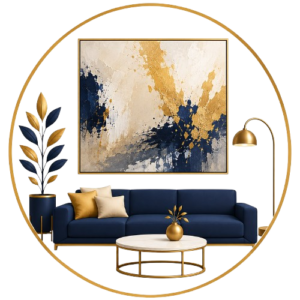
A painted accent wall and framed or canvas artwork can also be used together.
For example, a subtle arch can provide a backdrop for a canvas, while a simple neutral wall can support a larger statement artwork.
Common Beginner Wall Painting Mistakes
Choosing an Overly Complicated Design
Start with something you can realistically complete.
Skipping the Sketch
Even simple artwork benefits from a basic outline.
Using Too Many Colours
Too many colours can make the wall look disconnected from the room.
Ignoring Proportions
A design should be scaled according to the wall and furniture.
Painting on an Unprepared Wall
Uneven surfaces can affect both the appearance and durability of the finished artwork.
Removing Tape Too Late or Too Early
Follow the paint and tape manufacturer’s recommendations to achieve clean edges without damaging the finish.
Forgetting Natural Light
Always check colours in the actual room’s lighting conditions.
Trying to Make Every Wall a Feature Wall
One strong painted wall is often more effective than several competing designs.
10 Quick Beginner Projects to Start With
If you want a project you can realistically tackle this weekend, consider:
- Painted arch
- Two-tone geometric shapes
- Simple botanical branch
- Minimalist face
- Small butterfly composition
- Cloud mural
- Simple mountain scene
- Large heart outline
- Painted sun
- Stencil pattern
Choose the idea that best matches your room, tools, and experience.
Frequently Asked Questions About Easy Wall Painting
What is the easiest wall painting idea for beginners?
Geometric shapes, arches, stripes, colour blocks, simple botanical designs, and line drawings are good starting points because they do not require advanced painting skills.
Can I paint a wall design without artistic experience?
Yes. Start with a simple design, sketch it first, use painter’s tape or stencils where appropriate, and build the painting from large shapes to smaller details.
What paint should beginners use for wall painting?
Use an interior wall paint appropriate for the surface and room. Always follow the manufacturer’s recommendations for preparation, application, drying, and ventilation.
How do I draw a design on a wall before painting?
Lightly sketch it with a pencil, use a grid for larger designs, or use a stencil/template for repeated shapes.
What is an easy wall painting for a bedroom?
Painted arches, leaves, feathers, simple landscapes, abstract shapes, and minimalist line drawings are all suitable options.
What is an easy wall painting for a living room?
Large geometric shapes, abstract forms, botanical branches, and simple murals can create an attractive focal point in a living room.
How do I make a DIY wall painting look expensive?
Focus on clean preparation, good proportions, a restrained colour palette, sharp edges, appropriate scale, and a design that complements the room.
Can I use stencils for wall painting?
Yes. Stencils are particularly useful for repeated patterns, geometric designs, botanical motifs, and beginners who want more consistent shapes.
How long does easy wall painting take?
Simple designs may be completed relatively quickly, while larger murals require more preparation, painting, drying, and detailing. The wall condition and number of coats also affect the timeline.
Can I combine DIY wall painting with wall art?
Yes. A painted wall can provide a backdrop for canvas or framed artwork. The two should share complementary colours and proportions so they do not compete visually.
Final Thoughts
The best easy wall painting projects begin with realistic expectations. You do not need complicated techniques to create a wall that looks thoughtful and stylish.
Start with a simple shape, limited colour palette, and well-planned composition. Once you become comfortable with measuring, sketching, taping, and layering paint, you can gradually move toward more detailed murals and creative wall artwork.
Whether you choose a painted arch, botanical branch, butterfly, feather, mountain scene, geometric pattern, animal, or abstract composition, remember that the wall should work with the rest of the room.
If you enjoy the look of decorative artwork but would rather avoid permanently painting your walls, explore Canvasora’s wall art collections for flexible ways to create a statement without committing to a painted mural.