
Contemporary Interior Design Ideas: 20 Stylish Ways to Create a Modern Home

Contemporary interior design is all about creating a home that feels current, sophisticated, comfortable, and visually balanced. Unlike a design style tied to one historical period, contemporary interiors evolve with changing materials, colours, furniture shapes, and lifestyle preferences.
A contemporary home can combine clean architectural lines with soft fabrics, natural materials, statement lighting, artwork, and carefully chosen decorative elements. The result is a space that feels modern without becoming overly rigid or cold.
Whether you are updating a living room, designing a new apartment, renovating a 2BHK, or planning a larger house, contemporary interior design offers plenty of flexibility.
What Is Contemporary Interior Design?
Contemporary interior design refers to an interior style that reflects what feels relevant and current today.
It commonly combines:
- Clean lines
- Simple architectural forms
- Neutral colour palettes
- Modern furniture
- Natural and engineered materials
- Open and uncluttered layouts
- Statement lighting
- Subtle textures
- Functional storage
- Carefully selected artwork
One of the biggest advantages of contemporary design is that it does not require every element to belong to one strict style. A contemporary room might combine wood, glass, metal, stone, fabric, and artwork while maintaining a cohesive visual language.
The emphasis is on balance rather than decoration for its own sake.
20 Contemporary Interior Design Ideas for Your Home
1. Build a Neutral Base
Start with colours such as warm white, beige, taupe, soft grey, or greige.
A neutral foundation allows furniture, artwork, lighting, and architectural details to become focal points without making the room feel visually busy.
You can introduce stronger colours later through cushions, rugs, artwork, accent furniture, or accessories.
2. Combine Clean Lines With Soft Textures
Contemporary interiors often use strong geometric forms, but too many hard surfaces can make a room feel uncomfortable.
Balance straight-lined furniture with:
- Soft rugs
- Linen curtains
- Upholstered seating
- Textured cushions
- Bouclé fabrics
- Natural wood
This creates a room that looks refined while still feeling comfortable.
3. Use an Open and Uncluttered Layout
Contemporary design works particularly well when the layout feels spacious.
Avoid blocking natural pathways with unnecessary furniture. Give major pieces enough breathing room and create clear zones for sitting, dining, working, or relaxing.
An uncluttered floor plan often makes a stronger visual impact than adding more decoration.
4. Create a Statement Lighting Feature
Lighting can become one of the most distinctive elements in a contemporary interior.
Consider:
- Sculptural pendant lights
- Linear dining lights
- Architectural floor lamps
- Modern wall lights
- Recessed lighting
- Layered accent lighting
A statement fixture can add personality without requiring numerous decorative objects.
5. Introduce Natural Wood
Contemporary design does not have to rely entirely on glass, metal, and polished surfaces.
Natural wood adds warmth and prevents neutral interiors from feeling sterile.
Use wood for:
- Flooring
- Wall panels
- Cabinets
- Coffee tables
- Dining tables
- Shelving
- Consoles
Light and medium wood tones work especially well with warm contemporary palettes.
6. Use Large-Scale Artwork
Large artwork can provide an immediate focal point in a contemporary room.
Instead of covering every wall with small decorative pieces, consider one appropriately scaled painting or canvas artwork above:
- A sofa
- Console
- Bed
- Dining table
- Sideboard
Abstract, geometric, minimalist, botanical, and modern landscape artwork can all complement contemporary interiors.
7. Add Contrast Through Black Accents
A restrained amount of black can add definition to a contemporary room.
Use black through:
- Lighting fixtures
- Window frames
- Furniture legs
- Metal details
- Artwork frames
- Side tables
The goal is contrast, not overwhelming the room with dark elements.
8. Layer Different Materials
Contemporary interiors become more interesting when several materials are combined thoughtfully.
For example, a living room might combine:
Wood + stone + glass + metal + fabric
The materials should complement one another rather than compete for attention.
Repeating one or two materials across the room can also make the design feel more intentional.
9. Choose Furniture With Strong Silhouettes
Contemporary furniture often has a recognisable shape.
Look for:
- Low-profile sofas
- Rounded lounge chairs
- Sculptural tables
- Clean-lined cabinets
- Simple upholstered beds
- Minimal dining chairs
Avoid choosing every piece from the same furniture collection. A more curated combination generally creates a richer interior.
10. Create a Contemporary Living Room
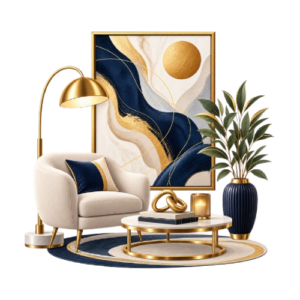
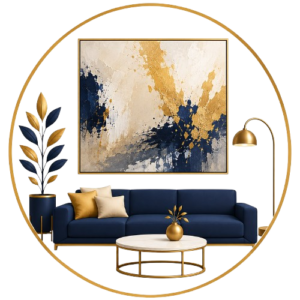
A contemporary living room can start with a comfortable neutral sofa, a large rug, a simple coffee table, layered lighting, and one strong artwork.
Use cushions and throws to introduce subtle texture.
Keep the television, storage, and electronics visually organised so that the room maintains a clean appearance.
For an especially polished result, choose artwork that echoes one or two colours already present in the room.
11. Design a Contemporary Bedroom
The bedroom should feel calm rather than overly decorative.
Choose:
- Neutral bedding
- A simple upholstered or wooden bed
- Minimal bedside tables
- Soft lighting
- Floor-length curtains
- One strong artwork or a restrained arrangement
Warm beige, taupe, grey, cream, and muted earthy colours work particularly well.
12. Create a Contemporary Kitchen
Contemporary kitchens typically benefit from streamlined cabinetry and limited visual clutter.
Consider:
- Handleless or minimal-profile cabinets
- Integrated appliances
- Simple backsplashes
- Stone or engineered countertops
- Under-cabinet lighting
- Wood accents
A combination of matte cabinetry and warm wood can create a sophisticated balance between sleekness and comfort.
13. Make the Dining Area a Focal Point
The dining area does not need excessive decoration.
A sculptural pendant above the dining table, an interesting table shape, and a large artwork on the adjacent wall can be enough.
Keep the surrounding surfaces relatively simple so the main composition remains clear.
14. Use Built-In Storage
Contemporary interiors benefit from storage that visually blends into the architecture.
Built-in cabinets can conceal:
- Electronics
- Books
- Household items
- Office equipment
- Kitchen appliances
When storage is integrated into walls, the room can maintain a cleaner visual appearance.
15. Add Indoor Plants
Plants provide colour and organic shapes within a predominantly structured interior.
Choose plants with forms that complement the room rather than filling every corner.
A large plant beside a sofa, a small plant on a console, or greenery near a window can be enough.
16. Introduce Curved Forms
Although contemporary design is associated with clean lines, curved furniture has become an effective way to soften modern interiors.
Try:
- Curved sofas
- Rounded coffee tables
- Arched mirrors
- Circular rugs
- Sculptural chairs
Use curved and straight forms together to create contrast.
17. Use a Restrained Accent Colour
Contemporary design does not need to be completely neutral.
Choose one accent colour and repeat it selectively.
Possible choices include:
- Deep blue
- Olive green
- Terracotta
- Rust
- Mustard
- Burgundy
- Muted teal
Artwork is an especially useful way to introduce an accent colour without committing to a permanent wall colour.
18. Create a Contemporary Feature Wall
A feature wall can add architectural interest without overwhelming the room.
Consider:
- Wood slats
- Microcement-style finishes
- Stone textures
- Large-format panels
- Subtle textured paint
- Artwork-led feature walls
Keep the remaining walls relatively restrained so the feature has room to stand out.
19. Mix Matte and Reflective Finishes
Combining matte and reflective materials creates subtle visual depth.
For example:
- Matte cabinetry + glass
- Textured wall + metal lighting
- Matte furniture + polished stone
- Linen upholstery + ceramic accessories
This technique works particularly well in neutral interiors.
20. Keep the Final Look Curated
The final step in contemporary interior design is editing.
Walk through the room and remove anything that feels unnecessary.
Ask:
- Does every furniture piece have a purpose?
- Is there enough empty space?
- Is one focal point clearly visible?
- Are the colours balanced?
- Are the materials repeated consistently?
- Does the room feel comfortable?
Contemporary design often looks best when there is less visual noise and more intentionality.
Contemporary Interior Design Ideas by Room
Contemporary Living Room
Use a neutral sofa, large rug, sculptural coffee table, layered lighting, natural wood, and one large artwork. Keep accessories selective and avoid overcrowding the walls.
Contemporary Bedroom
Focus on comfortable bedding, simple furniture, soft lighting, neutral colours, and subtle textures. A large artwork above the bed can provide a sophisticated focal point.
Contemporary Kitchen
Choose streamlined cabinetry, integrated storage, modern lighting, and a restrained material palette. Introduce wood or textured finishes to prevent the space from feeling overly clinical.
Contemporary Dining Room
A sculptural dining table, comfortable chairs, statement pendant, and large-scale artwork can create a polished dining area without excessive decoration.
Contemporary Home Office
Choose a clean-lined desk, ergonomic chair, concealed storage, and task lighting. A simple artwork or framed print can add personality while maintaining focus.
Contemporary Bathroom
Use large-format surfaces, simple fixtures, clean storage, and layered lighting. Natural stone or stone-look finishes can create a sophisticated atmosphere.
Contemporary Interior Colour Ideas
Contemporary homes often begin with neutral colours, but there are many ways to create variation.
Warm Neutrals
Beige, cream, taupe, greige, and warm white create a softer contemporary interior.
Grey
Grey can provide a sophisticated foundation, particularly when combined with wood and warm lighting.
Black and White
A black-and-white palette creates strong architectural contrast. Add wood or textiles to soften the result.
Earthy Colours
Terracotta, olive, rust, sand, and muted brown can make contemporary interiors feel more natural.
Deep Accent Colours
Navy, forest green, charcoal, and burgundy can be used selectively through furniture, artwork, cushions, or accessories.
A useful approach is to keep approximately 70–80% of the room visually neutral and introduce stronger colours through smaller elements.
Contemporary Interior Design With Natural Materials
Contemporary design becomes more welcoming when natural materials are incorporated into the room.
Consider combining:
- Natural wood
- Stone
- Linen
- Cotton
- Wool
- Ceramic
- Rattan
- Glass
- Metal
For example, a contemporary living room could combine a beige sofa, oak coffee table, stone side table, wool rug, black metal lamp, and abstract artwork.
The contrast between materials creates depth without requiring excessive decoration.
Contemporary Interior Design for Small Homes
Contemporary design can work extremely well in apartments and compact houses.
Use these principles:
- Choose furniture according to the room’s actual scale.
- Prioritise multifunctional pieces.
- Use built-in storage wherever practical.
- Keep the colour palette restrained.
- Use mirrors to enhance visual openness.
- Keep pathways clear.
- Choose furniture with lighter visual profiles.
- Use one strong focal point instead of several competing elements.
Large artwork can still work in a small room if it is properly scaled and surrounded by enough breathing space.
Contemporary Interior Design for Large Homes
Large homes need a stronger sense of scale and proportion.
Instead of filling large rooms with numerous small objects, use appropriately sized furniture and artwork.
For example, a large living room could feature:
- A substantial sectional sofa
- Oversized rug
- Large coffee table
- Statement lighting
- Large-scale artwork
- One or two architectural plants
Create smaller functional zones within open spaces to make the home feel comfortable.
Contemporary vs Modern Interior Design
The terms modern and contemporary are often used interchangeably, but they have different meanings.
Modern interior design generally refers to a design movement associated with modernism and its emphasis on clean forms, functionality, and reduced ornamentation.
Contemporary interior design refers more broadly to what feels current and evolving today.
| Modern Interior Design | Contemporary Interior Design |
| Connected to modernist design | Continuously evolves |
| Strong emphasis on clean forms | More flexible |
| Often uses established design principles | Can incorporate current trends |
| Natural materials are common | Wider material combinations |
| More defined stylistically | Less tied to one period |
Contemporary interiors can therefore include modern elements while also incorporating newer furniture shapes, colours, materials, and technology.
How to Make Contemporary Interiors Feel Warm
A common concern is that contemporary interiors can feel too cold.
The solution is not necessarily more decoration. Instead, add warmth through materials and lighting.
Try:
- Warm white paint
- Natural wood
- Soft rugs
- Linen curtains
- Upholstered furniture
- Warm lighting
- Indoor plants
- Textured cushions
- Artwork with earthy colours
A carefully selected palette can make a sleek contemporary home feel inviting.
How to Make Contemporary Interior Design Look Expensive
A premium interior is usually more about proportion, quality, and restraint than the number of expensive objects.
Focus on Scale
Artwork, rugs, curtains, and furniture should be appropriately sized for the room.
Coordinate Finishes
Repeat a few materials or finishes so the space feels cohesive.
Choose Statement Pieces
One beautiful light fixture or large artwork can have more impact than many small accessories.
Hide Visual Clutter
Use built-in or closed storage to keep everyday items organised.
Use Layered Lighting
Combine ceiling, task, ambient, and accent lighting.
Leave Breathing Room
Empty space is valuable. Do not fill every wall or surface simply because it is available.
Common Contemporary Interior Design Mistakes
Following Every Trend
Contemporary does not mean constantly changing your entire home according to trends.
Using Too Many Materials
A room with too many finishes can look disconnected. Choose a controlled material palette.
Making Everything Grey
Grey can be sophisticated, but excessive grey can make interiors feel flat or cold.
Choosing Furniture Without Considering Scale
A beautiful piece can still look wrong if it is too large or too small for the room.
Overdecorating
Contemporary interiors generally benefit from editing rather than accumulation.
Ignoring Lighting
Even excellent furniture and finishes can look ordinary under poor lighting.
Forgetting Comfort
A contemporary room should be practical and comfortable, not just visually impressive.
How to Plan a Contemporary Interior Step by Step
Step 1: Define the room’s purpose.
Decide how the space will actually be used.
Step 2: Choose your base palette.
Start with two or three neutral tones.
Step 3: Select the major furniture.
Prioritise proportion, comfort, and clean silhouettes.
Step 4: Establish your material palette.
Combine wood, stone, metal, glass, and textiles selectively.
Step 5: Plan lighting.
Use multiple layers rather than relying on one central fixture.
Step 6: Choose the focal point.
This could be artwork, a fireplace, furniture, lighting, or an architectural feature.
Step 7: Add texture and colour.
Introduce rugs, cushions, plants, and artwork.
Step 8: Edit the room.
Remove anything that does not contribute to the final composition.
Frequently Asked Questions
What is contemporary interior design?
Contemporary interior design is an evolving style focused on current aesthetics, clean forms, functional spaces, balanced materials, modern furniture, and restrained decoration.
What colours are best for contemporary interiors?
Warm white, beige, taupe, greige, grey, black, and earthy tones are popular foundations. Stronger colours can be introduced through artwork, furniture, and accessories.
Is contemporary interior design the same as modern design?
No. Modern design is associated with a particular design movement, while contemporary design refers to an evolving approach that reflects current tastes and materials.
Can contemporary design work in a small apartment?
Yes. Its emphasis on uncluttered layouts, functional furniture, integrated storage, and restrained decoration makes it suitable for compact spaces.
What wall art works with contemporary interiors?
Large abstract artwork, geometric designs, minimalist artwork, botanical compositions, modern landscapes, and black-and-white artwork can all work well.
How do I make a contemporary room feel cosy?
Introduce natural wood, soft textiles, rugs, plants, warm lighting, and artwork with subtle colour or texture.
Can contemporary interiors use traditional furniture?
Yes. A carefully selected traditional or vintage piece can create contrast and personality within an otherwise contemporary room.
Is contemporary interior design expensive?
It does not have to be. Good proportions, thoughtful material combinations, restrained decoration, and effective lighting can create a sophisticated result at many budgets.
Final Thoughts
The best contemporary interior design balances current style with long-term livability.
Start with a restrained colour palette, choose furniture with strong proportions, introduce natural materials, layer your lighting, and use artwork to create personality. Then edit the space until every major element feels intentional.
Contemporary design should not mean a home that looks like a showroom. The strongest interiors combine clean design with comfort, texture, functionality, and personality.
If you are developing a complete home design plan, start with our Modern Home Interior Design Ideas guide for broader inspiration and explore our Scandinavian Interior Design Ideas and Minimalist Home Interior Design Ideas guides for more specific approaches. For the finishing layer, explore Modern Wall Art Ideas, Abstract Wall Art Ideas, and Canvas Wall Art Ideas to find artwork that complements your interior.