
Modern House Interior Design Ideas: Stylish Ideas for a Contemporary Home

A modern house should feel clean, comfortable, functional, and visually balanced. The best modern house interior design is not simply about buying contemporary furniture or choosing neutral colours. It is about creating a home where architecture, furniture, lighting, materials, storage, and décor work together naturally.
Whether you are designing a new house, renovating an existing property, or updating a family home, modern interiors can make every room feel more spacious and intentional. Clean lines, practical layouts, natural materials, layered lighting, uncluttered surfaces, and carefully selected wall décor can create a polished look without making the home feel cold.
This guide explores practical modern house interior design ideas for living rooms, bedrooms, kitchens, dining areas, bathrooms, entryways, and other spaces, along with colour combinations, furniture ideas, lighting tips, wall décor, and mistakes to avoid.
What Is Modern House Interior Design?
Modern house interior design focuses on simplicity, functionality, clean geometry, and a thoughtful use of space. Instead of filling rooms with unnecessary decoration, modern interiors give each element a clear purpose.
Typical characteristics include:
- Clean architectural lines
- Simple furniture silhouettes
- Neutral or restrained colour palettes
- Natural wood and stone
- Functional storage
- Open and visually connected spaces
- Large or uncluttered surfaces
- Layered lighting
- Minimal but intentional decoration
- Contemporary artwork and wall décor
Modern does not necessarily mean stark or minimalist. A modern home can be warm, colourful, luxurious, dramatic, or highly personal while still maintaining a clean overall structure.
20 Modern House Interior Design Ideas
1. Start With an Open and Practical Layout
Good planning should come before decoration. Arrange furniture according to how each room will actually be used.
In open-plan houses, define different zones without completely separating them. A sofa can establish the living area, while a dining table creates a separate dining zone within the same larger space.
Keep comfortable circulation paths between furniture and avoid overcrowding.
2. Choose a Neutral Base
Neutral colours provide a versatile foundation for modern interiors.
Consider shades such as:
- Warm white
- Off-white
- Beige
- Greige
- Soft grey
- Taupe
- Charcoal
- Natural wood tones
A neutral base also makes it easier to introduce artwork, cushions, rugs, plants, or accent furniture without creating visual clutter.
3. Add Warm Natural Wood
Wood prevents modern interiors from feeling overly clinical.
Use timber for:
- Flooring
- Wall panels
- Cabinetry
- Furniture
- Shelving
- Doors
- Decorative details
Oak, walnut, teak, and other natural wood tones can work beautifully with contemporary architecture.
4. Use Clean-Lined Furniture
Choose furniture with simple proportions rather than heavily ornamented designs.
Look for sofas, beds, dining tables, cabinets, and chairs with:
- Straight or gently curved profiles
- Simple legs
- Restrained detailing
- Balanced proportions
- Quality-looking finishes
The goal is not to make every piece identical. Instead, create visual consistency across the room.
5. Create One Strong Focal Point
Modern interiors benefit from visual restraint, so avoid creating too many competing focal points.
A large artwork, statement light fixture, sculptural chair, textured feature wall, fireplace, or architectural element can become the main point of interest.
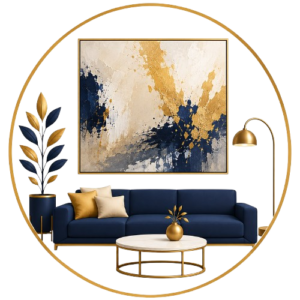
For example, a large piece of wall art above a sofa can give a neutral living room an immediate sense of personality.
6. Use Layered Lighting
Lighting can dramatically change how a modern house feels.
Combine:
Ambient lighting:
General illumination for the room.
Task lighting:
Focused light for activities such as cooking, reading, or working.
Accent lighting:
Lighting used to highlight artwork, architectural features, shelves, or decorative objects.
Recessed ceiling lights can provide a clean foundation, while pendant lights, floor lamps, wall lights, and concealed LED strips add depth.
7. Introduce Large Windows and Natural Light
Whenever possible, make natural light a major part of the design.
Avoid placing bulky furniture directly in front of important windows. Use light curtains or layered window treatments that allow daylight into the room.
Natural light works especially well with white walls, warm wood, stone, plants, and neutral furnishings.
8. Use Stone for Texture
Stone adds a refined architectural quality to modern interiors.
Consider:
- Marble
- Travertine
- Limestone
- Granite
- Quartz
- Slate
Stone can be used for kitchen counters, bathroom walls, flooring, fireplace surrounds, feature walls, or occasional furniture.
Rather than covering every surface, use stone strategically to create a premium focal point.
9. Design Built-In Storage
Modern homes look cleaner when everyday items have designated storage.
Built-in cabinets can be used around:
- TV walls
- Entryways
- Bedrooms
- Home offices
- Kitchens
- Dining areas
Choose cabinetry that visually integrates with the architecture rather than making every storage unit look like a separate piece of furniture.
10. Keep the TV Wall Simple
The TV wall often becomes one of the largest visual surfaces in a modern living room.
A simple combination of a wall-mounted television, low console, wood panel, stone surface, concealed storage, or subtle lighting can create a sophisticated result.
Avoid adding too many shelves and decorative objects around the television.
11. Add Texture to Neutral Rooms
A neutral colour scheme does not have to look boring.
Introduce texture through:
- Linen
- Wool
- Bouclé
- Wood
- Stone
- Plaster
- Ribbed panels
- Woven baskets
- Textured rugs
- Upholstered furniture
Using several textures within a restrained palette creates depth without visual chaos.
12. Choose a Consistent Colour Palette
A modern house usually looks more cohesive when the main colour palette continues from room to room.
For example:
Warm modern palette:
Warm white + beige + oak + black accents
Cool modern palette:
White + soft grey + charcoal + walnut
Earthy modern palette:
Cream + terracotta + brown + natural wood
Elegant modern palette:
Off-white + taupe + deep green + dark wood
The palette does not need to be identical everywhere. Repeat selected colours and materials to create continuity.
13. Add Contemporary Wall Art
Wall art gives modern rooms personality without requiring excessive decoration.
Choose artwork that complements the room’s proportions and palette. Abstract, geometric, botanical, monochrome, colourful, and minimalist artwork can all work in a modern house.
For large walls, consider:
- One oversized artwork
- A carefully planned gallery wall
- A triptych
- Two complementary pieces
- A large horizontal composition
The artwork should feel intentionally placed rather than added as an afterthought.
14. Bring in Indoor Plants
Plants soften the straight lines and hard surfaces commonly found in modern interiors.
Large plants can fill empty corners, while smaller plants can be placed on shelves, consoles, or side tables.
Choose planters that complement the home’s material palette rather than introducing too many unrelated colours.
15. Design a Modern Kitchen With Functionality in Mind
A modern kitchen should be visually clean but highly practical.
Prioritise:
- Efficient work zones
- Generous storage
- Integrated appliances where appropriate
- Durable countertops
- Under-cabinet lighting
- Simple cabinet fronts
- Easy-to-clean surfaces
A kitchen island can become the central feature when the available space allows it.
16. Make the Bedroom Calm and Comfortable
A modern bedroom should balance simplicity with softness.
Use:
- A streamlined bed
- Integrated wardrobes
- Layered bedding
- Soft curtains
- Warm bedside lighting
- Natural textures
- Restrained artwork
Avoid turning the bedroom into an overly minimalist space with no warmth or personality.
17. Give the Dining Area a Defined Identity
A dining area can become a sophisticated focal point without requiring elaborate decoration.
Pair a simple dining table with comfortable contemporary chairs and add one statement pendant above the table.
A large artwork, textured wall, or sideboard can complete the setting.
18. Make the Entryway Feel Intentional
The entrance establishes the first impression of the house.
A modern entryway can include:
- A slim console
- Mirror or artwork
- Statement lighting
- Closed storage
- A bench
- Indoor plants
- A textured wall
Keep the area functional and uncluttered because entrances quickly become storage zones in everyday life.
19. Use Mirrors Strategically
Mirrors can make modern rooms appear brighter and more spacious.
Use a large mirror opposite a window to reflect daylight or position one above a console, dresser, or sideboard.
Choose simple frames or frameless designs when you want a cleaner contemporary appearance.
20. Personalise the Modern Interior
The final layer should make the home feel like yours.
Include meaningful artwork, books, travel objects, photographs, plants, ceramics, textiles, or other pieces that reflect your personality.
A successful modern home should feel edited, not empty.
Modern House Interior Design Ideas by Room
Modern Living Room
A modern living room works best when furniture is arranged around a clear focal point.
Consider:
- A comfortable contemporary sofa
- A large rug
- A simple coffee table
- One large artwork
- Layered lighting
- Built-in storage
- Natural wood
- Indoor plants
Keep enough open floor area around the furniture so the room feels spacious.
Modern Bedroom
Prioritise comfort and visual calm.
A practical modern bedroom can combine a streamlined bed, full-height wardrobe, soft neutral colours, warm bedside lighting, textured bedding, and one carefully selected artwork.
Modern Kitchen
Modern kitchens should balance appearance with workflow. Use efficient cabinetry, concealed storage, durable countertops, practical lighting, and easy-to-maintain finishes.
If space allows, a kitchen island can provide additional preparation space and informal seating.
Modern Dining Room
Use the dining table as the centre of the room. Add a statement pendant above it and keep surrounding décor relatively restrained.
A large artwork or textured feature wall can provide visual interest without overwhelming the dining space.
Modern Home Office
Choose a functional desk, ergonomic chair, concealed cable management, adequate storage, and focused task lighting.
Artwork can help make the workspace feel more personal without distracting from work.
Modern Bathroom
A modern bathroom benefits from simple surfaces, clean-lined fittings, good storage, and layered lighting.
Large-format tiles, natural stone, warm wood tones, frameless glass, and understated hardware can create a sophisticated appearance.
Modern Entryway
Keep the entrance visually clean with practical storage and one or two strong decorative elements.
A console, mirror, artwork, bench, or statement light can establish the home’s style immediately.
Modern House Interior Colour Ideas
Colour is one of the easiest ways to define the personality of a modern house.
Warm White and Wood
Warm white walls combined with natural wood create a soft, timeless modern interior.
Grey and Walnut
Grey walls or upholstery paired with walnut furniture create a sophisticated and slightly dramatic appearance.
Beige and Black
Beige provides warmth while black introduces definition through lighting, furniture, hardware, or artwork.
White and Blue
Soft blue accents can add freshness to an otherwise neutral modern home.
Green and Natural Wood
Deep or muted green works especially well with oak, walnut, rattan, and other natural materials.
Earthy Neutrals
Terracotta, sand, cream, brown, and warm grey can create a relaxed contemporary atmosphere.
How to Make a Modern House Feel Warm
One of the biggest challenges with modern interiors is avoiding a cold or impersonal appearance.
Use the following combination:
Clean architecture + warm materials + soft textures + layered lighting + personal décor
Wood flooring can soften large rooms. Rugs define seating areas. Curtains add softness. Warm lighting creates a more comfortable atmosphere after sunset, while artwork and personal objects add character.
Do not assume that modern design requires an entirely white or grey home.
Modern House Interior Design for Small Homes
Modern design works particularly well in smaller houses because it encourages efficient planning.
Use:
- Multi-functional furniture
- Built-in storage
- Wall-mounted furniture
- Light colours
- Mirrors
- Consistent flooring
- Minimal visual clutter
- Furniture with appropriate proportions
Avoid choosing oversized furniture simply because it looks luxurious in photographs. Scale should always match the actual room.
Vertical storage can also help use wall space without consuming valuable floor area.
Modern House Interior Design for Large Homes
Large homes require a slightly different approach. The challenge is often preventing rooms from feeling empty rather than preventing clutter.
Use larger furniture, generous rugs, statement artwork, architectural lighting, and substantial decorative pieces.
Large walls are particularly suitable for oversized artwork or carefully designed gallery walls.
In villas or larger houses, repeat materials and colours throughout connected spaces so the property feels like one cohesive home rather than a collection of unrelated rooms.
How to Make Modern Interiors Look More Luxurious
A luxurious modern house does not need expensive decoration everywhere.
Focus on:
- Better proportions
- High-quality-looking materials
- Consistent colours
- Layered lighting
- Large-scale artwork
- Clean detailing
- Concealed storage
- Natural stone or wood
- Fewer but better accessories
- Strong focal points
The key is restraint. A room with fewer carefully selected elements often looks more sophisticated than a room filled with expensive-looking objects.
Common Modern House Interior Design Mistakes
Making Everything White
Too much white without texture can make a home feel flat and sterile.
Using Too Many Different Materials
Mixing wood, stone, metals, patterns, and colours without a clear plan can make a modern interior look chaotic.
Choosing Furniture That Is Too Large
Always consider room dimensions and circulation before purchasing furniture.
Overusing Recessed Lighting
Downlights alone can make a room feel harsh. Combine them with floor lamps, pendants, wall lights, and accent lighting.
Ignoring Wall Proportions
A tiny artwork on a large wall often looks disconnected. Choose artwork according to the wall and furniture scale.
Creating a Showroom Instead of a Home
Modern interiors still need personality. Add meaningful objects, artwork, books, textiles, and plants.
Following Trends Too Literally
Trends change quickly. Prioritise timeless architecture and furniture, then use smaller decorative elements to introduce current styles.
A Simple Plan for Designing a Modern House
If you are starting from scratch, follow this sequence:
Step 1: Understand the architecture
Identify windows, doors, circulation routes, ceiling heights, and structural elements.
Step 2: Plan furniture placement
Determine how people will move through and use each room.
Step 3: Select your base palette
Choose your primary wall, floor, and large-furniture colours.
Step 4: Choose major materials
Select wood, stone, metal, glass, and textiles that work together.
Step 5: Plan lighting
Combine ambient, task, and accent lighting.
Step 6: Add storage
Resolve clutter before adding decorative elements.
Step 7: Add artwork and décor
Use artwork to create personality and focal points.
Step 8: Add softer elements
Introduce rugs, curtains, cushions, plants, and textiles.
Step 9: Edit the room
Remove anything that does not contribute to function, comfort, or visual balance.
Frequently Asked Questions About Modern House Interior Design
What is modern house interior design?
Modern house interior design combines clean lines, practical layouts, simple furniture, restrained colours, natural materials, functional storage, and carefully planned lighting.
How can I make my house look modern?
Start with a clean layout, simplify furniture, use a coordinated colour palette, introduce natural materials, improve lighting, and add a few strong decorative elements such as artwork.
What colours are best for a modern house?
White, beige, grey, taupe, black, brown, muted green, and blue are popular choices. Warm neutrals are particularly useful when you want a comfortable modern look.
How can I make a modern house feel less cold?
Add natural wood, warm lighting, rugs, curtains, textured fabrics, plants, and meaningful artwork.
Is modern interior design suitable for small houses?
Yes. Its emphasis on efficient layouts, storage, simple furniture, and visual openness makes it particularly practical for smaller homes.
How do I decorate a large wall in a modern house?
Consider one oversized artwork, a triptych, a balanced pair of large pieces, or a carefully planned gallery wall. Select the scale according to the wall and surrounding furniture.
What is the difference between modern and minimalist interiors?
Modern design focuses on clean lines, function, and contemporary materials, while minimalist design takes reduction further by intentionally limiting visual and physical elements. A modern home can therefore be richly layered while remaining visually clean.
Can modern interiors include traditional elements?
Yes. Traditional furniture, artwork, architectural details, or handcrafted pieces can add character to a modern house when balanced with contemporary forms.
How can I make a modern house look luxurious on a budget?
Prioritise layout, lighting, consistent colours, good proportions, natural-looking materials, and a few large statement pieces instead of buying many decorative accessories.
Final Thoughts
The best modern house interior design is not about making every room look identical or filling the home with the newest trends. It is about creating a thoughtful relationship between architecture, furniture, materials, lighting, colour, storage, and décor.
Start with the structure and layout, establish a consistent palette, introduce warm natural materials, and use lighting and artwork to give each room character. Keep the overall design uncluttered, but leave enough room for personality.
For wall décor inspiration, explore Canvasora’s guides to Modern Wall Art Ideas, Living Room Wall Art Ideas, Bedroom Wall Art Ideas, Office Wall Art Ideas, and Unique & Creative Wall Decor Ideas to find artwork approaches that complement a modern home.