
Blue Interior Design Ideas: Stylish Ways to Create a Calm and Sophisticated Home

Blue interior design is one of the most versatile ways to introduce colour into a home. Depending on the shade, blue can make a room feel calm and airy, rich and luxurious, fresh and coastal, or dramatic and sophisticated.
From soft powder blue and muted blue-grey to deep navy and striking cobalt, there is a blue for almost every interior style.
The key to successful blue interior design is choosing the right shade for the room and balancing it with complementary colours, natural materials, lighting, furniture, and artwork.
Blue can be used across an entire room or introduced in smaller doses through a feature wall, sofa, cabinetry, textiles, accessories, or wall art.
Whether you are designing a modern apartment, a peaceful bedroom, an elegant living room, or a luxurious home, these blue interior design ideas will help you create a balanced and visually appealing space.
Why Choose Blue Interior Design?
Blue is naturally associated with calmness, depth, openness, and freshness. Its versatility makes it suitable for both subtle and dramatic interiors.
Depending on the shade, blue can feel:
- Calm and relaxing
- Fresh and airy
- Elegant and sophisticated
- Rich and luxurious
- Bold and dramatic
- Coastal and natural
- Contemporary and modern
Light blues generally create a softer atmosphere, while darker blues add depth and visual weight.
The surrounding colours also matter. Blue with white feels fresh, while blue with walnut and brass can feel considerably richer.
20 Blue Interior Design Ideas for Your Home
1. Create a Soft Blue Feature Wall
A soft blue feature wall can introduce colour without overwhelming the room.
Good locations include:
- Behind the sofa
- Behind the bed
- Dining room focal wall
- Home office backdrop
- Reading nook
Pair soft blue with warm white, cream, light wood, or beige for a relaxed appearance.
2. Use Navy for a Dramatic Interior
Navy blue is one of the most sophisticated darker shades.
It works beautifully on:
- Feature walls
- Cabinetry
- Sofas
- Curtains
- Accent chairs
- Built-in shelving
Balance navy with lighter surfaces such as cream, white, beige, or natural wood.
3. Combine Blue with White
Blue and white create a timeless combination.
Try:
White walls + blue sofa + natural wood + blue artwork
or
Blue feature wall + white furniture + warm lighting
This palette works especially well in coastal, Scandinavian, modern, and contemporary interiors.
4. Pair Blue with Natural Wood
Natural wood adds warmth to blue interiors.
Oak, walnut, teak, and other wood tones can prevent blue from feeling too cool.
Consider:
Muted blue walls + oak furniture + cream textiles
for a relaxed modern room.
For a more dramatic look:
Navy + walnut + brass
creates a sophisticated luxury palette.
5. Use Blue and Beige Together
Blue and beige provide an excellent balance between cool and warm tones.
Beige softens blue, while blue gives beige interiors more character.
Try:
Beige sofa + blue accent wall + wood furniture
This combination works particularly well in living rooms and bedrooms.
6. Create a Blue and Grey Interior
Blue and grey create a calm contemporary palette.
Light blue can soften grey, while navy can add depth to charcoal or medium-grey interiors.
For example:
Light grey walls + dusty blue furniture + white accents
creates a quiet, sophisticated room.
7. Introduce Blue Through Artwork
You do not need to paint your walls blue to create a blue interior.
Artwork can introduce the colour in a much more flexible way.
Consider:
- Abstract blue artwork
- Ocean-inspired artwork
- Landscape paintings
- Botanical artwork
- Blue-and-white artwork
- Colourful paintings with blue accents
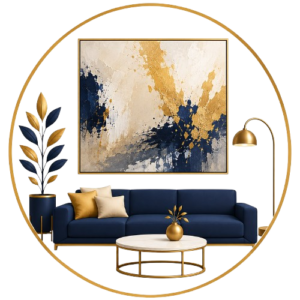
A large painting containing blue can become the main focal point of a neutral room.
Explore Modern Wall Art Ideas →, Abstract Wall Art Ideas →, Nature & Landscape Wall Art Ideas →, and Colourful Wall Art → for more inspiration.
8. Design a Blue Living Room
A blue living room can be relaxed or dramatic depending on the shade.
A practical modern combination is:
Warm white walls + blue sofa + natural wood + neutral rug + blue artwork
For a stronger look, use navy on one wall and balance it with lighter furniture and warm lighting.
9. Create a Peaceful Blue Bedroom
Blue is particularly effective in bedrooms.
Soft blue, dusty blue, blue-grey, and muted navy can all create relaxing environments.
Combine blue with:
- Cream bedding
- Warm white walls
- Natural wood
- Soft textiles
- Warm bedside lighting
A darker blue feature wall behind the bed can create a sophisticated focal point.
10. Use Blue in the Kitchen
Blue cabinetry can add personality to a kitchen while remaining sophisticated.
Consider:
- Navy lower cabinets
- Blue kitchen island
- Dusty blue cabinetry
- Blue backsplash
- Blue-and-white combination
Pair blue cabinetry with wood, white stone, brass, or black hardware.
For small kitchens, using blue only on the lower cabinets or island can provide colour without making the space feel enclosed.
11. Add Blue to the Dining Room
Blue can create an elegant dining environment.
Deep blue walls can provide a rich backdrop for:
- Wooden dining tables
- Brass lighting
- Artwork
- Cream upholstery
- Natural textures
For a lighter dining room, use blue through chairs, artwork, table textiles, or accessories.
12. Create a Blue Home Office
Blue can provide a calm visual background for a workspace.
Try:
Soft blue walls + natural wood desk + black accents + greenery + artwork
For a more dramatic office, use navy behind the desk and keep the remaining walls light.
13. Use Blue in a Drawing Room
Formal drawing rooms can benefit from deeper blue shades.
Navy, petrol blue, or muted teal can create a sophisticated atmosphere when paired with:
- Cream
- Beige
- Walnut
- Brass
- Velvet
- Statement lighting
A large framed painting can reinforce the room’s colour palette.
14. Combine Blue with Green
Blue and green create a naturally harmonious palette.
Use:
- Soft blue + sage
- Navy + forest green
- Blue-grey + olive
- Teal + muted green
Natural wood and plants can strengthen the organic feeling.
This combination works especially well in living rooms, bedrooms, and reading spaces.
15. Add Terracotta to a Blue Interior
Terracotta provides warm contrast against blue.
For example:
Navy + terracotta + cream + natural wood
creates an earthy yet sophisticated interior.
You can introduce terracotta through:
- Ceramics
- Cushions
- Rugs
- Artwork
- Decorative objects
You do not need much of the colour to create visual warmth.
16. Use Blue with Brass or Gold
Blue and brass create a particularly elegant combination.
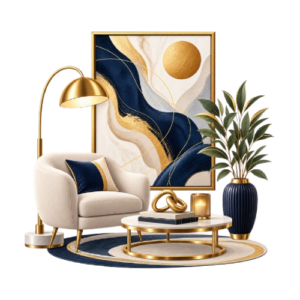
Deep navy paired with brass lighting, handles, mirrors, or decorative details can create a luxurious appearance.
Keep metallic accents controlled so the room remains sophisticated rather than overly decorative.
17. Layer Different Shades of Blue
A blue room does not need to use only one shade.
Layer:
- Pale blue
- Dusty blue
- Medium blue
- Navy
For example:
Pale blue walls + medium blue chair + navy cushions + blue artwork
The variation creates depth while maintaining a cohesive palette.
18. Use Blue in Small Spaces
Blue can work beautifully in compact spaces.
For smaller rooms, consider lighter or muted shades and combine them with:
- White
- Cream
- Light wood
- Mirrors
- Layered lighting
A darker blue can still work as a feature wall when the surrounding surfaces remain light.
19. Create a Luxury Blue Interior
Deep blue can create a luxurious atmosphere when paired with quality materials.
Consider:
- Navy
- Velvet
- Marble
- Walnut
- Brass
- Glass
- Warm lighting
The goal is not to add every luxury material at once. Select a few and allow the blue to remain the visual foundation.
20. Let Artwork Establish the Blue Accent
If you already own a favourite painting containing blue, use it as the starting point for your room’s palette.
Identify one or two blue tones in the artwork and repeat them subtly through:
- Cushions
- Curtains
- Rugs
- Accessories
- Accent furniture
This creates a natural relationship between the artwork and the rest of the interior.
Blue Interior Design Ideas by Room
Blue Living Room
Blue can be introduced through the sofa, feature wall, curtains, rug, or artwork.
For a balanced contemporary room, combine blue with warm white, natural wood, and neutral textiles.
Blue Bedroom
Soft blue and blue-grey are particularly effective for bedrooms.
Use warm lighting and natural materials to keep the room comfortable rather than overly cool.
Blue Kitchen
Navy and muted blue cabinetry can give a kitchen a distinctive appearance.
Combine blue with white stone, wood, brass, or black hardware.
Blue Dining Room
Deep blue walls create a sophisticated backdrop for dining furniture and statement lighting.
For a lighter look, introduce blue through chairs, artwork, or accessories.
Blue Home Office
Muted blue can create a calm and focused atmosphere.
Combine it with wood, neutral storage, greenery, and restrained artwork.
Blue Drawing Room
Use navy, deep blue, or blue-green accents with cream, walnut, brass, and rich textiles for an elegant formal space.
Best Colours to Pair with Blue
Blue works with a wide range of colours.
Blue + White
Fresh, bright, and timeless.
Blue + Beige
Warm, comfortable, and sophisticated.
Blue + Grey
Calm and contemporary.
Blue + Natural Wood
Warm and balanced.
Blue + Green
Natural and harmonious.
Blue + Terracotta
Earthy and energetic.
Blue + Brass
Elegant and luxurious.
Blue + Black
Dramatic and contemporary.
Blue + Cream
Soft and sophisticated.
The exact result depends on the shade of blue. A pale blue has a very different effect from navy or cobalt.
How to Choose the Right Shade of Blue
Powder Blue
Soft and airy, making it suitable for bedrooms, small rooms, and relaxed interiors.
Sky Blue
Fresh and light, particularly effective with white and natural materials.
Dusty Blue
Muted and sophisticated, ideal for modern and Scandinavian-inspired interiors.
Blue-Grey
Subtle and contemporary, especially useful when you want colour without strong contrast.
Teal
Richer and more energetic, suitable for feature walls and accent furniture.
Navy Blue
Deep, elegant, and dramatic. Excellent for cabinetry, feature walls, furniture, and luxury interiors.
Cobalt Blue
Bold and energetic. Best introduced selectively through artwork, furniture, or accessories.
Always test blue paint samples in your actual room. Natural daylight and artificial lighting can significantly change how the shade appears.
How to Make Blue Interiors Feel Warm
Blue can sometimes feel cool, particularly when combined with white and metal. Balance it with warmer elements.
Add Natural Wood
Oak, walnut, teak, and other woods immediately introduce warmth.
Use Warm Lighting
Warm lighting softens deeper blues and creates a more inviting atmosphere in the evening.
Introduce Beige and Cream
Warm neutrals balance cooler blue shades.
Add Earthy Accents
Terracotta, brown, tan, and muted green can make a blue room feel more grounded.
Use Textures
Layer linen, wool, cotton, velvet, rugs, and woven materials.
Add Artwork
Artwork can introduce additional colours and visual interest without requiring a major change to the room.
Blue Interior Design for Different Styles
Modern Blue Interior
Combine blue with white, grey, black, glass, metal, and clean-lined furniture.
Minimalist Blue Interior
Use blue sparingly against a neutral foundation, allowing the colour to function as a controlled accent.
Scandinavian Blue Interior
Use muted blue with white, pale wood, cream, and simple textiles.
Coastal Blue Interior
Combine soft blue with white, sand, natural wood, linen, and subtle nautical references.
Luxury Blue Interior
Use navy or deep blue with walnut, marble, brass, velvet, and sophisticated lighting.
Modern Rustic Blue Interior
Balance muted blue with wood, stone, linen, leather, and warm neutral colours.
Blue Interior Design Mistakes to Avoid
Choosing Blue Without Considering Lighting
A shade that looks soft in a showroom can look much darker or cooler at home.
Always test samples in the room.
Using Too Many Strong Blues
Several highly saturated blue shades can compete with each other.
Choose one dominant blue and use supporting shades selectively.
Making the Entire Room Cool
Blue, cool grey, white, and metal can create an overly cold environment.
Balance them with wood, cream, beige, and warm lighting.
Ignoring Existing Furniture
Your blue should complement flooring, sofas, cabinetry, curtains, and other permanent elements.
Overusing Navy
Navy is beautiful but visually heavy.
Use it strategically in smaller rooms or balance it with plenty of lighter surfaces.
Forgetting Contrast
Even a soft blue interior needs variation.
Use white, cream, wood, black, darker blue, or artwork to create definition.
How to Plan a Blue Interior
1. Assess the room’s natural light.
Understand how the room looks during the day and evening.
2. Decide how much blue you want.
Choose between a blue room, feature wall, furniture, cabinetry, textiles, or artwork.
3. Select the shade.
Choose from soft blue, dusty blue, blue-grey, teal, navy, or another variation.
4. Choose supporting colours.
White, cream, beige, grey, wood, green, and terracotta are useful options.
5. Introduce warm materials.
Wood, linen, leather, stone, and woven textures can prevent the room from feeling cold.
6. Plan your lighting.
Use ambient, task, and accent lighting rather than relying on a single fixture.
7. Finish with artwork and accessories.
Use wall art to reinforce the palette or introduce complementary colours.
Frequently Asked Questions About Blue Interior Design
Is blue a good colour for home interiors?
Yes. Blue is highly versatile and can create calm, elegant, contemporary, coastal, or dramatic interiors depending on the shade and surrounding materials.
What colours go well with blue interiors?
White, cream, beige, grey, natural wood, green, terracotta, black, and brass all work well with different shades of blue.
Which shade of blue is best for a bedroom?
Soft blue, dusty blue, blue-grey, and muted navy are all good options. The best choice depends on natural light and the atmosphere you want.
Is navy blue suitable for small rooms?
Yes, but it is usually better used selectively in small rooms. A navy feature wall or furniture piece can create depth while lighter surrounding surfaces maintain visual openness.
How do I make a blue room feel warmer?
Use natural wood, beige or cream textiles, warm lighting, earthy accents, and layered textures.
Can blue work in a modern interior?
Absolutely. Blue works particularly well in modern and contemporary interiors when combined with clean-lined furniture, restrained accents, natural materials, and suitable lighting.
What artwork looks good with blue walls?
Light, colourful, neutral, botanical, abstract, and black-and-white artwork can all work against blue walls. Choose artwork that provides enough tonal contrast.
Should all the blue in a room be the same shade?
No. Layering lighter, medium, and darker blues can create depth. Just make sure the shades have a clear relationship rather than competing with each other.
Final Thoughts
Blue interior design offers an enormous range of possibilities, from soft and peaceful rooms to dramatic and luxurious spaces.
The most successful blue interiors do not rely on colour alone. They balance blue with warm neutrals, natural wood, textiles, lighting, architectural details, and artwork.
Start by considering the natural light in your room and deciding how much blue you want to introduce. Then select a shade that complements your existing furniture and materials.
Whether you choose pale blue for a calming bedroom, dusty blue for a contemporary home, or navy for a sophisticated living room, thoughtful colour balance can make blue feel timeless rather than trendy.
And if you prefer to keep your walls neutral, artwork is one of the easiest ways to bring blue into your interior while keeping the rest of the room flexible.
Explore more Canvasora inspiration:
- Interior Colour Ideas for Your Home →
- Grey Interior Design Ideas →
- White Interior Design Ideas →
- Black Interior Design Ideas →
- Modern Home Interior Design Ideas →
- Modern Interior Design Ideas for Home →
- Scandinavian Interior Design Ideas →
- Modern Wall Art Ideas →
- Abstract Wall Art Ideas →
- Nature & Landscape Wall Art Ideas →
- Colourful Wall Art →