
Traditional & Classic Interior Design Ideas: 20 Elegant Ways to Create a Timeless Home

Traditional interior design is all about creating a home that feels elegant, comfortable, balanced, and timeless. Instead of following short-lived trends, traditional interior design draws inspiration from classic architecture, refined furniture, rich materials, symmetrical arrangements, and decorative details that have remained popular for generations.
A traditional home does not have to look old-fashioned. When classic elements are combined with contemporary comforts, practical storage, modern lighting, and carefully selected artwork, the result can feel sophisticated and completely relevant today.
From a formal living room and elegant bedroom to a welcoming dining area or traditional Indian home, this style can be adapted to different properties, room sizes, and budgets.
What Is Traditional Interior Design?
Traditional interior design is a style based on established decorative principles, classic furniture forms, architectural details, and a sense of symmetry and proportion.
Typical characteristics include:
- Symmetrical furniture arrangements
- Classic furniture silhouettes
- Rich wood finishes
- Neutral and warm colour palettes
- Decorative mouldings and trims
- Elegant fabrics
- Patterned textiles
- Classic lighting
- Refined accessories
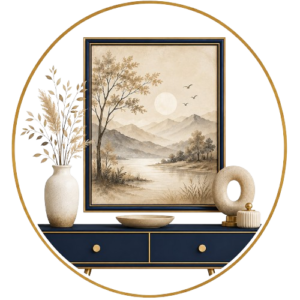
- Framed artwork
- Balanced room layouts
Traditional design is often associated with warmth and sophistication rather than minimalism.
The goal is to create rooms that feel comfortable, polished, layered, and timeless.
20 Traditional & Classic Interior Design Ideas
1. Create a Symmetrical Furniture Arrangement
Symmetry is one of the easiest ways to establish a traditional interior.
Place matching or visually balanced elements around a central focal point.
For example:
- Two armchairs around a coffee table
- Matching lamps on either side of a console
- Two bedside tables around a bed
- Artwork centred above a fireplace
The arrangement does not have to be perfectly identical. What matters is achieving visual balance.
2. Use Classic Wooden Furniture
Wooden furniture provides the foundation for many traditional interiors.
Consider:
- Wooden dining tables
- Carved cabinets
- Classic sideboards
- Wooden consoles
- Traditional bed frames
- Bookshelves
Rich walnut, teak, mahogany-inspired, or medium wood tones can add depth and warmth.
If the room already contains dark furniture, balance it with lighter walls, textiles, rugs, or artwork.
3. Choose a Warm Neutral Colour Palette
Traditional interiors often work beautifully with warm neutrals.
Consider:
- Cream
- Ivory
- Beige
- Warm white
- Taupe
- Soft brown
- Warm grey
These colours create a timeless foundation while allowing furniture, fabrics, artwork, and architectural details to become more noticeable.
4. Add Elegant Wall Moulding
Wall moulding can instantly introduce architectural character.
Options include:
- Picture-frame moulding
- Wainscoting
- Chair rails
- Decorative panels
- Crown moulding
- Wall trim
You do not need elaborate moulding throughout the entire home. A single feature wall or dining room can be enough to create a traditional character.
5. Use Classic Patterned Fabrics
Textiles are an important part of traditional interiors.
Consider patterns such as:
- Florals
- Stripes
- Damask
- Checks
- Plaids
- Traditional geometric patterns
Use patterns selectively. A patterned armchair, cushion, curtain, or rug can provide visual interest without overwhelming the room.
6. Create a Traditional Living Room
A traditional living room should feel elegant but comfortable.
Start with a well-proportioned sofa, add two accent chairs, a central coffee table, a rug, side tables, and layered lighting.
A fireplace, console, large mirror, or artwork can serve as the main focal point.
Keep the furniture arrangement conversational rather than pushing every piece against the walls.
7. Choose a Statement Chandelier
Lighting can dramatically influence the character of a traditional interior.
Consider:
- Chandeliers
- Brass pendant lights
- Classic table lamps
- Wall sconces
- Decorative floor lamps
A chandelier above a dining table or in a formal living room can become an architectural focal point.
For a more contemporary interpretation, choose a simplified chandelier rather than an excessively ornate one.
8. Introduce Rich Textures
Traditional interiors benefit from layers of tactile materials.
Combine:
- Velvet
- Linen
- Cotton
- Wool
- Wood
- Brass
- Glass
- Stone
A velvet chair, wooden table, textured rug, linen curtains, and brass lamp can create depth even when the overall colour palette remains restrained.
9. Use Rugs to Define the Room
A traditional rug can anchor furniture and establish a sense of proportion.
Persian-inspired, floral, medallion, geometric, or muted patterned rugs can work particularly well.
Make sure the rug is large enough for the main furniture arrangement. A rug that is too small can make a traditionally furnished room feel disconnected.
10. Decorate With Mirrors
Classic mirrors can make traditional interiors feel brighter and more spacious.
Try:
- Ornate framed mirrors
- Arched mirrors
- Large rectangular mirrors
- Pair of matching mirrors
Place a mirror above a console, fireplace, or sideboard.
Choose the frame carefully so it complements the furniture rather than competing with it.
11. Display Framed Artwork
Artwork is an important finishing element in traditional interiors.
Good choices include:
- Classical landscapes
- Botanical artwork
- Portrait-inspired artwork
- Floral paintings
- Architectural artwork
- Vintage-inspired prints
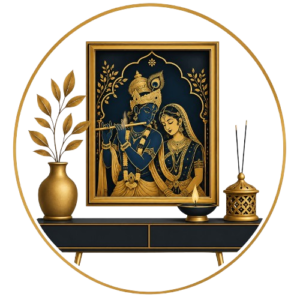
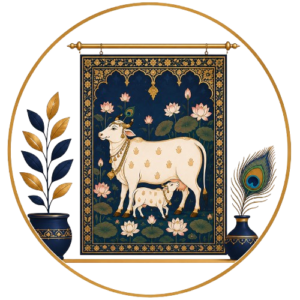
- Traditional Indian art
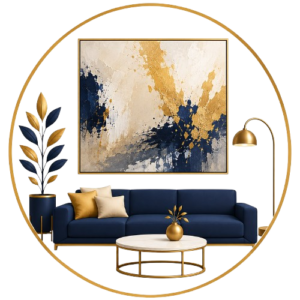
- Elegant abstract artwork
Large artwork can work particularly well above a sofa, sideboard, bed, or dining console.
The frame should complement the overall room. Wood, antique-inspired, metallic, or simple neutral frames can all work depending on the design.
12. Create a Traditional Dining Room
Traditional dining rooms benefit from a strong sense of symmetry and proportion.
Consider:
- A substantial wooden dining table
- Upholstered or wooden dining chairs
- A statement chandelier
- A sideboard
- Large artwork or mirror
- Table centrepiece
Keep decorative objects on the sideboard limited to a carefully selected arrangement.
13. Design a Classic Bedroom
A traditional bedroom should feel restful and elegant.
Choose a substantial bed, coordinated bedside tables, lamps, soft bedding, curtains, and a rug.
A padded or upholstered headboard can add sophistication.
For the wall behind the bed, consider one large artwork, a pair of balanced framed pieces, or a classic mirror arrangement.
14. Add Brass or Antique-Finish Details
Metallic accents can add richness to traditional interiors.
Use brass or antique-style finishes for:
- Cabinet hardware
- Lamps
- Curtain rods
- Mirrors
- Door handles
- Decorative objects
Avoid using too many metallic finishes. Repeating one dominant metal can create a more cohesive appearance.
15. Use Curtains to Add Height and Elegance
Curtains can have a major effect on the perceived quality of a traditional room.
Hang curtain rods higher than the window frame where appropriate and allow curtains to fall close to the floor.
Linen, cotton, velvet, and other textured fabrics can create a more substantial appearance.
Keep patterns coordinated with the rest of the room rather than introducing several competing prints.
16. Create a Classic Entryway
The entrance sets the tone for the rest of the home.
A traditional entryway can include:
- Wooden console
- Framed mirror
- Table lamp
- Decorative bowl
- Artwork
- Rug
- Fresh flowers or greenery
Keep the arrangement balanced and avoid filling the console with too many small accessories.
17. Introduce Built-In Bookshelves
Built-in bookshelves can give a traditional room an established, architectural appearance.
Use them to display:
- Books
- Framed artwork
- Ceramics
- Collectibles
- Plants
- Decorative objects
Mix books with decorative pieces rather than arranging every shelf identically.
18. Use a Fireplace or Architectural Focal Point
If your home has a fireplace, it can become the natural centre of a traditional room.
If not, create a similar focal point with:
- Large artwork
- Architectural wall moulding
- A substantial console
- A decorative cabinet
- A statement mirror
The important principle is to establish one strong visual anchor.
19. Mix Traditional Furniture With Modern Comfort
Traditional does not mean every item needs to look historical.
Pair classic furniture with:
- Contemporary sofas
- Modern lighting
- Simple rugs
- Practical storage
- Updated upholstery
- Modern artwork
This approach creates a transitional interior that feels timeless without becoming overly formal.
20. Keep the Room Layered but Edited
Traditional design can accommodate more decoration than minimalist or contemporary styles, but there is still a limit.
Layer furniture, textiles, artwork, lighting, and accessories gradually.
Then remove anything that feels unnecessary.
A successful traditional room should feel rich and collected, not crowded.
Traditional Interior Design Ideas by Room
Traditional Living Room
Use symmetry, comfortable seating, wooden furniture, rugs, lamps, curtains, and framed artwork. A fireplace, large painting, or mirror can become the central focal point.
Traditional Bedroom
Choose an upholstered or wooden bed, matching bedside tables, elegant lamps, soft bedding, and classic artwork. Keep the colours calming and coordinated.
Traditional Dining Room
A substantial wooden table, classic chairs, chandelier, sideboard, and large artwork can create a timeless dining environment.
Traditional Kitchen
Use classic cabinetry, warm wood, stone countertops, traditional hardware, glass-front cabinets, and warm lighting. Modern appliances can be integrated without disrupting the overall character.
Traditional Home Office
A wooden desk, comfortable upholstered chair, bookshelves, table lamp, and framed artwork can create a sophisticated workspace.
Traditional Bathroom
Consider classic tile patterns, brass or brushed-metal fixtures, framed mirrors, elegant lighting, and warm neutral colours.
Traditional Interior Colour Ideas
Traditional interiors can use a wide range of colours, but they generally benefit from colours that feel warm and timeless.
Cream and Beige
A safe foundation for almost any traditional room.
Warm White and Wood
Creates a bright space while allowing traditional furniture to remain the focus.
Deep Green
Forest and olive greens can add richness to living rooms, studies, and dining spaces.
Navy Blue
Navy can create an elegant backdrop for brass, wood, and cream furnishings.
Burgundy and Rust
Use these deeper tones through upholstery, rugs, artwork, or accessories rather than covering an entire room.
Soft Blue
A lighter blue can make traditional bedrooms and living rooms feel calm and welcoming.
The key is to balance stronger colours with neutral walls, furniture, and textiles.
Traditional Interior Design With Artwork
Artwork can make traditional interiors feel personal rather than overly formal.
When selecting wall art, consider the room’s existing:
- Furniture colour
- Wood finishes
- Rug patterns
- Wall colour
- Metal finishes
- Textile patterns
For a classic room, botanical artwork, landscapes, floral compositions, architectural scenes, and traditional-inspired paintings can work naturally.
However, you do not have to restrict yourself to traditional artwork.
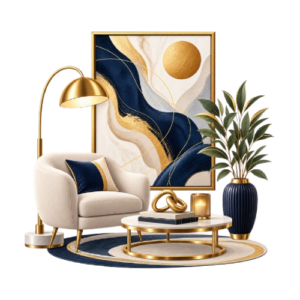
A carefully selected contemporary or abstract painting can create an interesting contrast against classic furniture.
How to Place Artwork in a Traditional Interior
Above a sofa, artwork should generally relate to the width of the furniture beneath it.
Above a console or sideboard, centre the artwork and leave enough breathing room around the composition.
In a bedroom, one large piece can create a calmer appearance than several unrelated small pieces.
Traditional vs Classic Interior Design
The terms traditional and classic are closely related, but they are not necessarily identical.
Traditional interior design often refers to a broader style influenced by established historical interiors, regional traditions, classic furniture, patterns, and decorative details.
Classic interior design tends to emphasise timeless proportions, symmetry, elegant materials, and enduring design principles.
In practice, the terms overlap considerably.
A home can therefore combine classic symmetry and furniture with contemporary colours, lighting, and artwork.
Traditional vs Modern Interior Design
Traditional and modern interiors represent very different approaches.
| Traditional Interior | Modern Interior |
| Decorative details | Reduced ornamentation |
| Classic furniture | Clean-lined furniture |
| Rich textures | Simpler textures |
| Symmetrical layouts | More flexible arrangements |
| Patterned textiles | Restrained patterns |
| Warm and layered | Clean and streamlined |
Neither approach is inherently better. The right choice depends on the atmosphere you want to create.
How to Make Traditional Interiors Feel Fresh
Traditional interiors can easily become visually heavy if every element is ornate.
To create a fresher interpretation:
- Use lighter wall colours
- Introduce contemporary artwork
- Simplify accessories
- Mix old and new furniture
- Use modern lighting
- Choose lighter fabrics
- Add natural greenery
- Keep furniture proportions balanced
This creates a transitional interior that combines traditional character with contemporary comfort.
How to Make Traditional Interior Design Look Luxurious
Luxury does not require filling a room with expensive decoration.
Instead, concentrate on:
Proportion
Furniture and artwork should be appropriately scaled.
Quality Materials
Wood, stone, linen, wool, metal, and high-quality upholstery can add depth.
Layered Lighting
Use chandeliers, lamps, sconces, and accent lighting together.
Large-Scale Artwork
A well-proportioned painting can create a sophisticated focal point.
Controlled Colour
A restrained palette often looks more expensive than too many competing colours.
Symmetry
Balanced arrangements naturally create a sense of order and refinement.
Traditional Interior Design for Small Homes
Traditional styling can work in smaller homes if you avoid oversized furniture and excessive decoration.
Try:
- Choose appropriately scaled furniture.
- Use lighter wall colours.
- Select one major focal point.
- Use mirrors to reflect light.
- Choose multifunctional storage.
- Keep patterns controlled.
- Use fewer but better accessories.
- Select artwork according to the wall size.
A small home does not need to imitate a large formal mansion. Instead, take the principles of traditional design and adapt them to your available space.
Traditional Interior Design for Large Homes
Larger homes provide more opportunities for formal traditional arrangements.
Use architectural features, larger rugs, substantial furniture, statement lighting, and oversized artwork to maintain the correct scale.
For open-plan spaces, create distinct zones rather than allowing furniture to float randomly throughout the room.
A large artwork can also help anchor a particularly wide wall.
Common Traditional Interior Design Mistakes
Using Too Many Ornate Elements
If every item is decorative, the room can quickly feel dated.
Overmatching Furniture
A room does not need an entire matching furniture set to look traditional.
Choosing Rugs That Are Too Small
A small rug can disconnect the furniture arrangement.
Ignoring Scale
Large rooms require larger furniture and artwork; compact rooms need appropriately scaled pieces.
Mixing Too Many Patterns
Floral, striped, checked, and ornate patterns can coexist, but they need a clear colour relationship.
Making Everything Dark
Dark wood and rich colours can be beautiful, but balance them with lighter walls, textiles, and lighting.
Treating Traditional Design as a Museum
A traditional home should still feel comfortable and lived-in.
How to Plan a Traditional Interior Step by Step
Step 1: Identify the architectural character.
Look at flooring, doors, windows, ceiling height, mouldings, and existing features.
Step 2: Choose a colour palette.
Select two or three main colours and one or two supporting tones.
Step 3: Establish the furniture layout.
Prioritise symmetry, proportion, and comfortable circulation.
Step 4: Add major textiles.
Introduce rugs, curtains, upholstery, and cushions.
Step 5: Layer lighting.
Combine ceiling fixtures with lamps and wall lighting.
Step 6: Introduce artwork.
Choose pieces that complement or intentionally contrast with the furniture.
Step 7: Add accessories gradually.
Use books, ceramics, plants, mirrors, and decorative objects selectively.
Step 8: Edit the final room.
Remove anything that makes the room feel overcrowded.
Frequently Asked Questions
What is traditional interior design?
Traditional interior design is a timeless decorating style based on classic furniture, symmetry, warm colours, rich materials, patterns, architectural details, and refined decorative elements.
Is traditional interior design outdated?
No. Traditional design can feel completely current when classic elements are combined with contemporary lighting, artwork, practical storage, and modern comforts.
What colours are best for traditional interiors?
Cream, beige, warm white, taupe, brown, navy, deep green, soft blue, rust, and burgundy can all work well when balanced carefully.
What furniture works in traditional interiors?
Wooden tables, classic sofas, upholstered chairs, consoles, sideboards, bookcases, traditional bed frames, and furniture with refined detailing are common choices.
What wall art works with traditional interior design?
Landscapes, botanical artwork, floral paintings, architectural artwork, portraits, traditional-inspired artwork, and carefully selected contemporary paintings can all work.
Can traditional and modern interior design be combined?
Yes. Combining classic furniture and architectural details with contemporary artwork, lighting, colours, and simpler accessories creates a transitional style.
Is traditional design suitable for small homes?
Yes. The principles can be adapted to smaller spaces by choosing appropriately scaled furniture, lighter colours, fewer accessories, and carefully sized artwork.
How can I make a traditional home look more modern?
Simplify decorative elements, introduce contemporary artwork, use modern lighting, choose lighter colours, and combine classic furniture with a few contemporary pieces.
Final Thoughts
Traditional interior design remains popular because it creates spaces that feel comfortable, elegant, balanced, and timeless.
Start with symmetry and good proportions, introduce warm colours and natural materials, choose classic furniture, layer textiles and lighting, and use artwork to give the room personality.
You do not need to recreate a historical interior. The most successful traditional homes combine the character of classic design with the practicality of modern living.
If you are exploring different interior styles, compare this approach with our Modern Interior Design Ideas, Minimalist Home Interior Design Ideas, Scandinavian Interior Design Ideas, and Contemporary Interior Design Ideas guides. For the finishing touch, explore Canvas Wall Art Ideas, Floral & Botanical Wall Art Ideas, Nature & Landscape Wall Art Ideas, and Gallery Wall Ideas for artwork inspiration.