
Office Wall Art Ideas: Stylish Ways to Decorate Your Workspace

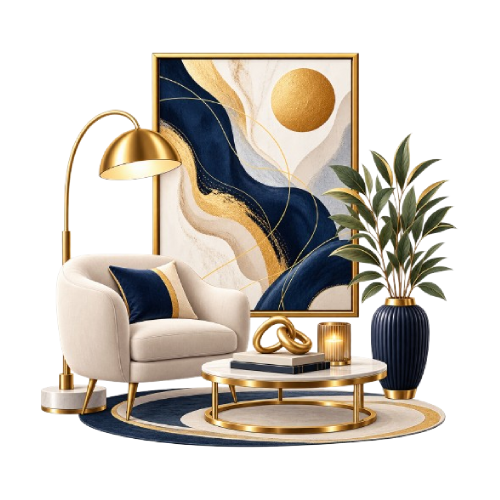
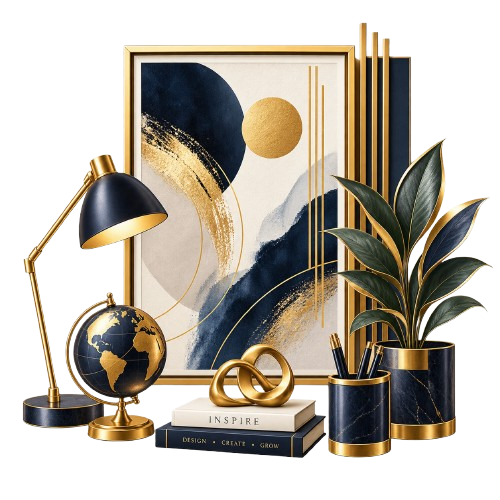
Looking for office wall art ideas to make your workspace feel more professional, inspiring and visually complete? The right wall art can transform an ordinary office into a space that feels intentional and reflects your personality or brand.
Whether you’re decorating a home office, corporate workspace, creative studio, executive office or meeting room, artwork can add character without taking up valuable floor space.
The best office wall art isn’t simply decorative. It can help establish the atmosphere of a room, introduce colour, reinforce a brand identity and make an otherwise plain workspace feel more welcoming.
From modern abstract artwork and motivational designs to minimalist prints, landscapes, city photography and large statement canvases, there are countless ways to decorate office walls.
In this guide, you’ll find practical office wall art ideas, along with tips for choosing artwork size, placement, colours, styles and arrangements for different types of workspaces.
20 Office Wall Art Ideas
1. Create a Statement Wall Behind Your Desk
The wall behind your desk is one of the most visible areas in an office, particularly during video calls.
A large artwork can turn this wall into a polished backdrop without making the workspace feel cluttered.
Consider:
- Abstract artwork
- Minimalist compositions
- Brand-inspired artwork
- Landscape photography
- Large canvas paintings
- Geometric artwork
Best product choice: A large statement canvas or oversized artwork that complements the width of your desk.
For more inspiration, see our guide to Large & Oversized Wall Art Ideas.
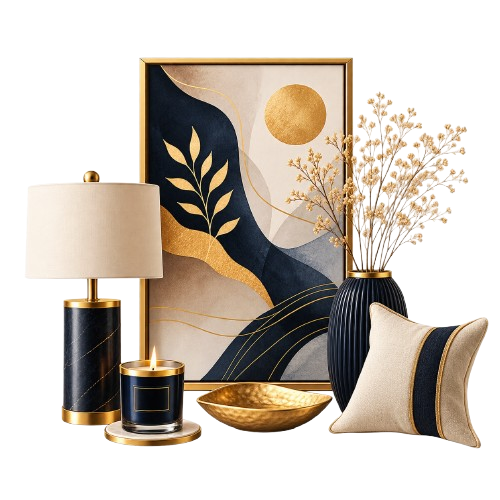
2. Use Modern Abstract Art
Modern abstract artwork is a versatile choice for contemporary offices.
It can add colour and visual interest without creating a literal theme that dominates the room.
Look for compositions featuring colours already present in your office furniture, flooring or accessories.
For example, an office with white walls, black furniture and natural wood can work well with abstract artwork using:
- Beige
- Black
- Brown
- Cream
- Muted green
This creates coordination while keeping the artwork visually interesting.
For more ideas, explore Abstract Wall Art Ideas and Modern Wall Art Ideas.
3. Add Minimalist Office Wall Art
If you prefer a clean and uncluttered workspace, minimalist artwork can complement the interior without competing with your desk or equipment.
Consider:
- Line art
- Simple geometric artwork
- Neutral abstracts
- Architectural prints
- Monochrome artwork
- Minimal typography
Minimalist art works particularly well in modern home offices and professional workspaces where visual simplicity is important.
4. Create an Inspiring Gallery Wall
A gallery wall can make a large office wall feel more dynamic while allowing you to combine different types of artwork.
You could create a collection around a consistent theme such as:
- Abstract art
- Architecture
- Travel
- Nature
- Photography
- Inspirational typography
Best product choice: A coordinated gallery wall set with artwork that shares a common colour palette or visual style.
Keep the spacing consistent so the arrangement feels intentional rather than random.
For layout inspiration, see our complete guide to Gallery Wall Ideas.
5. Choose Motivational Office Artwork
Motivational wall art can work well in offices when used selectively.
Instead of covering the walls with generic quotes, choose one or two meaningful statements with strong typography and a sophisticated design.
Good locations include:
- Behind a desk
- Near the entrance
- In a creative workspace
- In a meeting room
- In a team area
The design should feel like part of the interior rather than a corporate poster.
6. Use Nature-Inspired Wall Art
Nature artwork can soften an otherwise technology-heavy office.
Consider:
- Forest landscapes
- Mountains
- Botanical leaves
- Beaches
- Trees
- Desert landscapes
- Water scenes
Nature-inspired artwork can introduce softer colours and create a more relaxed visual environment.
Best product choice: Landscape or botanical canvas artwork in neutral, earthy or muted tones.
If you like this direction, explore Nature & Landscape Wall Art Ideas and Floral & Botanical Wall Art Ideas for more inspiration.
7. Add Black and White Artwork
Black and white wall art creates a timeless professional appearance.
It works particularly well in offices with:
- Black furniture
- White walls
- Grey interiors
- Contemporary desks
- Minimalist décor
Architecture, photography, abstract artwork and line drawings are particularly suitable.
If the room feels too stark, introduce warmth through wood, plants, textiles and warm lighting.
See Black and White Wall Art Ideas for more ways to use monochrome artwork.
8. Make a Large Empty Wall the Focal Point
A large blank office wall often looks unfinished when decorated with several tiny pieces.
Instead, consider one substantial artwork.
An oversized canvas can anchor the room and make the office feel more complete.
Best product choice: Oversized canvas, panoramic artwork or large multi-panel artwork.
This approach is especially effective in executive offices, conference rooms and large home offices.
9. Add Artwork Behind a Reception Desk
If you’re decorating a business reception area, the wall behind the reception desk is a natural focal point.
Consider artwork that reflects the company’s:
- Brand colours
- Industry
- Personality
- Design style
A large abstract artwork can work particularly well when you want the space to feel sophisticated without looking overly corporate.
10. Use City and Architectural Artwork
City photography and architectural artwork can give an office a sophisticated, contemporary appearance.
Consider artwork featuring:
- Skylines
- Modern architecture
- Historic buildings
- Bridges
- Streets
- Geometric structures
This style can work particularly well in offices connected to finance, architecture, real estate, design or technology.
11. Create a Creative Studio Art Wall
Creative offices can take a more expressive approach.
Instead of limiting the artwork to one style, combine:
- Abstract paintings
- Colourful artwork
- Typography
- Illustrations
- Photography
- Experimental compositions
A creative workspace gives you more freedom to use stronger colours and unconventional arrangements.
The key is still to establish some connection between the pieces through colour, theme or framing.
For more colourful styling inspiration, explore Colourful Wall Art Ideas.
12. Decorate a Meeting Room
Meeting rooms often have large empty walls that can benefit from artwork.
Choose pieces that create a professional environment without distracting from conversation.
Good choices include:
- Abstract artwork
- Minimalist landscapes
- Architectural artwork
- Neutral compositions
- Subtle brand-inspired designs
For larger conference rooms, one large artwork can often look more polished than several small unrelated pieces.
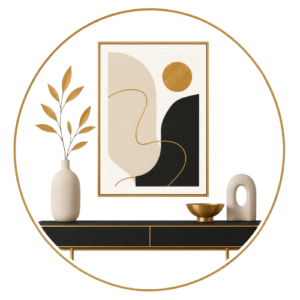
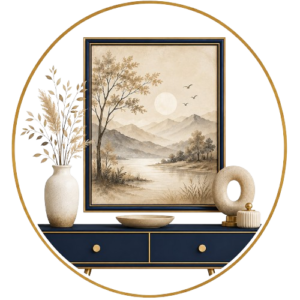
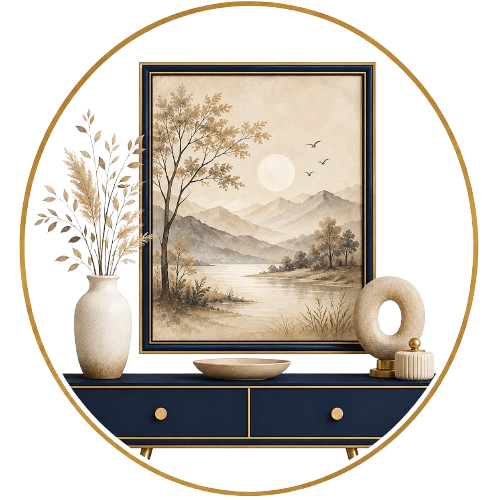
13. Add Artwork Above a Sideboard or Cabinet
If your office has a sideboard, storage cabinet or console, use the wall above it as a decorative zone.
A medium-to-large artwork can anchor the furniture below it.
Keep the artwork proportional to the furniture and leave enough space around the composition.
A small plant, lamp or decorative object can complete the arrangement without making it feel crowded.
14. Use Colourful Artwork to Energise the Workspace
A neutral office doesn’t have to remain completely neutral.
Colourful wall art can introduce personality and energy without requiring a colourful renovation.
Consider artwork with:
- Blue
- Green
- Terracotta
- Mustard
- Orange
- Deep red
If the artwork is colourful, keep surrounding accessories relatively restrained so it remains the focal point.
Our Colourful Wall Art Ideas guide has more ideas for introducing colour without overwhelming an interior.
15. Create a Professional Home Office
A home office should feel productive while still fitting naturally into the rest of your home.
Try combining:
- One large artwork behind the desk
- A small plant
- Neutral furniture
- Warm lighting
- Minimal decorative objects
Abstract, botanical, landscape and minimalist artwork can all work well.
Avoid making the room feel like a generic corporate office if you want the space to remain comfortable and personal.
If you’re also decorating other areas of your home, explore our Bedroom Wall Art Ideas and Living Room Wall Art Ideas guides for room-specific inspiration.
16. Use Vertical Artwork in Narrow Spaces
Not every office wall can accommodate a wide horizontal artwork.
For narrow spaces, vertical artwork can make better use of the available wall.
It can work beside:
- A doorway
- A bookshelf
- A cabinet
- A window
- A lounge chair
Choose a composition that complements the height and proportions of the wall.
17. Create a Workspace Lounge With Artwork
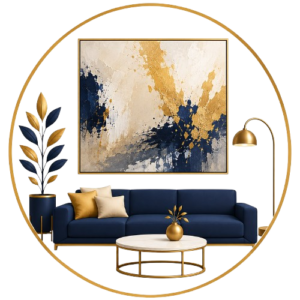
If your office includes a seating or breakout area, artwork can help visually define the space.
Consider placing artwork above:
- A sofa
- Lounge chairs
- A coffee table
- A low console
Nature, abstract and colourful artwork can work particularly well in relaxed office areas.
18. Create a Brand-Inspired Art Collection
Businesses can use artwork to reinforce their visual identity without turning every wall into advertising.
Instead of simply displaying a logo, consider artwork inspired by the company’s:
- Brand colours
- Values
- Industry
- Products
- Design language
For example, a technology company could use geometric or futuristic artwork, while a design studio could use more experimental compositions.
19. Use Large Artwork in an Executive Office
An executive office often benefits from fewer, larger decorative elements.
One carefully selected statement artwork behind or beside the desk can create a sophisticated focal point.
Choose artwork with strong composition and a restrained colour palette if you want an understated luxury look.
Best product choice: Large or oversized canvas artwork with a sophisticated neutral or complementary colour palette.
For more guidance on choosing large artwork, see Large & Oversized Wall Art Ideas.
20. Build a Personalised Office Art Collection
Your office doesn’t have to look like a showroom.
Use artwork to reflect your interests and personality.
You could incorporate:
- Travel artwork
- Favourite landscapes
- Photography
- Abstract pieces
- Cultural artwork
- Personal illustrations
- Meaningful typography
The goal is to create a workspace that feels like yours while maintaining visual consistency.
Office Wall Art Ideas by Office Type
Different workspaces require different approaches.
Home Office
Prioritise comfort and personality.
Good options include:
- Abstract artwork
- Botanical art
- Landscape paintings
- Minimalist prints
- Personal collections
Corporate Office
Keep artwork professional and cohesive.
Consider:
- Abstract artwork
- Architecture
- Brand-inspired artwork
- Monochrome pieces
- Sophisticated photography
Executive Office
Use fewer but larger decorative pieces.
Oversized artwork, elegant abstracts and refined landscapes can create a more premium appearance.
Creative Office
Experiment with colour, scale and combinations.
Gallery walls, colourful artwork and unconventional compositions can work particularly well.
Meeting Room
Choose artwork that creates atmosphere without distracting from conversations.
Minimalist abstracts, landscapes and architectural artwork are strong options.
Reception Area
Make the artwork part of the first impression.
A large statement piece behind or near the reception desk can create an immediate focal point.
How to Choose the Right Office Wall Art
Before buying artwork, consider the room as a whole.
1. Measure the Wall
Measure the width and height of the available wall.
A large wall generally needs a larger visual element.
2. Consider Your Desk
Artwork behind a desk should relate to the desk’s width and position.
A tiny artwork above a large executive desk can look disproportionate.
3. Look at Existing Colours
Use the existing office palette as a starting point.
Look at:
- Walls
- Desk
- Chairs
- Flooring
- Curtains
- Rugs
- Shelving
Choose artwork that complements these elements.
4. Consider Your Work Environment
A creative studio may support bold colours and expressive artwork, while a formal office may benefit from more restrained compositions.
5. Think About Video Calls
If your desk faces the camera, the wall behind you becomes part of your professional background.
Choose artwork that looks balanced from a distance and doesn’t create distracting visual clutter.
For more detailed advice on coordinating artwork with different interiors, explore Modern Wall Art Ideas.
Office Wall Art Size Guide
The correct size is one of the most important factors in creating a polished office.
| Location | Suggested Artwork |
| Small wall beside desk | Small or medium artwork |
| Above a compact desk | Medium artwork |
| Behind a standard desk | Medium-large to large artwork |
| Above a sideboard | Medium-large artwork |
| Meeting room wall | Large artwork or coordinated set |
| Large empty office wall | Oversized artwork or gallery wall |
| Narrow wall | Vertical artwork |
| Reception feature wall | Large statement artwork |
For artwork above furniture, consider the width of the furniture and the overall composition.
A useful starting point is to make the artwork or arrangement roughly two-thirds to three-quarters of the width of the furniture below it, then adjust according to the room.
For a broader guide to choosing artwork proportions, see Canvas Wall Art Ideas.
How High Should Office Wall Art Be Hung?
Artwork should generally be positioned at a comfortable viewing height rather than placed too close to the ceiling.
When hanging artwork above a desk, cabinet or sideboard, leave enough space for the artwork to visually connect with the furniture.
As a practical starting point, leave approximately 15–25 cm between the bottom of the artwork and the furniture below it, then adjust based on the proportions of the room.
For a gallery wall, treat the entire collection as one composition and position its centre at a comfortable viewing height.
Office Wall Art Spacing Guide
When displaying multiple artworks, consistent spacing creates a more professional appearance.
As a starting point:
- Keep gaps between frames consistent.
- Use approximately 5–10 cm between related pieces.
- Align edges where possible.
- Keep the overall arrangement balanced.
- Avoid making one piece appear disconnected from the others.
Before drilling holes, lay the arrangement on the floor or create paper templates on the wall.
For more detailed gallery arrangement techniques, see Gallery Wall Ideas.
One Large Artwork or a Gallery Wall?
Both options can work well in an office.
Choose One Large Artwork If:
- You want a clean professional appearance.
- The wall is large.
- You have a strong statement piece.
- The office already contains many visual elements.
Choose a Gallery Wall If:
- You want a more creative environment.
- You have multiple related pieces.
- You want to display different subjects.
- You want a more personalised workspace.
For formal offices, one large artwork often creates a cleaner appearance. Creative spaces can usually support more variety.
How to Match Office Wall Art With Your Interior
Your artwork should complement your workspace rather than look like an isolated decoration.
Modern Office
Try abstract, geometric and minimalist artwork.
Explore Modern Wall Art Ideas for additional contemporary styling ideas.
Industrial Office
Consider black and white photography, architectural artwork and bold abstract compositions.
Scandinavian Office
Use neutral landscapes, botanical artwork and minimalist designs.
Luxury Office
Choose large-scale artwork with sophisticated compositions and restrained colours.
Creative Office
Experiment with colourful abstracts, gallery walls and expressive artwork.
Traditional Office
Landscape, botanical and classic artwork can complement wood furniture and traditional finishes.
How to Make Office Wall Art Look Premium
A sophisticated office doesn’t require dozens of decorative pieces.
Focus on scale
Larger walls usually need larger artwork.
Use restraint
A few carefully chosen pieces can look more expensive than an overcrowded wall.
Coordinate colours
Choose artwork that works with the existing office palette.
Keep spacing consistent
Uneven spacing can make even expensive artwork look poorly arranged.
Choose quality presentation
Canvas artwork, suitable framing and clean installation can significantly improve the finished appearance.
Consider lighting
Good lighting can make artwork a feature rather than simply something hanging on the wall.
Office Wall Art Mistakes to Avoid
Choosing Artwork That’s Too Small
One of the most common mistakes is placing a small artwork on a large empty wall.
Consider the wall’s scale before choosing the artwork.
Overloading the Workspace
Too much artwork can create visual noise, particularly in offices that already contain shelves, monitors, furniture and equipment.
Ignoring Video Call Backgrounds
If your desk is used for video meetings, make sure artwork behind you doesn’t look distracting on camera.
Matching Artwork Too Literally
Artwork doesn’t need to match the office furniture exactly.
Complementary colours usually create a more natural result.
Hanging Artwork Too High
Artwork placed too close to the ceiling can feel disconnected from the furniture and room.
Using Generic Artwork Everywhere
If every piece looks interchangeable, the office can lose personality.
Choose artwork with a clear visual direction.
How to Arrange Office Wall Art Before Hanging
Planning the arrangement first can save time and prevent unnecessary holes.
- Measure the available wall.
- Measure each artwork.
- Place the pieces on the floor.
- Experiment with different layouts.
- Photograph your preferred arrangement.
- Use paper templates if necessary.
- Mark the hanging points.
- Step back and check the composition.
- Install the artwork.
For large pieces, check the arrangement from different parts of the room rather than judging it only from directly underneath.
Office Wall Art for a Professional Background
If your office doubles as a video-call background, treat the wall behind your desk almost like a visual composition.
Avoid:
- Excessively busy artwork
- Too many small frames
- Strong reflections
- Clashing colours
- Artwork positioned awkwardly behind your head
Instead, consider one large artwork or a simple coordinated arrangement.
This can make the background feel polished without becoming distracting.
Frequently Asked Questions About Office Wall Art
What is the best wall art for an office?
Abstract, minimalist, landscape, botanical, architectural and black and white artwork are versatile choices for many offices. The best option depends on the room’s style, size and purpose.
What should I put on the wall behind my desk?
A large abstract artwork, landscape, minimalist composition or coordinated artwork set can work well behind a desk. Choose the size according to the width of the desk and available wall.
What size artwork is best for an office?
The artwork should be proportional to the wall and furniture. Large walls generally benefit from large or oversized artwork, while smaller walls may suit medium or small pieces.
Is canvas wall art good for an office?
Yes. Canvas wall art can work particularly well in offices because it provides a clean, substantial appearance without requiring a heavy frame.
Should office wall art match the company branding?
It can, but it doesn’t have to. Brand colours can be incorporated subtly through artwork without making the office feel like an advertisement.
How many pieces of wall art should an office have?
There is no fixed number. Focus on proportion and visual balance rather than filling every wall. One strong artwork can sometimes be more effective than several small pieces.
What artwork is best for a home office?
Abstract, botanical, landscape and minimalist artwork are popular choices because they can create a professional environment while still allowing the space to feel personal.
How high should office wall art be?
Artwork should generally be positioned at a comfortable viewing height and visually connected to the furniture beneath it. Above furniture, approximately 15–25 cm of space is a useful starting point.
Turn Your Office Into a More Inspiring Space
The right office wall art can do more than fill an empty wall. It can establish the character of your workspace, create a professional backdrop, introduce colour and make the room feel more considered.
Start with the wall you want to transform. Consider its size, surrounding furniture and the atmosphere you want to create. Then choose artwork that supports the space rather than competing with it.
Whether you prefer a large abstract canvas, a calming landscape, a minimalist composition or a carefully arranged gallery wall, the goal is the same: create a workspace that looks intentional and feels like a place you want to spend time in.
Explore More Wall Art Guides
Continue exploring the Canvasora wall art collection with these related guides: