
Industrial Interior Design Ideas: 20 Stylish Ways to Create a Modern Industrial Home

Industrial interior design brings the character of warehouses, lofts, workshops, and converted factories into residential spaces. Exposed materials, metal details, concrete surfaces, brick textures, practical furniture, open layouts, and dramatic lighting are some of its most recognisable characteristics.
But an industrial home does not have to feel dark, rough, or unfinished. Modern industrial design balances harder materials such as steel, concrete, and brick with warm wood, comfortable upholstery, textiles, greenery, and artwork.
The result can be bold and architectural while still feeling comfortable enough for everyday living.
Whether you are designing a city apartment, loft, 2BHK, villa, or independent house, these industrial interior design ideas can help you create a space with personality and visual depth.
What Is Industrial Interior Design?
Industrial interior design takes inspiration from commercial and industrial architecture and adapts those characteristics for residential spaces.
Typical features include:
- Exposed brick
- Concrete surfaces
- Black metal
- Steel details
- Natural wood
- Open layouts
- Large windows
- Visible architectural elements
- Functional furniture
- Statement lighting
- Neutral and earthy colours
- Minimal but expressive decoration
The style often celebrates materials in their natural or unfinished-looking state.
However, the best industrial interiors are carefully designed. The goal is not to make a home look unfinished; it is to create a deliberate combination of raw materials, practical design, comfort, and character.
20 Industrial Interior Design Ideas for Your Home
1. Expose Brick for Instant Character
Exposed brick is one of the most recognisable industrial design elements.
A brick wall can become a natural focal point behind:
- A sofa
- Dining table
- Bed
- TV unit
- Home office desk
If your home does not have original brick, brick-look tiles or textured finishes can create a similar visual effect.
Avoid using brick on every wall. One feature surface is often enough.
2. Introduce Black Metal Details
Black metal provides the strong architectural contrast associated with industrial interiors.
Use it through:
- Shelving frames
- Lighting
- Furniture legs
- Window frames
- Stair railings
- Console tables
- Cabinet hardware
Combine black metal with wood and softer textiles to prevent the room from feeling overly hard.
3. Use Concrete as a Feature Material
Concrete can give an industrial home an architectural appearance.
Consider concrete or concrete-look finishes for:
- Feature walls
- Flooring
- Kitchen counters
- Coffee tables
- Bathroom surfaces
- Shelving
A large concrete surface should generally be balanced with warmer materials such as wood, leather, rugs, or fabric.
4. Combine Wood With Metal
The combination of natural wood and metal is one of the easiest ways to create an industrial look.
For example:
Wooden tabletop + black metal frame
Oak shelves + steel brackets
Wooden console + metal legs
Timber dining table + industrial pendant
Wood introduces warmth while metal provides structure and contrast.
5. Create an Open-Plan Layout
Industrial architecture is strongly associated with open spaces.
Where practical, combine living, dining, and kitchen areas into a visually connected layout.
Use rugs, lighting, furniture orientation, or changes in materials to define individual zones without completely closing them off.
6. Use Large Windows and Let Them Stand Out
Large windows can become a major architectural feature.
Avoid covering them with heavy curtains where privacy and climate conditions allow.
Simple linen curtains, roller shades, or minimal window treatments can preserve the architectural character while still providing practical control over light and privacy.
7. Choose Industrial-Style Lighting
Lighting is one of the easiest ways to establish the industrial character of a room.
Consider:
- Pendant lights
- Track lighting
- Black metal fixtures
- Cage-style lights
- Exposed-bulb-inspired fixtures
- Adjustable floor lamps
- Wall sconces
Use multiple lighting sources so the room does not become overly harsh in the evening.
8. Create a Statement Ceiling
If the architecture allows it, use the ceiling as part of the design.
Possible industrial elements include:
- Exposed beams
- Concrete ceilings
- Visible structural details
- Dark ceiling accents
- Metal duct-inspired details
Do not add structural-looking elements purely for decoration if they make the room feel artificial. Authentic architectural features are especially valuable in industrial spaces.
9. Choose Simple, Functional Furniture
Industrial interiors generally benefit from furniture with a strong functional character.
Look for:
- Clean-lined sofas
- Leather chairs
- Metal-frame tables
- Wooden cabinets
- Open shelving
- Practical storage
- Low-profile furniture
Avoid filling the room with overly ornate furniture because it can conflict with the architectural character.
10. Create an Industrial Living Room
Start with a comfortable sofa, large rug, coffee table, industrial lighting, and a combination of wood and metal.
A brick, concrete, or textured wall can become the backdrop.
Complete the composition with one large artwork rather than covering every available wall.
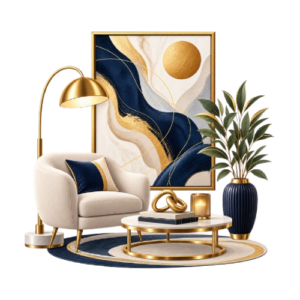
For a softer modern-industrial look, use beige or warm-grey upholstery and natural wood.
11. Design an Industrial Bedroom
Industrial bedrooms work best when the harder materials are balanced with comfort.
Try:
- Upholstered bed
- Dark metal bedside tables
- Wooden furniture
- Linen bedding
- Warm lighting
- Neutral curtains
- Large artwork
Black, charcoal, warm grey, beige, brown, and muted earthy colours work particularly well.
12. Build an Industrial Kitchen
Industrial kitchens can combine contemporary appliances with exposed or textured materials.
Consider:
- Matte cabinets
- Black hardware
- Wood cabinetry
- Stone or concrete-look counters
- Open shelves
- Metal lighting
- Subway-style or textured backsplashes
Keep appliances and everyday items organised so the room remains functional rather than visually chaotic.
13. Use Leather for Warmth
Leather is a natural companion to metal, wood, and concrete.
A tan, cognac, brown, or dark leather chair can add warmth and texture.
Use leather selectively rather than furnishing the entire room with matching leather pieces.
14. Add Large-Scale Artwork
Industrial spaces often have large walls that can support substantial artwork.
Choose:
- Abstract artwork
- Black-and-white photography
- Geometric artwork
- Architectural artwork
- Urban landscapes
- Graphic compositions
- Contemporary canvas artwork
A large artwork can soften a raw wall while providing a strong focal point.
15. Create an Industrial Gallery Wall
If you prefer multiple artworks, create a gallery wall using a consistent visual system.
Black frames work naturally with industrial interiors, while a combination of black and wood frames can create a warmer interpretation.
Use photography, typography-inspired pieces, abstract artwork, or architectural imagery.
Keep spacing consistent so the gallery wall feels intentional rather than random.
16. Add Indoor Plants
Plants are an effective contrast to the hard materials found in industrial interiors.
Large plants can soften concrete, metal, and brick while introducing organic shapes.
Try:
- Tall floor plants
- Hanging plants
- Large-leaf varieties
- Small plants on shelves
- Plants in concrete or ceramic pots
Greenery can be particularly effective in predominantly grey and black interiors.
17. Use Rugs and Textiles to Soften Hard Surfaces
Industrial materials can create visual hardness.
Balance them with:
- Large rugs
- Cushions
- Throws
- Curtains
- Upholstered seating
- Linen
- Wool
A large rug can also help define a seating area in an open-plan industrial home.
18. Introduce Vintage Elements
A few vintage pieces can add authenticity and personality.
Consider:
- Vintage-inspired cabinets
- Old-style clocks
- Leather furniture
- Industrial stools
- Reclaimed wood
- Antique-style accessories
Avoid turning the entire room into a vintage collection. One or two character pieces are usually more effective.
19. Create a Modern Industrial Home Office
Industrial design works naturally in workspaces.
Use a substantial desk, metal shelving, comfortable chair, practical storage, and strong task lighting.
A large abstract artwork or architectural print can add personality without creating unnecessary distraction.
20. Balance Raw Materials With Comfort
This is perhaps the most important industrial design principle.
If a room contains:
Concrete + brick + metal + dark wood
add:
Soft upholstery + rugs + curtains + plants + warm lighting
The contrast makes the room feel intentional and liveable.
Industrial design should celebrate raw materials without sacrificing comfort.
Industrial Interior Design Ideas by Room
Industrial Living Room
Combine a comfortable sofa with wood, metal, textured surfaces, layered lighting, and one large artwork. Use rugs and textiles to soften harder architectural elements.
Industrial Bedroom
Balance dark metal and concrete-inspired finishes with warm wood, soft bedding, rugs, and warm lighting.
Industrial Kitchen
Use streamlined cabinetry, metal hardware, open shelving, wood, stone or concrete-look surfaces, and statement lighting.
Industrial Dining Room
A substantial wooden or dark-finish table paired with metal or upholstered chairs can establish the look. Add a large pendant above the table.
Industrial Home Office
Choose a practical desk, metal shelving, strong task lighting, and comfortable seating. Use artwork to introduce personality.
Industrial Bathroom
Concrete-look surfaces, black fixtures, glass, stone, and simple cabinetry can create an industrial atmosphere. Add wood or greenery to soften the space.
Industrial Interior Colour Ideas
Industrial homes often use neutral colours inspired by architecture and raw materials.
Grey
Concrete-inspired grey provides a natural industrial foundation.
Black
Use black for metal, lighting, furniture, hardware, and architectural details.
White
White can prevent an industrial interior from becoming too dark and can provide contrast against brick and metal.
Brown
Leather and natural wood introduce warmth.
Beige and Taupe
These colours can soften a modern industrial interior.
Deep Green or Navy
Use these as controlled accent colours through furniture, textiles, plants, or artwork.
A good industrial palette often combines two or three neutrals with one or two warmer accents.
Industrial Interior Design With Natural Materials
Industrial design may be associated with concrete and steel, but natural materials are essential for creating balance.
Combine:
- Wood
- Stone
- Leather
- Linen
- Wool
- Ceramic
- Rattan
- Plants
Natural materials prevent the room from becoming visually dominated by hard surfaces.
For example, an industrial living room can combine a concrete-look wall, black metal shelving, oak coffee table, leather chair, wool rug, linen curtains, and large botanical artwork.
Modern Industrial Interior Design
Modern industrial design takes the classic industrial palette and simplifies it.
Instead of using many distressed or vintage elements, focus on:
- Clean furniture
- Controlled colours
- Simple lighting
- Natural wood
- Black metal
- Large artwork
- Minimal accessories
This creates an industrial home that feels contemporary rather than themed.
A modern industrial living room, for example, might use a streamlined beige sofa, black metal coffee table, oak shelving, concrete-look wall, and oversized abstract artwork.
Industrial Interior Design for Small Homes
Industrial design can work in compact apartments, but heavy materials need to be used carefully.
Try these approaches:
- Use one main industrial feature wall.
- Choose furniture with lighter visual profiles.
- Use mirrors to increase visual openness.
- Keep the colour palette controlled.
- Combine black metal with light wood.
- Use multifunctional furniture.
- Define open-plan zones with rugs.
- Choose artwork according to the wall’s scale.
Avoid using dark concrete, brick, and black furniture on every surface in a small room.
Industrial Interior Design for Large Homes
Large spaces provide more freedom to use substantial architectural elements.
Consider:
- Oversized artwork
- Large pendant lights
- Exposed brick
- Concrete features
- Large rugs
- Open shelving
- Substantial sofas
- Statement furniture
Use scale deliberately. Large rooms require larger visual anchors to avoid feeling empty.
How to Make Industrial Interior Design Feel Warm
Industrial materials can sometimes make a room feel cold.
Introduce warmth through:
Wood
Natural timber immediately softens metal and concrete.
Textiles
Rugs, cushions, throws, curtains, and upholstery add softness.
Warm Lighting
Choose warm-toned lighting rather than relying entirely on cool white illumination.
Leather
Leather furniture introduces texture and depth.
Plants
Greenery provides an organic contrast to architectural materials.
Artwork
Colourful, botanical, landscape, or abstract artwork can soften a predominantly neutral palette.
How to Make Industrial Interiors Look Luxurious
Industrial and luxury design can work surprisingly well together.
Focus on quality rather than quantity.
Use:
- Large-scale artwork
- High-quality upholstery
- Natural stone
- Quality wood
- Refined metal finishes
- Statement lighting
- Large rugs
- Carefully selected accessories
A polished industrial interior often combines rough and refined surfaces—for example, concrete with natural stone, black steel with brass, or reclaimed wood with sophisticated artwork.
Common Industrial Interior Design Mistakes
Making Everything Dark
Black, charcoal, and concrete can quickly make a room feel heavy. Balance them with lighter colours and natural materials.
Overusing Exposed Brick
One or two brick surfaces can create character. Covering every wall can make the room feel themed.
Using Too Many Metal Elements
Metal should provide structure and contrast, not dominate every furniture piece.
Forgetting Comfort
Industrial furniture still needs to be comfortable and practical for daily use.
Adding Fake Industrial Details Everywhere
Not every home needs exposed pipes, artificial beams, or distressed finishes.
Ignoring Acoustics
Large open spaces with hard surfaces can become echoey. Rugs, curtains, upholstered furniture, and textiles can help soften the environment.
Choosing Artwork as an Afterthought
Large industrial walls often need artwork with enough scale to balance the architecture.
How to Plan an Industrial Interior Step by Step
Step 1: Identify existing architectural features.
Look for brick, concrete, timber, large windows, beams, or other structural details.
Step 2: Choose your main industrial material.
Start with brick, concrete, metal, or wood.
Step 3: Establish the colour palette.
Use a controlled combination of neutrals and earthy tones.
Step 4: Select functional furniture.
Choose practical pieces with clean silhouettes.
Step 5: Add contrasting materials.
Use wood, leather, textiles, or greenery to soften harder surfaces.
Step 6: Plan the lighting.
Combine ambient, task, and accent lighting.
Step 7: Choose artwork.
Use large-scale artwork or a carefully planned gallery wall to establish personality.
Step 8: Edit the space.
Remove unnecessary industrial accessories and keep the room intentional.
Frequently Asked Questions
What is industrial interior design?
Industrial interior design is a style inspired by warehouses, factories, lofts, and commercial architecture. It commonly uses exposed brick, concrete, metal, wood, open layouts, functional furniture, and statement lighting.
What colours are best for industrial interiors?
Grey, black, white, brown, beige, taupe, charcoal, deep green, and muted blue can all work well in industrial homes.
What materials are commonly used in industrial design?
Concrete, brick, steel, black metal, natural wood, leather, stone, glass, linen, and wool are common choices.
Is industrial interior design suitable for small apartments?
Yes. Use industrial materials selectively and balance darker elements with light walls, wood, mirrors, textiles, and appropriate furniture.
What wall art works with industrial interiors?
Abstract, geometric, architectural, urban, black-and-white, graphic, botanical, and contemporary canvas artwork can all complement industrial spaces.
What is modern industrial interior design?
Modern industrial interior design combines industrial materials such as concrete, metal, and brick with cleaner furniture, restrained decoration, neutral colours, natural wood, and contemporary artwork.
How do I make an industrial home feel cosy?
Add warm lighting, wood, rugs, cushions, curtains, leather, plants, comfortable upholstery, and artwork.
Can industrial and luxury interior design be combined?
Yes. High-quality materials, refined lighting, large-scale artwork, sophisticated furniture, and carefully controlled finishes can create a luxurious industrial interior.
Final Thoughts
Industrial interior design works because it embraces the character of materials rather than hiding them. Brick, concrete, steel, wood, leather, and glass can create a distinctive architectural atmosphere when they are balanced thoughtfully.
For a traditional industrial look, embrace stronger raw materials, vintage details, and darker tones. For a modern industrial home, simplify the furniture, introduce warmer neutrals, use natural wood, and keep decorative elements controlled.
The key is balance: hard and soft, raw and refined, functional and comfortable.
If you are comparing interior styles, explore our Contemporary Interior Design Ideas, Rustic & Modern Rustic Interior Design Ideas, Traditional & Classic Interior Design Ideas, Scandinavian Interior Design Ideas, and Minimalist Home Interior Design Ideas guides. For artwork that works particularly well with industrial spaces, explore Abstract Wall Art Ideas, Black and White Wall Art, Modern Wall Art Ideas, and Canvas Wall Art Ideas.