
Unique & Creative Wall Decor Ideas: 25 Stylish Ways to Transform Your Walls

Looking for unique wall decor ideas that feel more interesting than ordinary framed pictures? A blank wall is an opportunity to add personality, colour, texture and character to your home.
The most memorable walls don’t always follow a traditional formula. Instead of simply hanging one picture, you can combine artwork with mirrors, sculptural pieces, textured materials, photographs, architectural details and unexpected arrangements.
Whether you’re decorating a living room, bedroom, dining area, hallway or home office, creative wall décor can help turn an overlooked surface into a feature.
In this guide, you’ll find 25 unique and creative wall decor ideas, from oversized artwork and sculptural displays to layered gallery walls, statement colours and unexpected combinations. You’ll also find practical advice on choosing the right scale, arranging pieces and making creative walls look polished rather than cluttered.
25 Unique Wall Decor Ideas
1. Make One Oversized Artwork the Hero
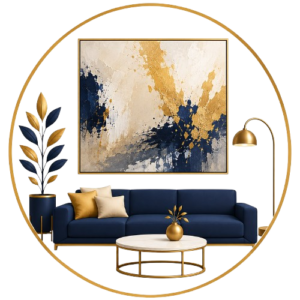
Instead of covering a large wall with numerous small decorations, make one oversized artwork the focal point.
A dramatic abstract composition, landscape, botanical artwork or contemporary canvas can completely change the character of a room.
The key is scale.
If the wall is large, the artwork needs enough visual presence to hold the space.
Best product choice: An oversized canvas, panoramic artwork or large statement piece.
For more ideas, explore Large & Oversized Wall Art Ideas.
2. Create an Art-Led Gallery Wall
Gallery walls don’t have to look like identical rows of frames.
Create a more distinctive arrangement by combining:
- Different frame sizes
- Artwork
- Photography
- Illustrations
- Typography
- Small decorative objects
Choose one connecting element—such as colour, subject or frame finish—to keep the collection cohesive.
For detailed layout ideas, see Gallery Wall Ideas.
3. Layer Artwork Instead of Hanging Everything
Try leaning smaller artwork against a larger piece on a console, shelf or ledge.
This creates depth and gives the wall a more relaxed, collected appearance.
Layer:
- One large artwork
- One medium print
- A smaller photograph
- A decorative object
This approach works particularly well in bedrooms, living rooms and home offices.
4. Use a Statement Colour Behind Artwork
Instead of treating the wall as a neutral background, make the wall itself part of the composition.
Paint a section in a contrasting or complementary colour and place artwork over it.
For example:
- Terracotta behind neutral artwork
- Deep green behind botanical art
- Soft blue behind coastal artwork
- Charcoal behind monochrome artwork
This technique can make a relatively simple artwork feel much more dramatic.
5. Create a Sculptural Wall
Wall décor doesn’t have to be flat.
Introduce three-dimensional elements such as:
- Sculptural shapes
- Decorative metal pieces
- Wooden forms
- Woven objects
- Ceramic wall pieces
Keep the rest of the wall relatively simple so the texture remains visible.
This is particularly effective in contemporary and luxury interiors.
6. Combine Art With a Large Mirror
A mirror can be treated as part of the artwork arrangement rather than simply as a practical object.
Combine a large mirror with:
- Small framed artwork
- Botanical pieces
- Decorative objects
- Photographs
A mirror can also help reflect natural light and make a smaller room feel more open.
The arrangement should remain balanced rather than becoming a collection of unrelated objects.
7. Create a Monochrome Feature Wall
A monochrome wall can look sophisticated without relying on bright colours.
Use artwork and décor in variations of:
- Black
- White
- Grey
- Charcoal
Mix photography, abstract artwork and line art while keeping the overall palette controlled.
For additional inspiration, explore Black and White Wall Art Ideas.
8. Build a Colour-Story Wall
Instead of choosing artwork independently, build the entire wall around a colour story.
For example, a warm palette might include:
- Beige
- Terracotta
- Rust
- Cream
- Brown
A cooler palette could use:
- Blue
- Grey
- Green
- White
Repeat the colours subtly throughout the arrangement.
This creates cohesion even when the artwork styles are different.
For more colourful styling ideas, see Colourful Wall Art Ideas.
9. Turn a Narrow Wall Into a Vertical Feature
Narrow walls are often ignored because they’re difficult to decorate.
Use the height instead of the width.
Try:
- One tall artwork
- Three vertically stacked prints
- A narrow gallery arrangement
- Vertical botanical artwork
- A tall decorative mirror
This can work particularly well beside doors, wardrobes, staircases and windows.
10. Create a Floor-to-Ceiling Art Moment
If you have a tall wall, don’t limit your artwork to eye-level decoration.
Create a vertical composition that draws the eye upward.
You could combine several pieces from floor level toward the upper portion of the wall, leaving enough negative space to prevent the arrangement from feeling crowded.
This works especially well in rooms with high ceilings.
11. Use a Diptych Instead of One Artwork
A diptych divides one visual concept into two complementary panels.
This can create more width and movement than a single artwork.
Try a diptych:
- Above a sofa
- Above a bed
- Behind a console
- In a dining room
- In an office
Keep the gap between the two panels relatively controlled so they read as one composition.
12. Try a Triptych for a Dramatic Effect
A triptych uses three coordinated panels to create a wider statement.
It works particularly well on:
- Large sofa walls
- Bed walls
- Dining room walls
- Office feature walls
Best product choice: A coordinated three-panel canvas triptych.
Choose artwork designed to work as a continuous composition rather than simply placing three unrelated pictures beside each other.
13. Turn a Staircase Wall Into an Art Feature
Staircases create naturally directional walls.
Instead of placing artwork randomly, follow the angle and movement of the stairs.
You can use:
- A series of small frames
- Family photographs
- Black and white photography
- Coordinated artwork
- A narrow gallery wall
Keep the spacing visually consistent and step back frequently while installing the arrangement.
14. Create a Theme-Based Wall
A themed wall can tell a visual story.
Possible themes include:
- Travel
- Nature
- Architecture
- Music
- Abstract art
- Photography
- Botanical artwork
- Cultural art
The theme gives the wall a sense of purpose while still allowing you to mix different pieces.
For nature-focused inspiration, explore Nature & Landscape Wall Art Ideas.
15. Mix Different Art Styles Carefully
Eclectic interiors can combine several artistic styles.
You might pair:
- Abstract artwork
- Vintage photography
- Botanical prints
- Typography
- Contemporary illustrations
The trick is to establish a visual connection.
Use one or two common elements such as:
- Similar colours
- Matching frames
- Consistent spacing
- Related subjects
Without a connecting element, the wall can quickly feel chaotic.
16. Create a Personal Memory Wall
Instead of using generic decorative artwork, build a wall around your own experiences.
Display:
- Travel photographs
- Family memories
- Special occasions
- Favourite places
- Personal artwork
- Meaningful objects
Choose only the strongest pieces.
Leaving some empty space between items will make the collection feel curated rather than crowded.
17. Use Oversized Botanical Artwork
Botanical artwork doesn’t always have to be delicate and small.
An oversized leaf, flower or botanical composition can become a dramatic focal point.
This works particularly well in:
- Bedrooms
- Living rooms
- Dining rooms
- Reading corners
For more botanical inspiration, explore Floral & Botanical Wall Art Ideas.
18. Create an Unexpected Artwork Pairing
Pair two things that aren’t normally displayed together.
For example:
- Abstract artwork + vintage photograph
- Botanical print + geometric artwork
- Landscape + typography
- Contemporary canvas + decorative mirror
Use colour and scale to create a relationship between the pieces.
The contrast can make the wall feel much more individual.
19. Decorate Around a TV Without Making It the Focal Point
TV walls can easily become visually dominated by the screen.
Instead of adding lots of unrelated decorations, use artwork around the television to create a more balanced composition.
Try:
- Small coordinated artwork
- Minimalist prints
- Neutral abstract pieces
- Symmetrical arrangements
Avoid placing artwork so close to the screen that the entire wall becomes visually crowded.
For more room-specific inspiration, explore Living Room Wall Art Ideas.
20. Create a Statement Wall Behind the Bed
The wall behind the bed is one of the most important decorative areas in a bedroom.
Instead of relying only on the headboard, use artwork to create a focal point.
Consider:
- One oversized canvas
- A diptych
- A triptych
- A symmetrical pair
- A carefully planned gallery wall
For additional bedroom inspiration, see Bedroom Wall Art Ideas.
21. Make Your Home Office More Creative
A home office doesn’t have to look purely functional.
Use the wall behind your desk to introduce:
- Abstract artwork
- Inspirational typography
- Photography
- Colour
- A gallery wall
Choose artwork that looks good both in person and on video calls.
For more workspace-specific ideas, see Office Wall Art Ideas.
22. Create a Dining Room Art Feature
Dining rooms can support artwork with stronger visual presence.
Consider:
- Oversized abstract art
- Botanical compositions
- Colourful artwork
- Photography
- A large gallery wall
Position the artwork so it complements the dining table rather than competing with it.
23. Use Unexpected Materials
Unique wall décor can come from materials that aren’t normally thought of as artwork.
Consider:
- Woven textiles
- Wood
- Metal
- Ceramic
- Fabric
- Natural materials
Mixing textures can make a neutral interior feel much more layered.
Use fewer pieces when the materials themselves are visually strong.
24. Create a Minimalist Statement Wall
Creative doesn’t always mean complicated.
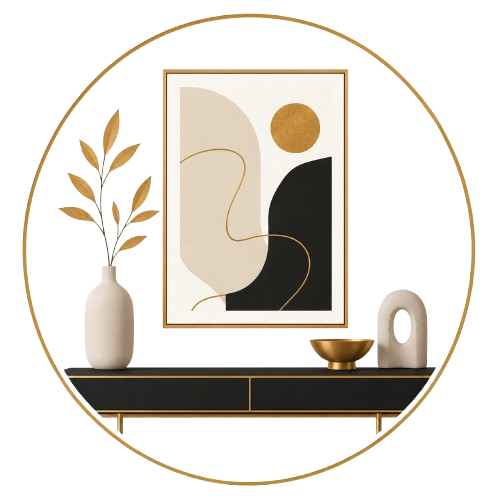
A single carefully selected artwork with plenty of surrounding negative space can be more distinctive than a crowded wall.
Choose:
- A strong abstract
- A dramatic landscape
- A sculptural piece
- A monochrome artwork
Let the artwork breathe.
This approach works particularly well in minimalist and contemporary interiors.
25. Create a Curated Canvas Collection
Instead of choosing unrelated canvas pieces, build a collection that feels intentionally connected.
Use artwork with:
- A shared colour palette
- Similar composition
- Related subject matter
- Consistent dimensions
- Complementary styles
This gives you the visual richness of a gallery wall while maintaining a clean, premium appearance.
For more canvas styling ideas, explore Canvas Wall Art Ideas.
Unique Wall Decor Ideas by Room
The same creative approach won’t work equally well in every room. Instead of repeating the ideas above, use the room’s function, furniture and available wall space to decide how to apply them.
Living Room
Make the main seating area the visual anchor. Large walls can handle oversized artwork, diptychs, triptychs or a carefully planned gallery composition. Keep smaller decorative elements secondary.
Best focus: Scale, focal point and relationship with the sofa or TV.
See Living Room Wall Art Ideas for more room-specific inspiration.
Bedroom
Choose décor that supports a calmer atmosphere. The wall behind the bed is usually the strongest opportunity for a statement piece, while smaller walls can work well with botanical artwork, soft abstracts or personal photography.
Best focus: Calm colours, symmetry and proportion around the bed.
See Bedroom Wall Art Ideas for additional ideas.
Home Office
Use the wall to combine personality with a professional appearance. Artwork behind or beside the desk should remain visually clear, particularly if the space is used for video calls.
Best focus: Clean composition, restrained colour and artwork that works at both close and camera distance.
See Office Wall Art Ideas for workspace-specific inspiration.
Dining Room
Use the dining area as an opportunity for stronger artwork and richer colour. A large composition can create a focal point without requiring numerous decorative objects.
Best focus: Artwork that relates to the dining table and surrounding lighting.
Hallway & Staircase
Use narrow or vertical compositions to work with the architecture rather than against it. Repeated frames, stacked artwork or a coordinated series can guide the eye through the space.
Best focus: Vertical proportion, consistent spacing and movement along the wall.
How to Choose Unique Wall Décor
Creative wall décor still needs to work with the room around it.
Consider the Wall Size
Large walls can support large artwork or collections.
Narrow walls generally work better with vertical compositions.
Consider the Furniture
Artwork should relate to the furniture beneath or beside it.
A tiny artwork above a large sofa can look lost.
Consider the Room’s Colour Palette
Use the existing colours as a starting point.
The artwork can either blend with the palette or deliberately provide contrast.
Consider the Visual Weight
Dark or highly detailed artwork has more visual weight than a light minimalist print.
Balance strong pieces with negative space.
Consider the Viewing Distance
Artwork that looks detailed from close range may appear too busy from across a large room.
Always consider where people will normally see it.
Unique Wall Decor Size Guide
There is no single correct artwork size, but proportion matters.
| Wall Situation | Recommended Approach |
| Small wall | Small or medium statement piece |
| Narrow wall | Vertical artwork |
| Above bedside table | Small to medium |
| Above dresser | Medium to large |
| Above sofa | Large artwork or collection |
| Above bed | Large horizontal piece or coordinated set |
| Large empty wall | Oversized artwork or gallery wall |
| Staircase | Series following the staircase |
| Dining room feature wall | Large statement artwork or gallery |
For artwork above furniture, a useful starting point is to make the overall artwork arrangement around two-thirds to three-quarters of the furniture width.
How High Should Wall Décor Be Hung?
Artwork should generally sit at a comfortable viewing height and remain visually connected to nearby furniture.
When placing artwork above furniture, approximately 15–25 cm between the furniture and artwork is a useful starting point.
For gallery walls, treat the collection as one visual unit rather than positioning every frame independently.
Always adjust for your room’s proportions.
How to Create a Balanced Creative Wall
Creative walls can become cluttered if every object competes for attention.
Use a simple hierarchy:
1. Choose one focal point
This might be an oversized canvas, mirror or sculptural piece.
2. Add supporting elements
Use smaller artwork or decorative objects around it.
3. Repeat a visual element
Repeat colour, material, shape or frame style.
4. Leave negative space
Empty space helps the main artwork stand out.
5. Check the wall from a distance
Walk to the opposite side of the room and look at the arrangement as a whole.
How to Make Unique Wall Décor Look Premium
Unique doesn’t have to mean messy or excessive.
Use fewer, stronger pieces
One impressive artwork can create more impact than ten unrelated decorations.
Think about scale
Large artwork often creates a stronger sense of luxury.
Control the colour palette
A limited palette makes eclectic arrangements feel more cohesive.
Keep spacing intentional
Consistent spacing creates visual order.
Mix textures carefully
Wood, metal, canvas and textiles can work together when one or two elements are repeated.
Give artwork room to breathe
Negative space is an important part of premium interior styling.
Common Creative Wall Décor Mistakes
Trying to Fill Every Wall
You don’t need artwork on every available surface.
Using Too Many Different Styles
Mixing styles can work, but there should be a connecting element.
Ignoring Scale
Small artwork can disappear on a large wall.
Creating Random Arrangements
An eclectic wall still needs planning.
Using Too Many Colours
A restrained palette often looks more sophisticated.
Hanging Artwork Too High
Keep artwork visually connected to furniture and the room.
Making Every Piece a Focal Point
If everything demands attention, nothing becomes the focal point.
How to Plan a Unique Wall Before Hanging Anything
Before installing your wall décor, test the entire composition.
Step 1: Photograph the wall
Take a straight-on photograph of the space.
Step 2: Measure everything
Record the wall dimensions and nearby furniture.
Step 3: Choose your focal piece
Decide which item should attract attention first.
Step 4: Gather supporting pieces
Choose artwork and décor that complement the focal point.
Step 5: Arrange everything on the floor
Experiment with different layouts.
Step 6: Create paper templates
For larger arrangements, tape paper outlines onto the wall.
Step 7: Check the composition
Look at the wall from several positions.
Step 8: Install the pieces
Hang the focal artwork first, then build around it.
Frequently Asked Questions About Unique Wall Decor
What can I put on a wall instead of pictures?
You can use mirrors, sculptural objects, wall hangings, wood panels, botanical displays, textiles, decorative plates, shelves or painted wall designs.
How can I make my wall décor more unique?
Start with one distinctive focal piece and build a coordinated arrangement around it. Mixing artwork with different textures, materials or unexpected objects can create a more personal result.
How do I decorate a large blank wall?
Consider oversized artwork, a gallery wall, a diptych, triptych, large mirror or a combination of artwork and sculptural décor.
What is a unique wall decor idea for a living room?
An oversized statement artwork, layered gallery wall, sculptural arrangement or artwork-and-mirror combination can create a distinctive living room feature.
What should I put on a blank bedroom wall?
Large artwork, botanical pieces, a coordinated pair, a gallery wall or textured wall décor can work well depending on the bedroom’s style.
How do I decorate a narrow wall?
Use vertical artwork, stacked frames, a narrow gallery wall or a tall mirror to make better use of the wall’s proportions.
Can I mix different types of wall art?
Yes. Mix different artwork styles, but establish a connection through colour, framing, subject, spacing or composition.
How much space should I leave between wall art?
For closely related pieces, approximately 5–10 cm is a useful starting point. Larger compositions may require more breathing room depending on their size.
Turn an Ordinary Wall Into a Signature Feature
The most effective unique wall decor ideas aren’t necessarily the most complicated. They are the ones that use scale, composition, colour and personality to make the wall feel intentional.
Start with one strong idea. Perhaps it’s an oversized canvas, a sculptural arrangement, a creative gallery wall, a dramatic colour block or an unexpected combination of artwork and décor.
Then build around that focal point without overcrowding the space.
For more inspiration, explore the Canvasora wall-art guides:
Whether your style is minimalist, colourful, contemporary, eclectic or luxurious, the right wall can become more than decoration – it can become one of the defining features of your home.