
Rustic & Modern Rustic Interior Design Ideas: 20 Warm and Stylish Ways to Create a Natural Home

Rustic interior design brings warmth, natural materials, texture, and character into the home. Inspired by countryside houses, cabins, farmhouses, and traditional rural architecture, rustic interiors often feature wood, stone, earthy colours, handcrafted details, and comfortable furniture.
However, rustic design does not have to mean an old-fashioned or heavily decorated home. Modern rustic interior design combines the warmth and authenticity of traditional rustic spaces with cleaner lines, contemporary furniture, neutral colours, and practical layouts.
This combination makes rustic interiors particularly versatile. You can create a cosy rustic living room in an apartment, a modern rustic bedroom in a city home, or a more traditional rustic atmosphere in a villa or independent house.
What Is Rustic Interior Design?
Rustic interior design is a style centred around natural materials, imperfect textures, earthy colours, comfort, and a connection with nature.
Common rustic design elements include:
- Natural wood
- Stone
- Exposed textures
- Earthy colours
- Woven materials
- Comfortable furniture
- Handmade or artisanal details
- Vintage-inspired accessories
- Natural textiles
- Warm lighting
- Indoor plants
- Organic shapes
Rustic rooms often embrace the natural character of their materials rather than trying to make everything look perfectly polished.
Modern rustic design takes these characteristics and combines them with contemporary simplicity.
Rustic vs Modern Rustic Interior Design
Traditional rustic interiors tend to feel more rugged, traditional, and heavily connected to countryside aesthetics.
Modern rustic interiors are generally cleaner and more restrained.
| Rustic Interior Design | Modern Rustic Interior Design |
| Heavier wood elements | Cleaner wood finishes |
| More traditional furniture | Contemporary furniture |
| Stronger vintage influence | Modern and vintage mix |
| Rich earthy colours | Softer neutral palette |
| More decorative texture | Controlled texture |
| Cosy and country-inspired | Cosy with contemporary simplicity |
You do not have to choose one approach exclusively. Many successful homes combine rustic materials with modern furniture and lighting.
20 Rustic & Modern Rustic Interior Design Ideas
1. Make Natural Wood the Hero Material
Wood is one of the easiest ways to establish a rustic atmosphere.
Use it for:
- Coffee tables
- Dining tables
- Shelving
- Cabinets
- Bed frames
- Console tables
- Wall panels
- Flooring
Look for visible grain, natural variation, and finishes that retain some of the material’s character.
In modern rustic interiors, balance wood with cleaner furniture and neutral walls so the room does not feel overly heavy.
2. Add Stone for Natural Texture
Stone introduces another layer of organic texture.
Depending on the home, consider:
- Natural stone walls
- Stone fireplaces
- Stone flooring
- Stone coffee tables
- Stone-look surfaces
- Textured stone accents
You do not need stone everywhere. One substantial stone feature can create a strong focal point.
3. Choose an Earthy Colour Palette
Rustic interiors naturally work well with colours inspired by nature.
Consider:
- Beige
- Cream
- Sand
- Brown
- Terracotta
- Rust
- Olive green
- Warm grey
- Charcoal
- Muted blue
Use lighter neutrals as the foundation and introduce deeper earthy colours through furniture, textiles, artwork, and accessories.
4. Create a Rustic Living Room
A rustic living room should feel comfortable and welcoming.
Start with a substantial sofa, natural wood coffee table, textured rug, warm lighting, and soft cushions.
Add a fireplace, large artwork, wooden console, or stone feature wall as a focal point.
For a modern rustic living room, keep the furniture silhouettes relatively simple while allowing natural materials to provide the character.
5. Layer Plenty of Natural Textures
Texture is essential to creating a convincing rustic interior.
Combine materials such as:
- Linen
- Cotton
- Wool
- Jute
- Leather
- Woven fibres
- Wood
- Stone
- Ceramic
A neutral room can become visually rich simply by layering different textures rather than adding more colours.
6. Use Reclaimed or Weathered Wood
Reclaimed wood can introduce authentic rustic character.
It can be used for:
- Shelves
- Dining tables
- Accent walls
- Headboards
- Consoles
- Decorative beams
If reclaimed wood is not practical, choose new timber with a naturally textured or aged-looking finish.
Use it selectively. Too much distressed wood can make a room feel themed rather than sophisticated.
7. Add a Rustic Fireplace or Focal Point
A fireplace can become the natural centre of a rustic room.
If your home does not have one, create a similar focal point using:
- Large artwork
- Stone texture
- Wood panelling
- A substantial console
- An oversized mirror
- A statement cabinet
The aim is to create one strong visual anchor rather than decorating every wall equally.
8. Bring Nature Indoors
Rustic interiors benefit from natural greenery.
Use:
- Large indoor plants
- Branch arrangements
- Dried grasses
- Small potted plants
- Fresh flowers
Choose simple pots and vessels made from ceramic, stone, terracotta, or woven materials.
9. Use Woven Baskets
Woven baskets provide both function and texture.
Use them for:
- Blankets
- Cushions
- Magazines
- Laundry
- Plants
- Everyday storage
They work particularly well in living rooms, bedrooms, bathrooms, and entryways.
10. Create a Modern Rustic Bedroom
A modern rustic bedroom can combine a simple bed with natural wood, linen bedding, warm lighting, and earthy colours.
Choose one or two substantial decorative elements rather than covering the room with rustic accessories.
A large nature-inspired or abstract artwork can add sophistication while maintaining the natural atmosphere.
11. Add Leather Accents
Leather can add depth and character to rustic interiors.
Consider:
- Leather armchairs
- Ottoman
- Accent chairs
- Handles
- Cushions
- Decorative details
Brown or tan leather works particularly well with natural wood and neutral fabrics.
For a lighter modern rustic aesthetic, use leather sparingly.
12. Introduce Handmade Ceramics
Handcrafted ceramics provide subtle imperfections that complement rustic materials.
Display:
- Vases
- Bowls
- Planters
- Tableware
- Decorative vessels
Choose pieces with organic shapes and understated finishes.
13. Use Warm, Layered Lighting
Rustic interiors look best under warm, layered lighting.
Combine:
- Pendant lights
- Table lamps
- Floor lamps
- Wall sconces
- Accent lights
Materials such as aged metal, ceramic, wood, or woven shades can reinforce the rustic character.
14. Design a Rustic Dining Area
A wooden dining table can become the foundation of a rustic dining room.
Pair it with comfortable chairs, a simple pendant light, and natural textiles.
A large framed artwork or gallery arrangement can add character to the wall behind the dining area.
For modern rustic interiors, mix a substantial wooden table with simpler contemporary chairs.
15. Use Rustic Wall Art
Wall art provides an easy way to reinforce the connection with nature.
Suitable choices include:
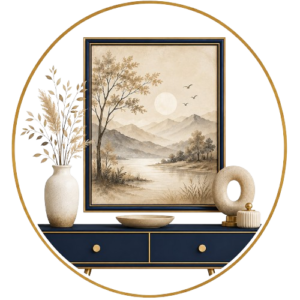
- Landscape artwork
- Botanical artwork
- Forest scenes
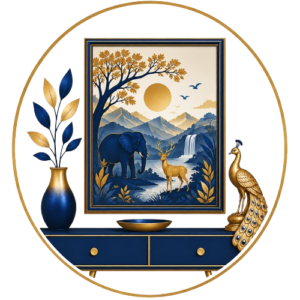
- Mountain artwork
- Animal artwork
- Nature photography
- Abstract artwork with earthy colours
A large canvas can work especially well above a rustic sofa, bed, sideboard, or dining table.
Choose artwork that complements the existing wood, stone, and textile colours rather than introducing an unrelated palette.
16. Mix Old and New Pieces
One of the strongest modern rustic techniques is combining old-looking and contemporary elements.
For example:
Vintage console + modern artwork
Reclaimed wood table + contemporary chairs
Traditional rug + modern sofa
Antique-style mirror + minimalist lighting
The contrast keeps the interior from feeling like a historical recreation.
17. Add Architectural Character
If your home has original architectural details, allow them to become part of the design.
Potential features include:
- Exposed beams
- Brick walls
- Stone walls
- Timber ceilings
- Arched openings
- Natural flooring
If the architecture does not have these features, avoid adding too many artificial rustic details simply for appearance.
18. Create a Rustic Home Office
A rustic home office can feel comfortable and grounded.
Use a wooden desk, comfortable chair, warm lamp, practical storage, and a few natural accessories.
A landscape or botanical artwork can add visual interest without making the workspace distracting.
19. Use Rustic Elements in the Kitchen
Rustic kitchens can combine practical modern appliances with natural materials.
Consider:
- Wooden cabinetry
- Open shelves
- Stone countertops
- Ceramic accessories
- Natural wood cutting boards
- Warm lighting
- Simple metal hardware
A modern kitchen can become more rustic simply by introducing natural timber and handcrafted accessories.
20. Keep Modern Rustic Interiors Edited
Rustic design can easily become cluttered because it naturally accommodates texture and decorative objects.
Avoid using every rustic element at once.
Instead, focus on a few strong materials:
Wood + stone + linen + metal
Then allow those materials to create the character of the room.
Rustic Interior Design Ideas by Room
Rustic Living Room
Use comfortable seating, natural wood, textured rugs, woven accessories, warm lighting, and nature-inspired artwork. A fireplace or substantial artwork can become the focal point.
Rustic Bedroom
Choose natural wood furniture, linen bedding, warm lighting, woven textures, and earthy colours. Keep the decoration simple enough to maintain a relaxing atmosphere.
Rustic Kitchen
Combine wooden elements, stone, ceramic accessories, open shelving, and warm lighting with modern appliances.
Rustic Dining Room
A substantial wooden table, comfortable chairs, pendant lighting, and natural artwork can create a welcoming dining space.
Rustic Bathroom
Introduce wood-look finishes, stone textures, woven baskets, ceramic accessories, and warm lighting while keeping moisture-sensitive materials appropriate for the space.
Rustic Home Office
A wooden desk, leather or upholstered chair, warm lighting, natural accessories, and a simple artwork can create a productive but comfortable workspace.
Rustic Interior Colour Ideas
Rustic colours are generally inspired by the landscape.
Warm Beige and Cream
A versatile foundation that works particularly well with natural wood.
Brown and Tan
These colours reinforce the earthy character of rustic spaces.
Terracotta and Rust
Use these warm tones through cushions, rugs, ceramics, artwork, or accent furniture.
Olive and Forest Green
Green creates a natural connection between the interior and outdoors.
Warm Grey
A softer alternative to stark grey that works well with wood and stone.
Muted Blue
Dusty or subdued blue can add contrast without breaking the natural palette.
Avoid using too many saturated colours. Rustic interiors generally look best when the palette feels connected to nature.
Modern Rustic Interior Design for Small Homes
Rustic design can work beautifully in apartments and smaller homes, but scale is important.
Use these principles:
- Choose fewer but more substantial rustic elements.
- Avoid oversized wooden furniture.
- Use light walls to balance darker materials.
- Choose multifunctional furniture.
- Use open shelving selectively.
- Keep floors and pathways clear.
- Introduce texture through textiles rather than excessive furniture.
- Choose artwork according to wall size.
A small modern rustic home can feel warm without becoming visually crowded.
Modern Rustic Interior Design for Large Homes
Large spaces can accommodate more substantial rustic elements.
Use:
- Large wooden dining tables
- Oversized rugs
- Stone fireplaces
- Exposed timber
- Large artwork
- Substantial sofas
- Statement lighting
Pay attention to scale. A tiny artwork above a large rustic sofa will usually feel lost.
Large walls can be especially effective locations for oversized landscape or nature-inspired artwork.
Rustic Interior Design With Artwork
Artwork can connect rustic interiors with the natural environment.
Nature-Inspired Artwork
Forests, mountains, landscapes, botanical compositions, and wildlife artwork reinforce the organic character of the room.
Abstract Artwork
Choose abstract compositions featuring earthy neutrals, muted greens, warm browns, terracotta, or soft blues.
Black-and-White Artwork
Black-and-white photography can provide contrast against warm wood and natural textures.
Large Canvas Artwork
A large canvas can create a strong focal point without requiring multiple decorative objects.
When selecting artwork, look at the room as a whole. The artwork does not need to match every colour, but it should feel compatible with the overall palette and materials.
How to Make Rustic Interior Design Look Modern
If a traditional rustic room feels too heavy, introduce contemporary elements.
Try:
- Simplifying furniture shapes
- Using lighter wall colours
- Reducing decorative objects
- Adding modern lighting
- Introducing contemporary artwork
- Mixing natural wood with black metal
- Using cleaner textiles
- Choosing fewer statement pieces
The result is a modern rustic interior that retains warmth without looking overly traditional.
How to Make Rustic Interiors Look Luxurious
Rustic design can look premium when materials, scale, and styling are carefully controlled.
Prioritise Natural Materials
Quality wood, stone, linen, wool, and leather can provide richness without excessive decoration.
Use Large-Scale Pieces
A substantial dining table, sofa, rug, or artwork can create visual impact.
Keep the Palette Controlled
Too many earthy colours can make the room feel busy. Choose a small, coordinated palette.
Layer Lighting
Warm pendant lights, lamps, sconces, and accent lighting create depth.
Mix Rustic With Refined Elements
Pair rough wood with smooth stone, soft linen, elegant artwork, or refined metal finishes.
Contrast is one of the easiest ways to make rustic interiors feel sophisticated.
Common Rustic Interior Design Mistakes
Using Too Much Distressed Wood
Rustic does not mean every surface needs to look aged.
Overloading the Room With Accessories
Natural materials already provide significant visual texture.
Choosing Furniture That Is Too Heavy
Large, bulky furniture can make rooms feel smaller than they are.
Using Too Many Rustic Themes
Avoid combining every farmhouse, cabin, vintage, and country element in one room.
Ignoring Modern Functionality
A rustic home should still provide practical storage, lighting, appliances, and comfortable furniture.
Making Everything Brown
Brown is useful, but too much can make a room feel dark. Balance it with cream, beige, warm white, greenery, and lighter textiles.
Choosing Artwork That Feels Unrelated
Artwork should support the room’s overall mood and colour palette.
How to Plan a Rustic Interior Step by Step
Step 1: Decide how rustic you want the room to feel.
Choose between traditional rustic, farmhouse-inspired, country, or modern rustic.
Step 2: Establish your base colours.
Begin with warm white, cream, beige, or another natural neutral.
Step 3: Select the main material.
Wood is usually the easiest starting point.
Step 4: Add one or two supporting materials.
Consider stone, linen, leather, metal, or woven fibres.
Step 5: Choose comfortable furniture.
Prioritise proportion and practicality.
Step 6: Layer lighting and textiles.
Use warm lights, rugs, cushions, curtains, and throws.
Step 7: Introduce artwork and greenery.
Use these elements to add personality and connect the room with nature.
Step 8: Edit the space.
Remove unnecessary rustic accessories so the room feels curated rather than themed.
Frequently Asked Questions
What is rustic interior design?
Rustic interior design is a warm, nature-inspired style that uses natural materials, earthy colours, textured surfaces, comfortable furniture, and handcrafted or vintage-inspired elements.
What is modern rustic interior design?
Modern rustic interior design combines traditional rustic materials such as wood and stone with contemporary furniture, cleaner lines, neutral colours, modern lighting, and restrained decoration.
What colours are best for rustic interiors?
Beige, cream, brown, tan, terracotta, rust, olive green, warm grey, charcoal, and muted blue are all suitable rustic colours.
What materials are commonly used in rustic interiors?
Wood, stone, leather, linen, wool, jute, rattan, ceramic, and metal are commonly used to create rustic texture and warmth.
What wall art works with rustic interiors?
Landscape, botanical, wildlife, mountain, forest, nature photography, earthy abstract, and black-and-white artwork can all complement rustic spaces.
Can rustic interior design work in an apartment?
Yes. Use a limited number of rustic elements, choose appropriately scaled furniture, and combine natural textures with a lighter neutral palette.
Is rustic interior design the same as farmhouse style?
No. Farmhouse is one influence within the broader family of rustic and country-inspired interiors. Rustic design can also include cabin, lodge, mountain, Mediterranean, or modern interpretations.
How do I make rustic interiors look modern?
Use cleaner furniture, lighter colours, contemporary lighting, fewer accessories, modern artwork, and a controlled material palette while retaining natural wood and other organic textures.
Final Thoughts
Rustic interior design creates homes that feel warm, grounded, comfortable, and connected to nature. Its greatest strength is the character that comes from natural materials and tactile textures.
For a traditional rustic look, embrace richer wood, classic furniture, stone, vintage details, and earthy colours. For a modern rustic home, simplify the furniture, lighten the palette, introduce contemporary artwork and lighting, and let a few natural materials become the stars.
The goal is not to make every element rustic. Instead, create a thoughtful balance between natural warmth and modern comfort.
If you are comparing interior styles, explore our Traditional & Classic Interior Design Ideas, Contemporary Interior Design Ideas, Scandinavian Interior Design Ideas, and Minimalist Home Interior Design Ideas guides. For artwork that complements rustic spaces, explore Nature & Landscape Wall Art Ideas, Animal & Wildlife Wall Art Ideas, Floral & Botanical Wall Art Ideas, and Canvas Wall Art Ideas.