
Scandinavian Interior Design Ideas: 15 Stylish Ways to Create a Warm, Minimal Home

Scandinavian interior design is known for its calm atmosphere, natural materials, functional furniture, soft colours, and uncluttered spaces. Inspired by Nordic countries such as Denmark, Sweden, and Norway, this style combines simplicity with warmth rather than making a home feel cold or overly minimal.
The appeal of Scandinavian interior design lies in its balance. Rooms are practical but inviting, contemporary but comfortable, and simple without feeling empty. Natural wood, neutral colours, textiles, plants, soft lighting, and carefully selected artwork all work together to create a relaxed home.
Whether you live in an apartment, a compact 2BHK, a large house, or a modern villa, Scandinavian design can be adapted to your space.
What Is Scandinavian Interior Design?
Scandinavian interior design is an approach to decorating that prioritises function, simplicity, natural materials, light, and comfort.
Unlike styles that rely heavily on decoration, Scandinavian interiors usually start with a clean foundation. Furniture has practical proportions, colours are restrained, and decorative pieces are chosen intentionally.
Common characteristics include:
- Light and neutral colour palettes
- Natural wood furniture and flooring
- Simple, functional furniture
- Soft textiles and layered textures
- Plenty of natural light
- Minimal visual clutter
- Indoor plants
- Simple lighting fixtures
- Organic shapes
- Carefully selected wall art and accessories
The goal is not to remove personality from a room. Instead, Scandinavian design creates a quiet backdrop where useful furniture, beautiful materials, artwork, and everyday objects can stand out.
15 Scandinavian Interior Design Ideas for a Beautiful Home
1. Start With a Light Neutral Colour Palette
White, warm white, beige, cream, soft grey, and pale taupe are excellent starting points for Scandinavian interiors.
A light palette reflects natural light and makes rooms feel spacious. Rather than using several strong colours, build depth by combining different neutral tones.
For example, pair warm white walls with:
- Light oak furniture
- Beige upholstery
- Cream curtains
- Soft grey textiles
- Natural woven accessories
This creates a sophisticated Scandinavian look without making the room feel plain.
2. Add Natural Wood Throughout the Home
Natural wood is one of the defining materials of Scandinavian interiors.
Choose light or medium-toned woods such as oak, ash, or pine for furniture, flooring, shelves, tables, or decorative details.
You do not need to make every element wooden. A simple wooden coffee table, dining table, bed frame, or console can introduce enough warmth to balance a neutral room.
3. Choose Simple, Functional Furniture
Scandinavian furniture tends to have clean lines and practical proportions.
Instead of choosing furniture purely because it looks decorative, ask whether it serves a useful purpose.
Look for:
- Clean silhouettes
- Tapered legs
- Rounded edges
- Low visual weight
- Practical storage
- Comfortable upholstery
A simple sofa with a textured throw can often create more Scandinavian character than a heavily decorated seating arrangement.
4. Layer Soft Textures
Minimal interiors can sometimes feel visually flat. Scandinavian design solves this by using texture instead of excessive decoration.
Layer materials such as:
- Wool
- Linen
- Cotton
- Bouclé
- Jute
- Knitted fabrics
- Sheepskin-style textures
For example, a neutral sofa can be paired with a knitted throw, textured cushions, and a soft rug.
The colours can remain simple while the different textures provide visual interest.
5. Make Natural Light a Priority
Natural light plays an important role in Scandinavian homes, particularly because Nordic countries experience long, dark winters.
Keep windows visually open where possible. Use lightweight curtains instead of heavy window treatments, and avoid placing bulky furniture directly in front of major windows.
Mirrors can also help distribute daylight around the room.
If natural light is limited, use multiple warm lighting sources rather than relying on one bright ceiling fixture.
6. Use Scandinavian-Style Lighting
Lighting should feel functional but atmospheric.
Combine:
- Pendant lights
- Floor lamps
- Table lamps
- Wall lights
- Small accent lights
Choose fixtures with simple silhouettes and materials such as metal, glass, wood, or fabric.
Warm bulbs can make neutral interiors feel significantly more comfortable in the evening.
7. Bring Plants Into the Interior
Indoor plants provide an easy way to introduce colour and organic shapes without disrupting the restrained Scandinavian palette.
Try:
- Tall floor plants
- Small plants on shelves
- Hanging plants
- Olive-style trees
- Green foliage in simple ceramic pots
Use plants selectively. A few well-positioned plants usually look more sophisticated than filling every available surface.
8. Create a Scandinavian Living Room
A Scandinavian living room should feel comfortable, bright, and uncluttered.
Start with a neutral sofa and add a textured rug, simple coffee table, soft cushions, and warm lighting.
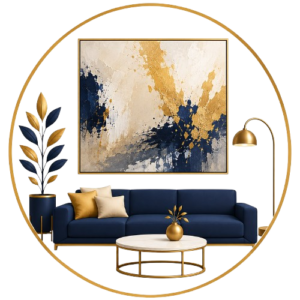
A large piece of artwork can become the focal point behind the sofa. Abstract, botanical, landscape, minimalist, or nature-inspired wall art can work particularly well.
The key is to give each major element enough visual space.
9. Design a Calm Scandinavian Bedroom
The bedroom is particularly well suited to Scandinavian design because the style naturally creates a relaxing atmosphere.
Use:
- Soft neutral bedding
- Light wood furniture
- Simple bedside tables
- Linen curtains
- Warm bedside lighting
- Minimal decoration
Instead of filling the wall with several decorative objects, consider one carefully selected artwork above the bed or on an adjacent wall.
Keep the composition balanced and leave enough empty space around it.
10. Create a Scandinavian Dining Area
A Scandinavian dining space can be simple without looking unfinished.
Pair a light wooden dining table with comfortable chairs, a minimal pendant light, and a small centrepiece.
A framed artwork or simple gallery arrangement can add personality to the surrounding wall.
For smaller homes, choose furniture with slim profiles to maintain an open feeling.
11. Use Open Shelving Carefully
Open shelves can add character to a Scandinavian interior, but they should not become cluttered storage areas.
Display a controlled selection of:
- Books
- Ceramics
- Plants
- Small artwork
- Wooden objects
- Everyday items
Leave some empty space between objects. Negative space is an important part of the overall aesthetic.
12. Introduce Scandinavian Wall Art
Wall art should complement the calm character of the room rather than overwhelm it.
Good choices include:
- Abstract artwork
- Botanical prints
- Minimalist artwork
- Nature photography
- Soft geometric designs
- Black-and-white art
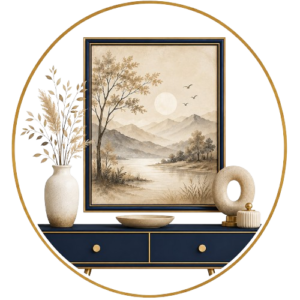
- Muted landscape artwork
For a neutral room, artwork can introduce a subtle accent colour while maintaining the Scandinavian feeling.
Canvas artwork with soft compositions can also work well when you want a contemporary interpretation of the style.
13. Combine White Walls With Warm Materials
White walls are common in Scandinavian interiors, but an entirely white room can sometimes feel too stark.
Balance them with warmer elements such as:
- Oak furniture
- Beige textiles
- Natural rugs
- Woven baskets
- Terracotta accessories
- Green plants
- Warm lighting
This creates the difference between a cold minimalist room and a comfortable Scandinavian interior.
14. Use Hygge-Inspired Comfort
Although hygge is associated particularly with Danish culture, its emphasis on comfort fits naturally with Scandinavian interiors.
Create a cosy atmosphere using:
- Soft blankets
- Comfortable seating
- Candles
- Warm lighting
- Natural textures
- Comfortable rugs
- Personal objects
The room should feel lived-in rather than like a showroom.
15. Keep Decoration Intentional
Scandinavian interiors are not completely decoration-free.
The difference is that decorative objects should have a reason to be there.
Instead of placing ten accessories on a console, choose three or four pieces with different heights, textures, and shapes.
This creates visual interest while maintaining the clean appearance associated with Scandinavian design.
Scandinavian Interior Design Ideas by Room
Scandinavian Living Room
Use a neutral sofa, light wood furniture, textured rug, soft lighting, indoor plants, and one strong artwork as the foundation.
Avoid filling the room with small decorative pieces. Let furniture, textures, and artwork provide most of the visual interest.
Scandinavian Bedroom
Choose soft bedding, light timber furniture, neutral walls, warm lamps, and minimal accessories. Botanical or abstract artwork can add personality without making the bedroom visually busy.
Scandinavian Kitchen
Keep cabinetry simple and pair it with natural wood, light countertops, understated hardware, and open shelving where appropriate.
Wooden cutting boards, ceramic vessels, plants, and simple pendant lighting can provide warmth.
Scandinavian Dining Room
A wooden dining table with simple chairs creates an immediate Nordic-inspired foundation. Add a pendant light overhead and keep table decoration restrained.
Scandinavian Home Office
Choose a simple desk, ergonomic chair, practical storage, and good lighting. A small artwork or framed print can make the workspace feel more personal without creating distraction.
Scandinavian Bathroom
Use light colours, natural-looking materials, simple fittings, and minimal accessories. Wooden details can soften an otherwise predominantly white bathroom.
Scandinavian Interior Colour Ideas
A Scandinavian palette does not have to mean pure white.
Consider combining:
Warm White + Light Wood
A classic combination that creates a bright and welcoming interior.
Beige + Cream + Oak
Ideal when you want a softer, warmer Scandinavian aesthetic.
Grey + White + Natural Wood
A slightly cooler palette that works well in contemporary homes.
Soft Blue + White + Wood
A subtle way to introduce colour without losing the Nordic character.
Muted Green + Beige
Plants and muted green accents can create a natural, calming atmosphere.
The best approach is to use one dominant neutral, one secondary neutral, and a small number of accent colours.
Scandinavian Interior Design With Natural Materials
Natural materials are essential for creating warmth in a Scandinavian home.
Prioritise materials such as:
- Wood
- Linen
- Cotton
- Wool
- Jute
- Rattan
- Ceramic
- Stone
The combination of these materials gives a simple room depth.
For example, a white wall can feel much warmer when paired with an oak console, linen curtains, a wool rug, a ceramic vase, and a botanical artwork.
Scandinavian Interior Design for Small Homes
Scandinavian principles work especially well in compact homes because they prioritise functionality and visual simplicity.
For a small apartment or 2BHK:
- Choose furniture that fits the room rather than oversized pieces.
- Use light colours to improve visual openness.
- Select furniture with exposed legs where appropriate.
- Use multifunctional storage.
- Keep pathways clear.
- Use mirrors strategically.
- Avoid excessive wall decoration.
- Choose one strong focal point instead of many competing elements.
A small room does not need to be completely empty. It simply needs a clear visual hierarchy.
Scandinavian Interior Design for Large Homes
Large rooms can sometimes lose the cosy quality associated with Scandinavian design.
Create intimacy by grouping furniture into functional zones.
For example, a large living room can include:
- A main seating area
- A reading chair
- A small side table
- A floor lamp
- A large rug
- One oversized artwork
Use larger furniture and artwork to maintain appropriate scale rather than filling the room with numerous small objects.
Scandinavian vs Minimalist Interior Design
Scandinavian and minimalist interiors share clean lines, simplicity, neutral colours, and limited clutter, but they are not identical.
Minimalist interior design generally focuses more strongly on reducing possessions and visual elements.
Scandinavian interior design places greater emphasis on warmth, comfort, natural materials, textiles, and everyday livability.
A Scandinavian home can therefore feel cosy and welcoming while still appearing clean and organised.
Scandinavian vs Modern Interior Design
Modern interiors can feature stronger geometry, polished finishes, darker contrasts, and a more architectural appearance.
Scandinavian interiors generally feel softer and more organic.
| Scandinavian | Modern |
| Natural materials | Mixed contemporary materials |
| Soft neutrals | Broader colour possibilities |
| Warm textures | Cleaner, sharper finishes |
| Cosy atmosphere | More architectural feel |
| Functional simplicity | Design-led simplicity |
There can be considerable overlap, and many contemporary homes successfully combine both approaches.
How to Make Scandinavian Interior Design Look More Luxurious
You do not need expensive decoration to make Scandinavian interiors look premium.
Focus on quality and restraint.
Choose Fewer, Better Pieces
Instead of filling the room with accessories, invest in a few well-made furniture and décor pieces.
Use Large-Scale Artwork
One appropriately sized artwork can create a sophisticated focal point without introducing clutter.
Coordinate Materials
Repeat natural wood, linen, ceramic, and metal finishes throughout the room so the design feels intentional.
Keep Surfaces Clean
Clear countertops, consoles, and shelves make even relatively affordable interiors appear more refined.
Use Layered Lighting
Combine ambient, task, and accent lighting rather than relying exclusively on overhead lighting.
Common Scandinavian Interior Design Mistakes
Avoid these problems when creating a Nordic-inspired home:
Making Everything White
Too much white without texture or warmth can make a room feel clinical.
Removing Too Much Personality
Scandinavian design is simple, not characterless. Include artwork, books, plants, and personal objects.
Overusing Small Accessories
Too many decorative objects defeat the purpose of the clean aesthetic.
Choosing Furniture That Is Too Large
Scale matters. Oversized furniture can quickly make a Scandinavian room feel cramped.
Ignoring Texture
Neutral colours need texture to prevent the interior from looking flat.
Using Only One Light Source
Layered lighting is essential for creating a warm evening atmosphere.
Matching Everything Perfectly
A Scandinavian room should feel coordinated, not artificially identical. Mix complementary materials and forms.
How to Plan a Scandinavian Interior Step by Step
If you are redesigning a room, use this simple process:
Step 1: Clear the visual clutter.
Remove unnecessary furniture and accessories.
Step 2: Establish the colour palette.
Start with warm white, beige, cream, grey, or another restrained neutral.
Step 3: Choose your main furniture.
Prioritise practical pieces with clean silhouettes.
Step 4: Add natural materials.
Introduce wood, linen, wool, jute, ceramic, or similar textures.
Step 5: Layer the lighting.
Add floor, table, wall, or pendant lighting as needed.
Step 6: Introduce greenery.
Use a few plants to add organic colour and shape.
Step 7: Add artwork.
Choose artwork that complements your palette and provides an intentional focal point.
Step 8: Edit the room.
Remove anything that feels unnecessary or visually distracting.
Frequently Asked Questions
What is Scandinavian interior design?
Scandinavian interior design is a Nordic-inspired approach that combines functionality, simplicity, natural materials, neutral colours, comfort, and practical furniture.
What colours are used in Scandinavian interior design?
White, cream, beige, soft grey, warm taupe, muted blue, and soft green are commonly used. Natural wood tones also play an important role.
Is Scandinavian design the same as minimalist design?
No. They share many principles, but Scandinavian design generally places more emphasis on warmth, comfort, natural materials, and cosy textures.
Can Scandinavian design work in a small apartment?
Yes. Its focus on functional furniture, light colours, uncluttered layouts, and smart storage makes it particularly suitable for compact homes.
What wall art works with Scandinavian interiors?
Abstract, botanical, minimalist, nature-inspired, landscape, black-and-white, and muted-colour artwork can all complement Scandinavian interiors.
How do I make Scandinavian interiors feel cosy?
Use warm lighting, natural wood, soft rugs, linen, wool, cushions, throws, plants, and carefully selected personal objects.
Can Scandinavian interiors have colour?
Yes. While neutral colours dominate, muted blues, greens, terracotta, dusty pinks, and other restrained accents can add personality.
Final Thoughts
Scandinavian interior design is ultimately about creating a home that feels simple, functional, comfortable, and naturally beautiful.
Start with a light neutral foundation, introduce natural wood and tactile materials, choose practical furniture, layer warm lighting, and keep decoration intentional. Then use artwork, plants, textiles, and personal objects to give the space character.
The best Scandinavian interiors are not completely empty or perfectly styled. They are comfortable homes where every major element has a purpose and the overall space feels calm.
For more inspiration, explore our Modern Home Interior Design Ideas guide and our Minimalist Home Interior Design Ideas guide. You can also discover Modern Wall Art Ideas, Nature & Landscape Wall Art Ideas, and Canvas Wall Art Ideas to find artwork that complements a Scandinavian-inspired home.