
Colourful Interior Design Ideas: Stylish Ways to Create a Vibrant Home

Colour can completely transform the personality of a home. While neutral interiors are often associated with timeless elegance, colorful interior design can make a space feel energetic, expressive, welcoming, and uniquely personal.
A colourful home does not mean that every wall, furniture piece, and accessory needs to be bright. The most successful colourful interiors use a controlled palette, combine different tones and textures, and create a clear visual hierarchy.
You can introduce colour through painted walls, furniture, rugs, curtains, cushions, artwork, plants, accessories, and even smaller architectural details.
Whether you love bold jewel tones, soft pastels, earthy colours, colourful modern interiors, or eclectic spaces filled with personality, these colorful interior design ideas will help you create a vibrant home without making it feel chaotic.
What Is Colourful Interior Design?
Colourful interior design uses multiple colours as an intentional part of the home’s overall visual identity.
Instead of relying primarily on whites, greys, or beiges, colour becomes an active design element.
A colourful interior can be:
- Bold and dramatic
- Bright and energetic
- Soft and playful
- Warm and earthy
- Artistic and eclectic
- Modern and sophisticated
The important distinction is between colourful and visually chaotic. A well-designed colourful room still needs balance.
20 Colourful Interior Design Ideas for Your Home
1. Start with One Dominant Colour
Before introducing several colours, choose one dominant shade.
This could be:
- Blue
- Green
- Terracotta
- Yellow
- Pink
- Orange
- Deep red
Use it on a major element such as a wall, sofa, rug, or large artwork.
Then build supporting colours around it.
2. Follow the 60-30-10 Rule
The 60-30-10 rule is a useful starting point for colourful interiors.
Use approximately:
- 60% dominant colour
- 30% secondary colour
- 10% accent colour
For example:
60%: warm white and neutral walls
30%: blue sofa and textiles
10%: terracotta artwork and accessories
It does not need to be mathematically exact. Think of it as a way to control visual balance.
3. Use Colourful Artwork as the Starting Point
Artwork can provide an excellent colour palette for a room.
Choose a painting you love and identify two or three colours within it.
Then repeat those colours subtly through:
- Cushions
- Rugs
- Curtains
- Accessories
- Accent furniture
This creates a more natural and coordinated colourful interior.
Explore Colourful Wall Art →, Abstract Wall Art Ideas →, and Modern Wall Art Ideas → for inspiration.
4. Create a Colourful Feature Wall
A feature wall is one of the easiest ways to introduce strong colour.
Consider a rich:
- Emerald green
- Navy
- Terracotta
- Mustard
- Cobalt blue
- Deep pink
Use the wall to establish a focal point while keeping the remaining surfaces relatively restrained.
5. Combine Complementary Colours
Complementary colours sit opposite each other on the colour wheel.
Examples include:
- Blue + orange
- Green + red
- Purple + yellow
These combinations create strong visual energy.
For sophisticated interiors, use one colour at full strength and the complementary colour in a softer or muted version.
6. Try an Analogous Colour Palette
Analogous colours sit next to each other on the colour wheel.
Examples include:
Blue + green + teal
or
Yellow + orange + terracotta
These combinations usually feel more harmonious than highly contrasting palettes.
They are excellent for colourful interiors where you want personality without excessive visual tension.
7. Mix Warm and Cool Colours
A colourful interior can become much more interesting when warm and cool shades are balanced.
For example:
Navy + terracotta + cream
or
Sage + mustard + warm white
The warm shade prevents the cool colour from feeling too cold, while the cool shade gives the warmer colour more definition.
8. Use Colour Through Furniture
Furniture can become the strongest colourful element in a neutral room.
Consider:
- Blue sofa
- Green accent chair
- Terracotta dining chairs
- Mustard armchair
- Colourful upholstered headboard
If the furniture is bold, keep the surrounding walls and larger surfaces relatively calm.
9. Create a Colourful Living Room
The living room is an ideal place to experiment with colour.
A balanced combination could be:
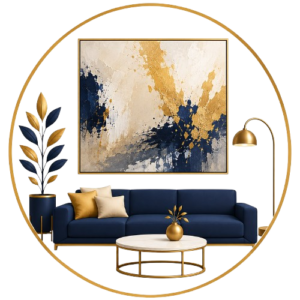
Warm white walls + blue sofa + terracotta cushions + colourful artwork + natural wood
For a more dramatic room, use a saturated feature wall and neutral furniture.
10. Design a Colourful Bedroom
Bedrooms can use colour without becoming visually overwhelming.
Consider:
- Dusty blue
- Sage green
- Terracotta
- Muted pink
- Deep green
- Warm yellow
Use stronger colours through the headboard, bedding, artwork, or one feature wall rather than every surface.
11. Add Colour to the Kitchen
Kitchen colour can be introduced through cabinetry, backsplash tiles, appliances, or accessories.
Try:
- Sage green cabinets
- Navy island
- Terracotta backsplash
- Colourful tiles
- Blue lower cabinets
Pair stronger colours with wood, stone, or neutral surfaces to maintain balance.
12. Create a Colourful Dining Room
Dining rooms are excellent spaces for richer colour.
Consider:
- Deep green walls
- Colourful dining chairs
- Terracotta accents
- Statement artwork
- Bold pendant lighting
The goal is to create atmosphere without making the room visually crowded.
13. Make a Colourful Home Office
A home office can benefit from carefully chosen colour.
Try:
Muted green wall + natural wood desk + colourful artwork + warm neutral accessories
If you want a stronger space, introduce colour through the chair, shelving, rug, or artwork rather than covering every wall.
14. Use Colourful Accessories
Accessories provide the easiest way to experiment.
Introduce colour through:
- Cushions
- Vases
- Ceramics
- Books
- Rugs
- Curtains
- Lamps
- Decorative objects
This is especially useful if you like changing your home’s look seasonally.
15. Layer Different Shades of One Colour
Colourful interiors do not always require many different colours.
You can create richness by layering shades of one colour.
For example:
Pale blue + dusty blue + medium blue + navy
or
Soft green + sage + olive + forest green
The result feels colourful while remaining cohesive.
16. Use Pastels for a Softer Look
If bright colours feel too intense, try pastels.
Useful shades include:
- Powder blue
- Blush pink
- Soft yellow
- Pale green
- Lavender
- Peach
Combine them with warm white, cream, light wood, or beige.
17. Try Jewel Tones for a Luxury Interior
Jewel tones can create a rich and sophisticated colourful interior.
Consider:
- Emerald
- Sapphire
- Ruby
- Amethyst
- Deep teal
Use them selectively through walls, furniture, textiles, or artwork.
Balance jewel tones with warm neutrals, wood, brass, or stone.
18. Create an Earthy Colourful Interior
Colour does not have to mean neon or highly saturated shades.
Earthy palettes can include:
- Terracotta
- Olive
- Ochre
- Rust
- Sand
- Brown
- Muted green
These colours create warmth while maintaining a sophisticated appearance.
19. Use Colour to Define Different Zones
Colour can visually separate areas in an open-plan home.
For example:
Living area: warm beige + blue
Dining area: cream + terracotta
Kitchen: white + sage
Repeat one colour between the zones to maintain overall cohesion.
20. Repeat Colours Throughout the Room
One of the easiest ways to make a colourful interior look intentional is repetition.
If you use blue artwork, repeat a small amount of blue in a cushion or decorative object.
If your sofa is green, introduce another green element elsewhere.
The repetition creates a visual connection between otherwise different objects.
Colourful Interior Design Ideas by Room
Colourful Living Room
The living room can support stronger colour than many other areas.
Start with a neutral foundation and introduce colour through the sofa, artwork, cushions, rug, curtains, or one feature wall.
A large colourful painting can become the main focal point while the surrounding furniture remains relatively restrained.
Colourful Bedroom
Choose colours that support relaxation.
Muted blue, sage, terracotta, dusty pink, and warm yellow can all work beautifully when used selectively.
Layer colour through bedding, curtains, artwork, and a feature wall.
Colourful Kitchen
Use colourful cabinetry or tiles as the main statement.
If the cabinets are bold, keep countertops and larger surfaces more neutral.
Colourful Dining Room
A dining room can handle richer colours such as emerald, navy, terracotta, mustard, or deep red.
Use warm lighting to enhance the atmosphere.
Colourful Home Office
Introduce colour without making the workspace distracting.
A colourful artwork, accent chair, rug, or feature wall can provide personality while maintaining visual focus.
Colourful Drawing Room
Formal rooms can use deeper colours and richer materials.
Combine jewel tones or earthy colours with wood, brass, cream, and sophisticated artwork.
Popular Colourful Interior Colour Combinations
Blue + Terracotta
Cool and warm tones create balanced contrast.
Green + Mustard
Earthy and energetic.
Navy + Pink
Sophisticated with a softer accent.
Emerald + Brass
Rich and luxurious.
Sage + Terracotta
Natural and contemporary.
Teal + Orange
Bold and energetic.
Yellow + Grey
Bright but balanced.
Green + Blue
Harmonious and nature-inspired.
Purple + Cream
Elegant and expressive.
Terracotta + Beige
Warm and understated.
The best combination depends on the intensity of each colour. Highly saturated colours usually need more neutral space around them.
How to Make Colourful Interiors Look Sophisticated
A colourful room can still feel premium when colour is controlled.
Keep a Clear Palette
Choose three to five main colours rather than introducing every shade you like.
Balance Strong Colours with Neutrals
White, cream, beige, grey, wood, and stone can provide breathing room.
Repeat Accent Colours
Repeat important colours in several small places instead of introducing many unrelated shades.
Use Quality Materials
Colour looks more refined when paired with natural wood, stone, linen, wool, glass, or metal.
Consider Proportion
A bold colour used on one large wall has a very different visual effect from the same colour used on a small cushion.
Let One Element Lead
A colourful artwork, sofa, feature wall, or rug can act as the primary visual statement.
Avoid making everything compete for attention.
Colourful Interior Design for Different Styles
Modern Colourful Interior
Use clean furniture and a restrained palette with one or two strong colours.
Minimalist Colourful Interior
Keep the architecture neutral and use colour selectively through artwork, furniture, and accessories.
Scandinavian Colourful Interior
Combine light wood and neutral foundations with muted blue, green, yellow, or terracotta accents.
Bohemian Colourful Interior
Layer richer colours, patterns, textiles, plants, and handmade-looking accessories.
Eclectic Colourful Interior
Mix different styles and colours while maintaining a connection through repeated tones, materials, or patterns.
Luxury Colourful Interior
Use jewel tones with brass, marble, velvet, dark wood, and sophisticated lighting.
How to Use Colourful Wall Art in Interior Design
Colourful wall art can be one of the easiest ways to introduce personality without permanently changing your walls.
When selecting artwork, consider:
Match One Colour
Choose artwork containing one colour already present in the room.
Complement the Room
Use a contrasting colour to make the artwork stand out.
Let the Artwork Lead
If you are starting from an empty room, choose the artwork first and build the colour palette around it.
Consider Scale
A large colourful painting can anchor a room more effectively than several small decorative pieces.
Give It Breathing Space
Do not surround a bold artwork with too many competing colours or objects.
For additional inspiration, explore Colourful Wall Art →, Abstract Wall Art Ideas →, and Gallery Wall Ideas →.
Colourful Interior Design Mistakes to Avoid
Using Too Many Colours
A room with too many unrelated colours can quickly become chaotic.
Choose a controlled palette.
Making Every Surface Bright
Strong colour on walls, furniture, curtains, rugs, and accessories can become overwhelming.
Give the eye some neutral space.
Ignoring Natural Light
Colour changes dramatically under different lighting conditions.
Always test strong paint colours in the actual room.
Choosing Colours Independently
A colour can look beautiful by itself but fail when placed next to your flooring, furniture, or existing décor.
Consider the complete room.
Forgetting Visual Hierarchy
Every room needs a focal point.
Do not make the wall, sofa, rug, artwork, and accessories equally dominant.
Matching Everything Exactly
Colourful interiors need variation.
Repeating a colour is useful, but exact matching can make a room feel overly coordinated.
How to Plan a Colourful Interior
Use this simple process:
1. Choose your inspiration.
This could be artwork, a fabric, rug, furniture piece, or colour you already love.
2. Select a dominant colour.
Use it on a major surface or visual element.
3. Add one or two supporting colours.
Choose shades that complement the dominant colour.
4. Add neutral space.
Use white, cream, beige, grey, wood, or stone to create balance.
5. Introduce texture.
Layer textiles, natural materials, and finishes.
6. Repeat important colours.
Use them in at least two or three places.
7. Check the room in different lighting.
Review your palette during daylight and evening lighting.
8. Edit before adding more.
If the room already feels visually complete, stop. More colour is not always better.
Frequently Asked Questions About Colourful Interior Design
What is colourful interior design?
Colourful interior design uses multiple intentional colours throughout a space instead of relying primarily on neutral shades. Colour can appear through walls, furniture, textiles, artwork, accessories, and architectural details.
How many colours should an interior have?
Three to five main colours is a practical starting point. The exact number depends on the size, style, and complexity of the room.
How do I make a colourful room look elegant?
Use a controlled palette, balance strong colours with neutrals, repeat accent colours, incorporate quality materials, and establish a clear focal point.
What colours work well together in interiors?
Blue and terracotta, green and mustard, sage and terracotta, navy and pink, emerald and brass, and blue and green are useful starting combinations.
Can a small room be colourful?
Yes. Use colour selectively through one feature wall, furniture, artwork, textiles, or accessories. Lighter surrounding surfaces can maintain a sense of openness.
Is colourful interior design suitable for a modern home?
Absolutely. Modern colourful interiors work best when bold colours are combined with clean furniture, simple forms, natural materials, and controlled decoration.
How can artwork help with interior colours?
Artwork can establish or reinforce an accent palette. Choose colours from the artwork and repeat them subtly throughout the room for a cohesive appearance.
Should every room have the same colours?
No. Different rooms can have their own personalities. Repeating one or two colours, materials, or finishes throughout the home can provide continuity.
Final Thoughts
Colorful interior design is ultimately about expression and balance.
You do not need to choose between a completely neutral home and a space filled with intense colour. A carefully controlled palette can give your home personality while still feeling sophisticated and cohesive.
Start with one colour you love, build a supporting palette around it, and use neutrals to create breathing room. Then introduce colour through furniture, textiles, accessories, and especially artwork.
Whether your preference is soft pastels, earthy tones, jewel colours, or bold modern combinations, thoughtful colour placement can transform a home without requiring every surface to be bright.
And if you want an easy way to experiment, start with wall art. A colourful painting can introduce several shades at once and give you a ready-made palette for the rest of the room.
Explore more Canvasora inspiration:
- Interior Colour Ideas for Your Home →
- Grey Interior Design Ideas →
- White Interior Design Ideas →
- Black Interior Design Ideas →
- Blue Interior Design Ideas →
- Modern Home Interior Design Ideas →
- Modern Interior Design Ideas for Home →
- Colourful Wall Art →
- Abstract Wall Art Ideas →
- Modern Wall Art Ideas →
- Gallery Wall Ideas →