
DIY Wall Art Ideas: Easy Handmade Paintings & Drawings for Your Home


You do not need expensive décor or professional artistic skills to make a blank wall feel special. With a few basic materials and a little creativity, easy wall art can become one of the simplest ways to personalise your home.
DIY wall art can take many forms. You can paint an abstract canvas, draw directly on a wall, create a botanical composition, make paper artwork, frame fabric, build a simple gallery arrangement, or transform everyday materials into decorative pieces.
The best projects are not necessarily complicated. A simple handmade design can look remarkably sophisticated when its colours, scale, composition, and materials work with the room around it.
Whether you are decorating a bedroom, living room, home office, hallway, children’s room, or reading corner, this guide brings together practical DIY wall art ideas that are approachable, affordable, and adaptable to different interior styles.
What Is DIY Wall Art?
DIY wall art is decorative artwork that you make, customise, or assemble yourself rather than purchasing as a finished piece.
It can include:
- Handmade paintings
- Wall drawings
- Canvas artwork
- Paper art
- Botanical compositions
- Textile art
- Collages
- Geometric designs
- Photography
- Typography
- Recycled-material artwork
- Decorative objects
DIY does not necessarily mean inexpensive-looking. The right combination of materials, colour, scale, and presentation can create artwork that feels intentional and premium.
20 Easy Wall Art Ideas to Make Yourself
1. Abstract Canvas Painting
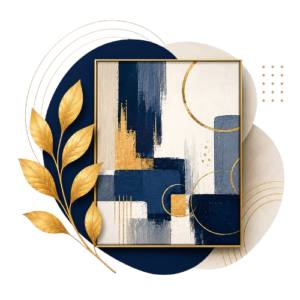
Abstract painting is one of the most accessible forms of easy wall art because it does not require realistic drawing.
Try combining:
- Organic shapes
- Curved lines
- Blocks of colour
- Brush textures
- Layered forms
Choose two or three colours inspired by your existing furniture and décor.
You can create the artwork on a blank canvas and frame it or hang it directly depending on the desired look.
2. Minimalist Line Art
Create a simple face, figure, flower, or abstract form using continuous lines.
Sketch the design lightly with a pencil before tracing it with a suitable paint marker or fine brush.
Black linework against a neutral background can create an elegant contemporary appearance.
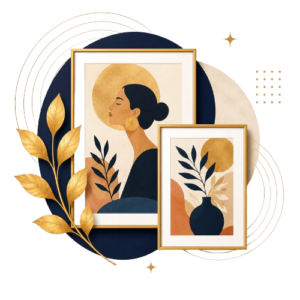
3. DIY Botanical Artwork
Collect inspiration from leaves, branches, flowers, and other natural forms.
You can paint or draw simplified botanical shapes on canvas or thick paper.
For a cohesive arrangement, use the same background colour across several pieces and vary the botanical subjects.
4. Pressed Botanical Art
Pressed leaves and flowers can become simple decorative artwork.
Arrange the dried materials on suitable paper, secure them carefully, and place the finished composition inside a frame.
Neutral backgrounds often allow the natural forms to remain the focus.
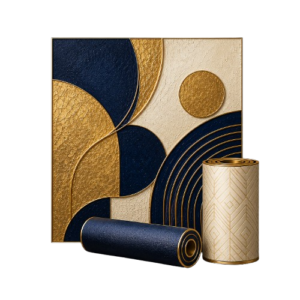
5. Geometric Canvas Art
Create geometric artwork using circles, arches, rectangles, triangles, or intersecting lines.
Painter’s tape can help create sharp boundaries.
For a modern interior, use a restrained palette rather than too many contrasting colours.
6. DIY Painted Arch
Paint an arch on a wall or canvas to create a strong graphic shape.
A wall arch can frame:
- A bed
- Sofa
- Desk
- Console
- Reading nook
- Artwork
This is particularly effective when you want a feature without covering the entire wall.
7. Handmade Flower Painting
Flowers can be simplified into basic petals and leaves.
Instead of trying to create realistic botanical artwork, focus on the overall shape and composition.
A single oversized flower can become a striking focal point.
8. Watercolour Wall Art
Watercolour can create soft, atmospheric artwork with minimal effort.
Paint abstract washes, flowers, landscapes, skies, or organic shapes and frame the finished piece.
Use archival-quality materials if you want the artwork to remain attractive over time.
9. Paper Collage
Create an abstract collage using coloured or textured paper.
Cut shapes into different sizes and arrange them before gluing.
Try:
- Arches
- Circles
- Leaves
- Organic forms
- Geometric shapes
A consistent colour palette can make a simple collage look much more sophisticated.
10. Fabric Wall Art
Textiles can introduce warmth and texture.
Frame a beautiful fabric sample, create a simple textile panel, or stretch fabric over a suitable backing.
This works particularly well in bedrooms, reading corners, and relaxed living spaces.
11. DIY Typography Art
Create artwork around a meaningful word, short phrase, or letter.
You can hand-letter the design or use a suitable template.
Keep the message short and the typography clean so the artwork feels decorative rather than cluttered.
12. Painted Mountain Landscape
A simple mountain scene can be created with layered silhouettes.
Start with the background and progressively add darker or more defined forms.
You do not need realistic detail. A simplified landscape can work beautifully in bedrooms, offices, and reading areas.
13. DIY Butterfly Artwork
Butterflies can be drawn, painted, cut from paper, or arranged as a three-dimensional wall composition.
Use a limited palette for an elegant result.
For children’s rooms, brighter colours can create a more playful atmosphere.
14. Handmade Feather Art
Feathers can be interpreted through drawing, painting, paper cutting, or textile techniques.
One oversized feather can become a subtle statement, while several smaller pieces can form a decorative arrangement.
15. DIY Sun and Moon Art
Create a simple celestial composition using circles, crescents, stars, and lines.
Gold or metallic-inspired accents can add visual richness, while monochrome artwork creates a quieter appearance.
16. Photo Wall Art
Turn personal photographs into decorative artwork.
Choose images with a consistent visual style and arrange them as:
- A grid
- A pair
- A triptych
- A gallery wall
- A single oversized print
Use similar frames if you want the arrangement to feel cohesive.
17. DIY Gallery Wall
Combine several handmade pieces into one curated display.
You can mix:
- Paintings
- Drawings
- Photographs
- Typography
- Botanical prints
- Small decorative objects
Lay everything out on the floor before hanging anything so you can adjust the arrangement.
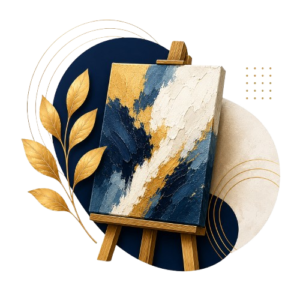
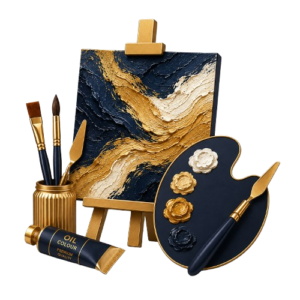
18. Textured Abstract Art
Create dimension by layering suitable art materials or using different painting techniques.
Try:
- Thick brush strokes
- Palette-knife textures
- Layered shapes
- Raised patterns
- Textured backgrounds
Keep the colours controlled if you want the finished artwork to feel sophisticated.
19. Recycled Material Wall Art
Everyday materials can become creative artwork.
Depending on the material and intended environment, consider:
- Cardboard
- Paper
- Fabric scraps
- Wooden pieces
- Natural fibres
- Reclaimed materials
Make sure the materials are clean, stable, and safe for indoor use.
20. Hand-Drawn Wall Mural
If you want something directly integrated into the room, draw a design on the wall.
Simple botanical branches, abstract faces, geometric shapes, mountains, butterflies, feathers, or line-art figures are approachable starting points.
For larger compositions, use a light sketch, grid, or projector to establish proportions before adding the final artwork.
Easy Wall Art Ideas by Room
The best DIY project depends on the room’s purpose and existing décor.
Living Room Wall Art
Living rooms generally provide enough wall space for larger pieces.
Good DIY options include:
- Large abstract canvas
- Gallery wall
- Botanical artwork
- Geometric composition
- Oversized line drawing
- Textured abstract painting
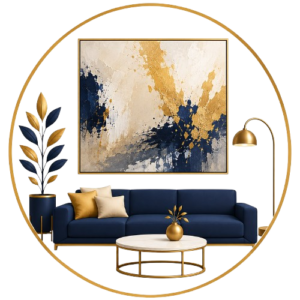
If the artwork is going above a sofa, make sure its visual width relates to the furniture rather than choosing a piece that feels too small.
Bedroom Wall Art
Bedrooms benefit from softer artwork.
Consider:
- Botanical paintings
- Abstract shapes
- Landscapes
- Minimalist line art
- Moon-and-sky artwork
- Fabric panels
- Handmade flowers
A large piece above the bed can create a clear focal point without requiring many smaller decorations.
Home Office Wall Art
DIY office artwork should add personality without creating excessive distraction.
Try:
- Geometric art
- Typography
- Architectural sketches
- Abstract paintings
- Botanical drawings
- Simple photography
Children’s Room
Children’s spaces are ideal for creative handmade artwork.
Consider:
- Animals
- Clouds
- Rainbows
- Stars
- Butterflies
- Trees
- Mountains
- Simple character-inspired artwork
Choose materials that are appropriate for the child’s age and keep fragile pieces securely mounted.
Hallway
A hallway can accommodate a sequence of small handmade pieces or one long horizontal composition.
A gallery arrangement can make an otherwise overlooked passage feel intentional.
Reading Nook
Choose quiet artwork that supports the relaxed atmosphere.
Botanical drawings, landscapes, abstract shapes, typography, and textile art can all work well.
Dining Area
A large botanical composition, abstract canvas, textile panel, or simple geometric artwork can become a focal point behind a dining table.
Easy Handmade Wall Art With Common Materials
One of the advantages of DIY art is that you can work with materials you already have.
Paper
Paper is useful for:
- Collages
- Origami
- Cut-out designs
- Typography
- Botanical silhouettes
Fabric
Fabric adds softness and texture and can be stretched, framed, or mounted as a decorative panel.
Wood
Small wooden pieces can create rustic or contemporary artwork depending on their finish and arrangement.
Paint
Paint remains one of the most versatile DIY materials.
Use it on:
- Canvas
- Paper
- Suitable wood
- Prepared walls
Natural Materials
Leaves, dried flowers, fibres, and other stable natural materials can create organic compositions.
Always make sure materials are dry and appropriate for indoor display.
How to Make DIY Wall Art Look Expensive
The quality of the idea matters, but presentation matters just as much.
Use a Limited Palette
Choose colours that already exist in the room.
Increase the Scale
A larger, simple artwork can often have more impact than several tiny pieces.
Use Consistent Frames
When creating a gallery wall, similar frames can unify different artworks.
Leave Breathing Room
Do not fill every available wall area.
Match Artwork to Furniture
Artwork should relate to the scale and position of nearby furniture.
Use Good Lighting
Accent lighting can make handmade artwork feel much more intentional.
Keep the Composition Clean
Avoid adding decorative elements simply because there is empty space.
DIY Wall Art Colour Ideas
Neutral and Earthy
Cream + beige + brown + terracotta
Ideal for warm, natural interiors.
Modern Monochrome
White + grey + black
Works well with modern and minimalist décor.
Botanical
Sage + olive + cream + natural brown
Pairs beautifully with wood and plants.
Soft and Calm
Powder blue + off-white + muted green
Suitable for bedrooms and quiet spaces.
Warm Contemporary
Taupe + rust + cream + charcoal
Adds depth without becoming overly colourful.
Colourful
Blue + yellow + coral + green
A good option for children’s rooms, creative spaces, and eclectic interiors.
DIY Wall Art for Small Spaces
Small rooms do not necessarily need small artwork.
Instead, focus on visual simplicity and appropriate placement.
Try:
- One medium-sized canvas
- A vertical line drawing
- A small gallery arrangement
- A painted arch
- A narrow botanical composition
- A compact textile panel
Avoid filling every wall with small pieces because multiple small objects can make a compact room feel busier.
DIY Wall Art for Large Walls
Large walls can support more substantial artwork.
Consider:
- Oversized canvas
- Large abstract painting
- Triptych
- Large botanical mural
- Gallery wall
- Oversized line drawing
- Multi-panel composition
If you are making the artwork yourself, create a small paper mock-up first to determine the correct scale.
DIY Wall Art for Different Interior Styles
Modern
Use abstract shapes, clean lines, geometric artwork, and restrained colours.
Minimalist
Keep the composition simple and use plenty of negative space.
Scandinavian
Natural materials, botanical drawings, muted colours, and simple forms work particularly well.
Rustic
Wood, textiles, botanical artwork, earthy colours, and handmade textures can complement rustic spaces.
Bohemian
Layered textiles, colourful artwork, organic shapes, and eclectic arrangements can create a relaxed atmosphere.
Traditional
Botanical paintings, classic landscapes, framed sketches, and coordinated gallery arrangements can work beautifully.
Contemporary
Use bold compositions, abstract art, sculptural textures, and unexpected colour combinations.
How to Make DIY Wall Art Step by Step
Step 1: Choose the Wall
Identify the wall where the artwork will be displayed.
Step 2: Measure the Space
Consider the wall dimensions and nearby furniture.
Step 3: Select the Medium
Decide whether you want to paint, draw, collage, print, frame, or assemble the artwork.
Step 4: Create a Small Mock-Up
Draw or arrange a miniature version before working at full size.
Step 5: Select Your Colours
Use the existing interior palette as your starting point.
Step 6: Gather Materials
Prepare everything before beginning so you do not have to interrupt the project.
Step 7: Create the Artwork
Work from the largest elements toward smaller details.
Step 8: Let It Dry or Set
Follow the requirements of the materials you have used.
Step 9: Frame or Mount It
Choose a presentation method that complements both the artwork and the room.
Step 10: Install Carefully
Measure the final position before making holes or permanently attaching anything.
How High Should DIY Wall Art Be Hung?
The artwork should generally relate to the viewer and surrounding furniture rather than simply being placed wherever there is empty wall space.
When hanging artwork above furniture:
- Keep the relationship visually connected to the furniture.
- Avoid leaving an excessively large gap.
- Consider the artwork’s overall height and width.
- Check the composition from across the room.
For gallery walls, treat the complete arrangement as one visual unit rather than measuring each frame independently.
DIY Wall Art vs Ready-Made Wall Art
DIY artwork is ideal if you enjoy creating something personal and want complete control over its appearance.
Choose DIY when you want:
- Custom colours
- Unique artwork
- A creative project
- Personal meaning
- Custom dimensions
Ready-made artwork may be more practical when you want:
- A professional finished appearance
- Less preparation
- Faster installation
- More predictable results
- The ability to choose from established artistic styles
There is no need to choose only one approach. Handmade pieces can be mixed with Canvasora artwork to create a more personal and layered interior.
Common DIY Wall Art Mistakes
Making Everything Too Small
Small artwork can disappear on a large wall.
Using Too Many Colours
A limited palette usually creates a more cohesive result.
Ignoring the Room
DIY artwork should still relate to the interior around it.
Hanging Pieces Too High
Artwork should visually connect with nearby furniture and the overall room.
Creating Too Much Clutter
Not every empty section of wall needs decoration.
Skipping a Mock-Up
A paper layout can prevent unnecessary holes and rearranging.
Choosing Fragile Materials
Consider durability, moisture, sunlight, children, pets, and the location of the artwork before selecting materials.
Forgetting Lighting
Artwork can look completely different under daylight and artificial light.
How to Create a Premium DIY Gallery Wall
A gallery wall can combine handmade artwork with photographs, prints, and ready-made pieces.
Start by selecting a visual theme.
Then:
- Choose a colour palette.
- Select the main statement piece.
- Add smaller supporting pieces.
- Vary sizes without losing balance.
- Arrange everything on the floor first.
- Maintain intentional spacing.
- Transfer the layout to the wall.
- Install the largest pieces first.
- Step back and evaluate the complete arrangement.
The goal is to make the collection feel curated rather than random.
Frequently Asked Questions About Easy Wall Art
What is the easiest wall art to make?
Abstract paintings, geometric shapes, minimalist line drawings, botanical artwork, paper collages, and simple typography are among the easiest projects.
Do I need artistic skills to make DIY wall art?
No. Many projects rely on simple shapes, templates, stencils, colour blocking, or basic drawing techniques rather than advanced artistic ability.
What materials can I use for DIY wall art?
You can use paint, canvas, paper, fabric, wood, photographs, suitable natural materials, and other stable decorative materials.
How can I make handmade wall art look professional?
Focus on scale, colour coordination, clean execution, good framing or mounting, intentional spacing, and appropriate lighting.
What is the easiest DIY wall art for a bedroom?
Botanical drawings, abstract canvas art, painted arches, landscapes, feathers, and minimalist line art are good options.
What DIY wall art works in a living room?
Large abstract paintings, gallery walls, botanical compositions, textured art, and oversized line drawings can work particularly well.
Can I make wall art without a canvas?
Yes. Paper, fabric, wood, photographs, and other suitable materials can all become wall décor.
Is DIY wall art cheaper than buying artwork?
It can be, particularly for simple projects, but the cost depends on materials, framing, tools, and the size of the finished piece.
Can I mix DIY art with Canvasora wall art?
Yes. Mixing handmade and ready-made pieces can create a more personal interior. Keep the colours, scale, and visual weight balanced.
How do I choose the right size for DIY wall art?
Measure the wall and nearby furniture first. The artwork should have enough visual weight to relate to the surrounding space without overwhelming it.
Final Thoughts
Easy wall art does not have to mean ordinary wall décor. A simple abstract canvas, botanical drawing, handmade collage, painted arch, textile piece, gallery wall, or oversized line-art composition can become a meaningful feature in your home.
Start with the space, not the craft. Look at the wall’s dimensions, surrounding furniture, natural light, existing colours, and interior style. Then choose a DIY technique that matches both your creative ability and the visual character you want.
If you are a beginner, start with simple shapes and limited colours. As your confidence grows, experiment with larger compositions, layered textures, murals, and mixed-media arrangements.
And remember that DIY and ready-made artwork do not have to compete. A few handmade pieces combined with carefully selected Canvasora wall art can create a home that feels both polished and genuinely personal.