
Practical Ideas for Creating a Home That Feels Like You
A beautiful home isn’t about following every design rule. It’s about bringing together colour, furniture, lighting, texture, artwork, and personal details in a way that feels balanced and genuinely yours.
The CANVASORA HOME STYLING GUIDE is created to help you make better decorating decisions—whether you’re styling one wall, refreshing a room, furnishing a new home, or simply looking for ideas to make your space feel more finished.
From choosing the right artwork and colour palette to arranging furniture and creating a statement wall, you’ll find practical guidance you can actually use.
Who Is This Guide For?
Our Home Styling Guide is designed for:
- Homeowners decorating or refreshing their interiors
- Renters looking for simple décor ideas
- First-time home decorators
- People furnishing a new home
- Interior design enthusiasts
- Anyone planning a room makeover
- Art buyers looking for help styling their purchases
- Anyone who wants a more beautiful and cohesive home
You don’t need professional interior-design experience.
Start with the space you have, the things you love, and a style that feels like you.
The Foundations of Good Home Styling
Before choosing individual décor pieces, start with the basics.
1. Understand Your Space
Look at:
- Room dimensions
- Ceiling height
- Natural light
- Existing furniture
- Wall colours
- Flooring
- Windows and doors
- Architectural features
Understanding the space first makes every styling decision easier.
2. Choose a Style Direction
You don’t have to follow a single interior-design style, but having a general direction can help your choices feel connected.
Modern
Clean lines, contemporary artwork, simple forms, and carefully selected décor.
Minimalist
A restrained palette, uncluttered surfaces, functional furniture, and understated artwork.
Contemporary
A combination of modern forms, expressive artwork, interesting materials, and current design influences.
Luxury
Sophisticated colours, statement pieces, refined finishes, layered textures, and artwork with strong visual presence.
Organic & Natural
Earthy colours, natural forms, botanical artwork, warm materials, and nature-inspired décor.
Eclectic
A more personal combination of styles, colours, artwork, patterns, and objects.
The best style is the one that feels natural to you.
3. Start With a Colour Palette
Colour is one of the easiest ways to make a room feel cohesive.
A simple approach is to work with:
A dominant colour
The main background colour of the room.
A secondary colour
Used through furniture, rugs, curtains, or larger décor.
An accent colour
Introduced through artwork, cushions, accessories, or smaller details.
Your artwork can become the perfect place to introduce an accent colour without changing the entire room.
4. Use Artwork as a Focal Point
A room often needs one element that immediately attracts attention.
Artwork can provide that focal point.
Consider placing a statement piece:
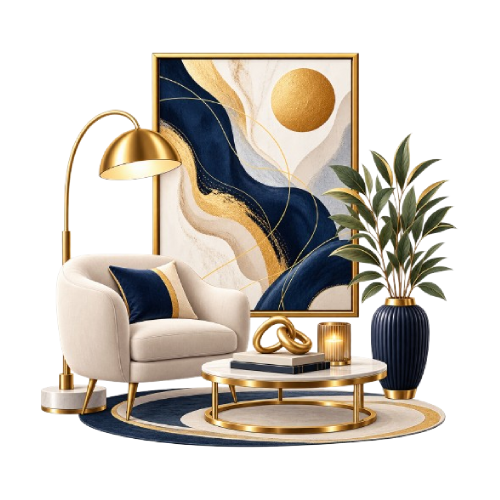
- Above the sofa
- Above the bed
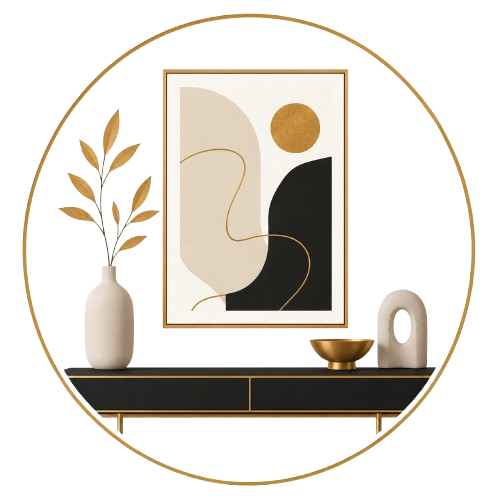
- Above a console
- Behind a dining table
- On an empty feature wall
- In an entryway
- Behind a desk
If your artwork is intended to be the focal point, give it enough surrounding space so it can visually stand on its own.
5. Choose the Right Artwork Size
Scale can make or break a room.
Artwork that is too small may look disconnected from the furniture around it. Artwork that is too large may overwhelm the space.
As a useful starting point, artwork above furniture can often work well when its overall width is approximately 60–75% of the furniture width.
For example:
6 ft sofa → approximately 3.6–4.5 ft of total artwork width
For more detailed advice, explore the CANVASORA Size & Buying Guide.
6. Create Balance
Balance doesn’t mean everything has to be symmetrical.
You can create balance through:
- Size
- Colour
- Shape
- Texture
- Height
- Visual weight
For example, a large artwork on one side of a room can be visually balanced by a floor lamp, plant, or furniture grouping on the other side.
Think about how your eye moves around the room.
7. Don’t Push Everything Against the Wall
One of the simplest ways to improve a room is to rethink furniture placement.
Where space allows, bring furniture slightly away from the walls.
This can:
- Create better conversation areas
- Improve movement
- Make the room feel more intentional
- Create visual depth
- Make the space feel less cramped
The ideal arrangement depends on the room’s dimensions and purpose.
8. Layer Your Lighting
Lighting changes how your furniture, walls, and artwork look.
A well-styled room typically benefits from more than one source of light.
Consider combining:
Ambient Lighting
The overall illumination of the room.
Task Lighting
Lighting designed for specific activities, such as reading or working.
Accent Lighting
Used to highlight artwork, architectural features, shelves, or decorative elements.
Natural daylight can also dramatically change the appearance of artwork throughout the day.
9. Add Texture
A room can have beautiful furniture and artwork but still feel flat if everything has the same visual texture.
Introduce variety through:
- Rugs
- Curtains
- Cushions
- Throws
- Wood
- Metal
- Glass
- Plants
- Woven materials
- Artwork
- Decorative objects
Texture creates depth and makes a room feel more layered.
10. Style Your Walls
Empty walls are an opportunity.
Depending on your room, consider:
One Statement Artwork
Best when you want a clean, sophisticated focal point.
Gallery Wall
Ideal for creating a curated and personal display.
Pair of Artworks
Useful for creating symmetry above furniture.
Triptych
Three coordinated pieces can create a wider visual composition.
Mixed Wall Décor
Combine artwork with mirrors, shelves, photographs, or decorative objects where appropriate.
Living Room Styling Guide
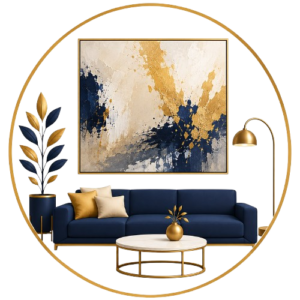
The living room is usually the most social room in the home, making it a natural place for statement artwork.
Above the Sofa
Choose artwork that relates proportionally to the sofa.
A large horizontal painting can create a strong focal point, while multiple pieces can create a more curated look.
Coffee Table Styling
Keep decorative objects at different heights and avoid overcrowding the table.
Try combining:
- Books
- Small decorative objects
- A tray
- A plant
- A sculptural piece
Add Layers
Combine artwork with:
- Rugs
- Cushions
- Curtains
- Plants
- Lighting
- Decorative objects
The goal is to make the room feel collected rather than overly decorated.
Bedroom Styling Guide
Your bedroom should feel comfortable and personal.
Above the Bed
Artwork can become a beautiful focal point above the headboard.
Consider:
- Soft abstracts
- Landscapes
- Botanical artwork
- Neutral compositions
- Minimalist designs
Choose colours that support a calm atmosphere.
Keep the Palette Relaxed
Bedrooms often work well with:
- Warm neutrals
- Soft greens
- Muted blues
- Earthy tones
- Gentle monochromes
Home Office Styling Guide
Your workspace should support concentration while still reflecting your personality.
Consider:
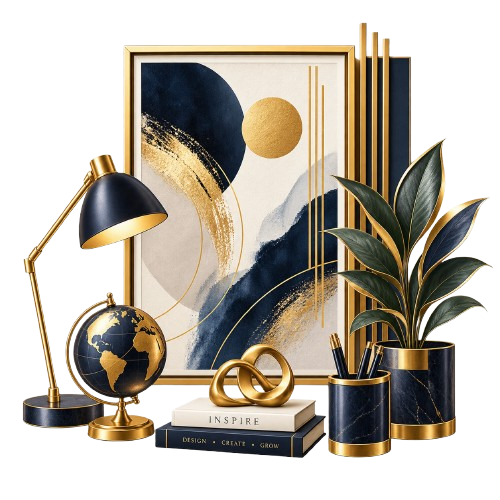
- One inspiring statement artwork
- A minimalist gallery wall
- Creative abstract art
- Neutral artwork
- Artwork that complements your desk and shelving
Keep the visual environment intentional rather than filling every available wall.
Dining Room Styling Guide
Dining spaces provide an excellent opportunity for artwork with personality.
Consider placing artwork:
- Above a sideboard
- On the main dining wall
- Beside the dining table
- Behind a dining bench
Coordinate the artwork with your lighting and dining furniture for a more cohesive look.
Entryway Styling Guide
Your entryway creates the first impression of your home.
A simple combination can be enough:
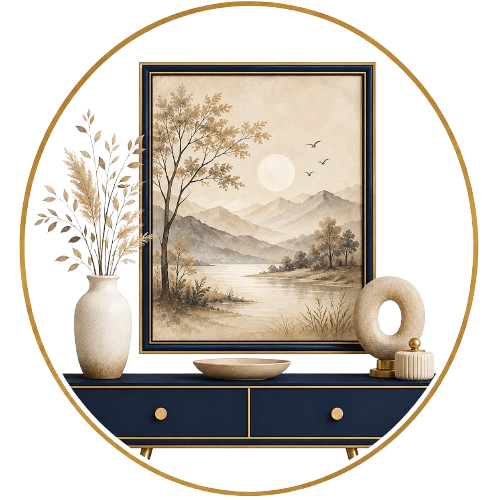
Artwork + console + lighting + one or two decorative objects
Avoid overcrowding a small entrance.
A single statement artwork can often have more impact than several unrelated pieces.
Small-Space Styling
Small rooms don’t mean you have to avoid artwork.
Instead:
- Choose pieces that are proportional to the wall
- Use vertical artwork on narrow walls
- Avoid excessive visual clutter
- Use mirrors strategically
- Keep the colour palette connected
- Choose fewer, more meaningful décor pieces
A carefully selected statement artwork can actually make a small space feel more intentional.
Large-Space Styling
Large rooms need artwork and furniture with enough visual presence.
Consider:
- Oversized artwork
- Large gallery walls
- Multiple coordinated pieces
- Large rugs
- Statement lighting
- Larger furniture groupings
Don’t be afraid of empty space, though.
Negative space gives important design elements room to breathe.
How to Style Around Your Artwork
Instead of choosing décor independently, use your artwork as a starting point.
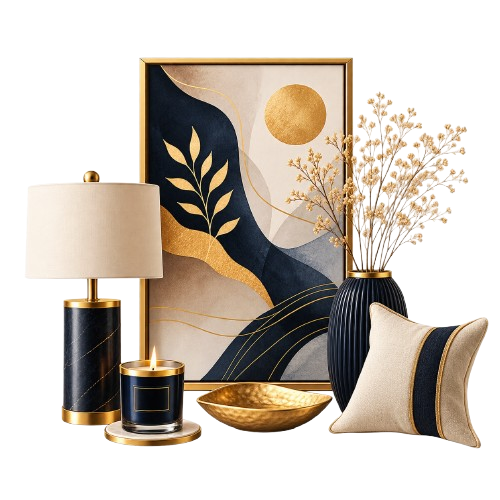
Pick one or two colours from the artwork and repeat them subtly throughout the room.
For example:
Artwork → Cushion → Rug → Decorative Object
The colours don’t need to match perfectly.
Repeating related colours creates visual continuity.
How to Mix Different Styles
You don’t have to buy everything from the same collection.
Mixing styles can make a home feel more personal.
Try combining:
Modern artwork + traditional furniture
Minimalist artwork + warm natural materials
Contemporary painting + vintage décor
Bold artwork + neutral furniture
The key is to create a connection through colour, scale, material, or shape.
Common Home Styling Mistakes
Choosing Artwork That Is Too Small
Always consider the surrounding furniture and wall proportions.
Matching Everything Too Closely
A room can feel artificial when every colour and material is identical.
Ignoring Lighting
Artwork can look completely different under daylight and artificial lighting.
Overcrowding the Walls
Not every wall needs decoration.
Following Trends Too Literally
Use trends as inspiration rather than rules.
Buying Before Measuring
Always measure your wall before ordering artwork.
Forgetting the Bigger Picture
A beautiful individual piece may not work if it conflicts with the room’s overall scale or style.
A Simple Formula for Styling a Room
If you’re not sure where to begin, try this:
1. Start With the Room
Understand its size, light, furniture, and architecture.
2. Choose a Style
Decide how you want the room to feel.
3. Establish Your Colours
Choose a dominant palette and one or two accent colours.
4. Place the Main Furniture
Create a functional layout first.
5. Choose Your Artwork
Use artwork to introduce personality and create a focal point.
6. Add Lighting
Layer ambient, task, and accent lighting.
7. Add Texture
Bring in rugs, cushions, curtains, plants, and other materials.
8. Add Personal Details
Finish the room with objects that have meaning to you.
9. Edit
Remove anything that feels unnecessary.
Good styling is often as much about what you leave out as what you add.
The CANVASORA Styling Philosophy
We don’t believe there is one perfect way to decorate a home.
Your space should reflect your personality, your lifestyle, and the way you want to feel when you’re there.
Use design principles as a guide, but don’t be afraid to break them when something feels right.
Choose artwork you genuinely love.
Create space around the things that matter.
And let your home evolve with you.
Explore More CANVASORA Inspiration
Looking for your next idea?
Wall Art Ideas
Discover creative ways to decorate your walls.
Decor Trends
Explore current interior and wall-art trends.
Size & Buying Guide
Find the right artwork size and format for your space.
Room Inspiration
Explore styling ideas for living rooms, bedrooms, offices, dining rooms, and more.
Gallery Wall Ideas
Learn how to create a balanced and personal gallery wall.
Style Your Space. Make It Yours.
A beautifully styled home isn’t about having more things.
It’s about choosing the right things and bringing them together with intention.
Start with your space.
Find your style.
Choose the artwork you love.
And make your walls part of the story.
CANVASORA
Art for the spaces that matter.